
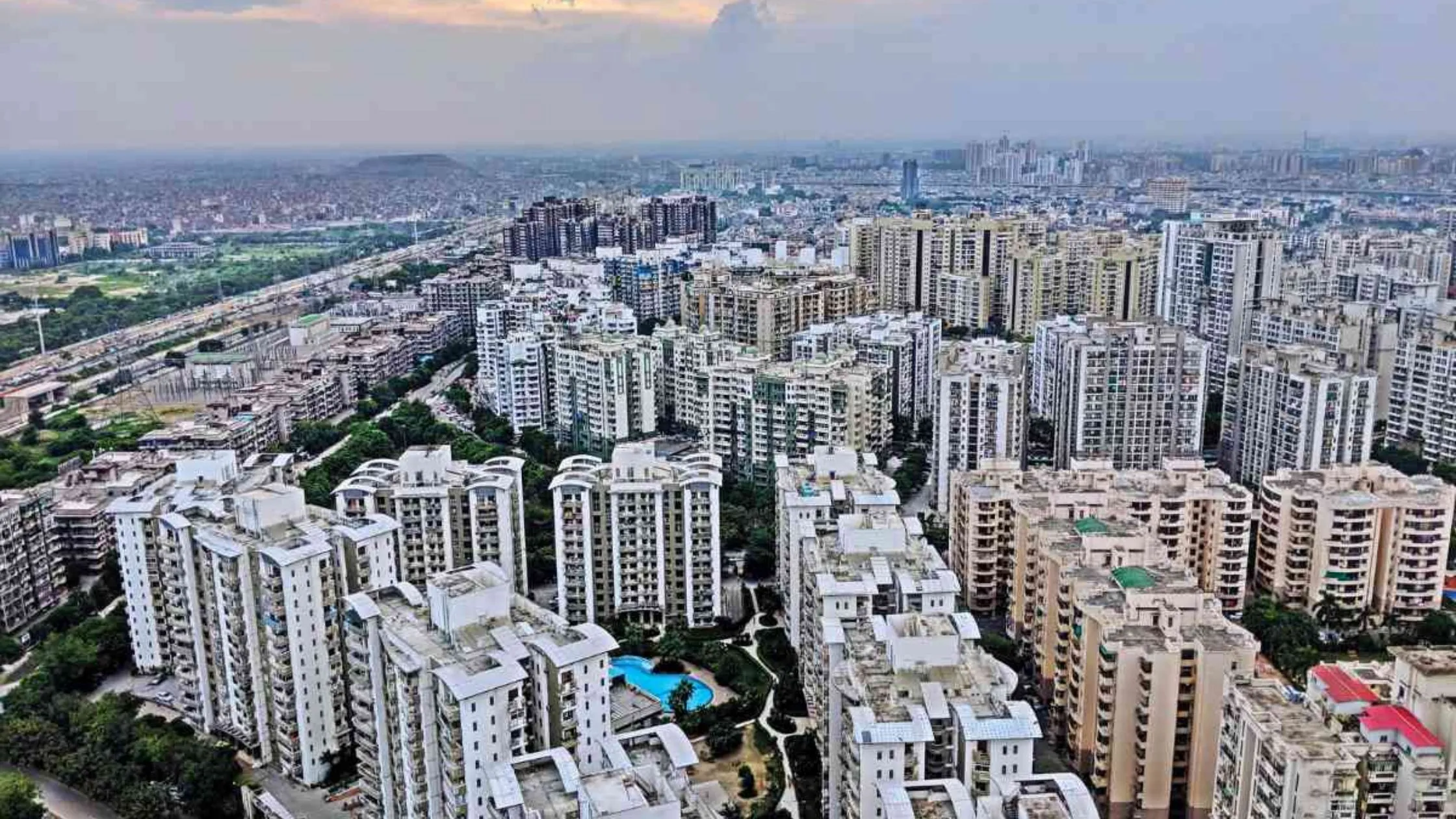
Table of Content
▲- Background: What Triggered the Ghaziabad Property Tax Hike?
- Why Was the Ghaziabad Property Tax Hike Challenged?
- High Court’s Observations and Final Verdict
- Legal Provisions Supporting the Revision
- Understanding MMRR and Its Role in Tax Calculation
- Political Reactions and Public Debate
- What the Ruling Means for Property Owners
- Broader Implications for Urban Governance
- Conclusion
The Allahabad High Court has dismissed a petition challenging the Ghaziabad property tax hike, providing legal backing to the revised taxation framework introduced by the Ghaziabad Municipal Corporation (GMC).
The ruling comes after months of hearings and brings clarity to the controversy surrounding the sharp increase in property tax assessments linked to revised Minimum Monthly Rent Rates (MMRR).
The verdict reinforces the statutory authority of municipal bodies in determining tax structures under the Uttar Pradesh Municipal Corporation Act.
Background: What Triggered the Ghaziabad Property Tax Hike?
The Ghaziabad property tax hike stems from a revision in the Minimum Monthly Rent Rates (MMRR), which serve as the foundation for calculating property tax. Petitioners argued that the updated rates significantly increased the tax burden, in some cases multiplying the levy by three to five times.
The revision followed a classification exercise conducted across 100 municipal wards, where areas were categorised into:
- Category A: Developed areas
- Category B: Moderately developed areas
- Category C: Backward or slum areas
The new structure also differentiated properties based on road width and location advantages.
Also Read: Mumbai Affordability Index at 50%: MHADA Plans Cluster Redevelopment to Unlock 1,000 Acres
Why Was the Ghaziabad Property Tax Hike Challenged?
Three former councillors filed a petition contesting the Ghaziabad property tax hike, claiming that the revised MMRR was not determined in accordance with statutory provisions.
Their primary arguments included:
- Alleged procedural lapses in determining rental benchmarks
- Non-compliance with provisions of the UP Municipal Corporation Act
- Excessive increase in tax liability without proper justification
They contended that the hike placed an unreasonable financial burden on residents and sought judicial intervention to set aside the revised rates.
High Court’s Observations and Final Verdict
After examining submissions from both petitioners and respondents, the Allahabad High Court ruled that the Ghaziabad property tax hike was legally valid.
The court observed that:
- The municipal authorities acted within their statutory powers.
- The determination of MMRR followed established legal provisions.
- No illegality or procedural irregularity was found in the revision process.
The bench stated that the exercise undertaken by the corporation was consistent with the governing Act and required no judicial interference. Consequently, the petition was dismissed.
Legal Provisions Supporting the Revision
The defense of the Ghaziabad property tax hike relied heavily on Sections 148, 172, 173, and 174 of the Uttar Pradesh Municipal Corporation Act.
Key legal points included:
- The corporation holds the authority to determine tax rates.
- The municipal commissioner is empowered to determine annual property value.
- Rule 4-A allows the commissioner to fix MMRR as a basis for taxation.
The court also noted that the municipal commissioner had sought guidance from the state government before finalising the revised rates.
Understanding MMRR and Its Role in Tax Calculation
The Minimum Monthly Rent Rate is a benchmark used to estimate a property's annual rental value, which directly impacts tax computation.
Under the revised framework, the Ghaziabad property tax hike reflects updated rental assumptions based on:
- Locality category
- Infrastructure quality
- Road width
- Market conditions
Authorities maintain that MMRR revisions are essential to align tax collections with current property valuations.
Political Reactions and Public Debate
The Ghaziabad property tax hike has triggered mixed reactions.
One of the petitioners indicated that further legal options may be explored after studying the court order. Meanwhile, the city’s mayor stated that the court’s decision validates the corporation’s position.
The issue also sparked debate over transparency, particularly concerning board meeting proceedings and approval processes.
What the Ruling Means for Property Owners
With the High Court upholding the Ghaziabad property tax hike, property owners must comply with the revised rates unless overturned by a higher judicial authority.
The decision establishes:
- Municipal autonomy in tax assessment
- Legal validation of MMRR-based calculations
- Limited scope for challenging tax revisions unless procedural violations are proven
For residents, the focus now shifts toward understanding how revised valuations affect individual tax liabilities.
Also Read: Office Expansion in Bengaluru: Key Drivers Behind Tech Major’s Growth
Broader Implications for Urban Governance
The judgment reinforces the authority of municipal bodies to periodically revise property valuation frameworks. The Ghaziabad property tax hike may also serve as a precedent for similar cases across Uttar Pradesh.
Urban local bodies depend heavily on property tax revenue for civic infrastructure, sanitation, roads, and public services. Courts generally refrain from interfering in fiscal decisions unless clear legal violations are established.
Conclusion
The dismissal of the plea against the Ghaziabad property tax hike marks a significant development in the city’s municipal governance landscape. By upholding the revised MMRR framework, the Allahabad High Court has reaffirmed statutory powers granted to urban authorities under state law.
While the hike continues to generate public debate, the ruling provides legal clarity and signals judicial support for structured tax reform measures undertaken within legislative boundaries.

_1792140859.webp)


_1792151285.webp)
Ans 1. The Allahabad High Court ruled that the Ghaziabad Municipal Corporation acted within its statutory powers under the UP Municipal Corporation Act and found no procedural irregularity in revising the tax structure.
Ans 2. The hike was triggered by a revision in the Minimum Monthly Rent Rates (MMRR), which are used to calculate a property’s annual rental value and determine the final tax amount.
Ans 3. Petitioners claimed that in some cases, the revised MMRR led to tax increases ranging from three to five times the earlier amount, depending on location and category.
Ans 4. Minimum Monthly Rent Rate (MMRR) is a benchmark used to estimate a property’s rental value, which forms the basis for calculating property tax under municipal rules.
Ans 5. Properties were categorised into developed, moderately developed, and backward areas across 100 wards, with additional consideration given to road width and infrastructure quality.
Ans 6. The court referred to Sections 148, 172, 173, and 174 of the Uttar Pradesh Municipal Corporation Act, which empower municipal authorities to assess and revise property taxes.
Ans 7. Residents may approach a higher court if they believe there are legal grounds, but the High Court’s ruling limits challenges unless clear procedural violations are proven.
Ans 8. Property owners must comply with the revised rates, as the judgment validates the municipal corporation’s authority to update valuation frameworks.
Ans 9. Municipalities revise rates periodically to align tax collections with current property values and fund civic services like roads, sanitation, and infrastructure.
Ans 10. The judgment may act as a precedent for similar tax revision disputes across the state, reinforcing municipal autonomy in fiscal decisions.