
✦ AI Summary
Table of Content
▲- Delhi orders crackdown on unauthorised fifth floors
- Satya Niketan collapse puts building safety under scrutiny
- MCD to intensify inspections
- Unauthorised construction is not always obvious to buyers
- What happens if a property has an unauthorised floor?
- Structural changes can create another layer of risk
- A wider focus on building compliance
- What this means for Delhi property buyers
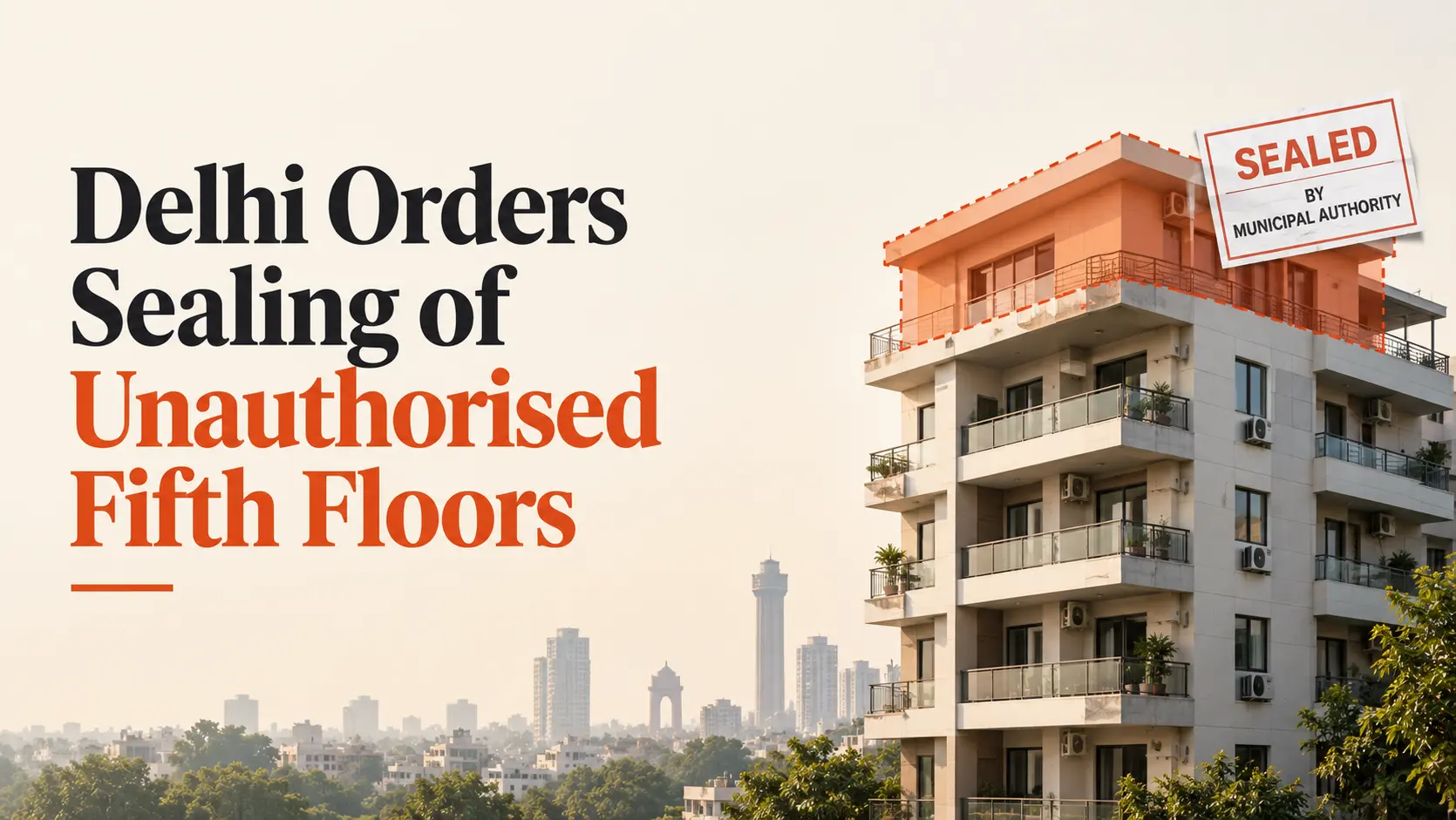
Delhi has moved to tighten enforcement against unauthorised construction after the collapse of a five-storey building in Satya Niketan left seven people dead.
Chief Minister Rekha Gupta has ordered the immediate sealing of buildings with unauthorised fifth floors across the city. The Municipal Corporation of Delhi (MCD) has also been asked to intensify inspections of nearby PG accommodations and other buildings, particularly those considered dangerous or structurally vulnerable.
The decision comes as questions grow over how buildings are being modified, approved and used in densely populated parts of Delhi.
Delhi orders crackdown on unauthorised fifth floors
The immediate focus is on buildings where construction has gone beyond the permitted height.
The MCD has said illegal constructions with more than four floors will face sealing action, while officials found responsible for allowing violations could also face strict action.
The move is significant for Delhi's older residential neighbourhoods, where buildings may have undergone additions or structural changes over time.
A fifth floor added without the required approval is not simply a planning violation. Depending on how the structure was designed and modified, unauthorised additions can also raise questions about structural safety, evacuation and the building's ability to handle additional loads.
That is why the latest enforcement drive is being linked as much to public safety as to building compliance.
Satya Niketan collapse puts building safety under scrutiny
The immediate trigger was the collapse of a building being used as a paying guest accommodation in Satya Niketan.
Seven people died in the incident, which has since prompted a magisterial inquiry and a police case against the building owner. Five MCD officials, including senior engineering and building department officials, have also been suspended.
The Delhi High Court has separately sought a high-level MCD inquiry and raised questions about the safety of PG accommodations in the city. It has also asked authorities to look into building permissions and conduct safety audits.
The incident has therefore moved beyond one building.
It has raised a wider question: how many other structures in the city have been altered beyond their approved plans, and are those changes being properly monitored?
MCD to intensify inspections
The civic body is now stepping up surveys and inspections of buildings considered dangerous or dilapidated.
Nearby PGs and buildings are also being inspected, with authorities indicating that violations will invite sealing action.
The government is also considering a broader safety framework under which buildings used for public activities could be subjected to periodic structural audits and safety certification.
This could have implications beyond PGs.
Buildings used as nursing homes, schools and other public-facing establishments have also been mentioned in the proposed safety approach. The stated objective is to ensure that such premises are structurally safe before they continue operating.
Unauthorised construction is not always obvious to buyers
For property buyers, the latest action highlights a problem that is easy to overlook.
A property may look perfectly normal during a site visit while parts of the structure may not match the sanctioned building plan.
An extra floor, terrace room, enclosed balcony, or structural extension may have been added years after the original construction.
This is particularly relevant when buying older independent houses or builder floors in established Delhi colonies. The issue is not limited to Delhi's current crackdown. Similar unauthorised construction and post-approval alterations have also triggered enforcement action in other major NCR markets.
Before paying a token amount, buyers should compare the actual construction with the sanctioned plan and available approvals. A property title verification also recommends checking the approved plan, occupancy documentation, and physical structure rather than relying only on paperwork.
What happens if a property has an unauthorised floor?
The consequences can extend beyond a municipal notice.
An unauthorised floor or extension can create problems when the property is sold, mortgaged or transferred. It may also affect the property's compliance status and create difficulties in obtaining or relying on occupation-related documents.
For buyers, this makes the sanctioned building plan an important document rather than just a technical formality.
The buyer should ideally check:
- The sanctioned building plan
- Permitted number of floors
- Occupancy or completion documents, where applicable
- Property title and ownership records
- Any municipal notices or enforcement proceedings
- Whether the actual construction matches the approved plan
AquireAcres' property-document guide also lists building plan approval and occupancy certificates among the important documents buyers should examine before purchasing a property.
Structural changes can create another layer of risk
Unauthorised construction is not limited to adding a floor.
Changes to load-bearing walls, columns, basements or other structural elements can also affect safety. Delhi Mayor Pravesh Wahi has cautioned residents against structural alterations, particularly changes involving pillars.
This matters in older properties where owners may renovate or expand space without obtaining the necessary technical approvals.
For buyers, a physical inspection by a qualified professional can therefore be worthwhile when purchasing an old or substantially modified property.
A wider focus on building compliance
The Delhi government's response is likely to put greater attention on the gap between what a building was originally approved for and how it is being used today.
That issue is particularly visible in areas where residential properties have been converted into PGs, offices or other commercial uses.
The Satya Niketan incident has brought that concern into sharper focus. The Delhi High Court has already asked authorities to examine safety in PGs and hostels, while the government is considering structural audits for buildings used for public activities.
The immediate sealing of unauthorised fifth floors is therefore only one part of a larger enforcement exercise.
What this means for Delhi property buyers
For buyers, the lesson is fairly straightforward: don't judge a property only by its interiors, location or price.
Check what has actually been approved.
An extra room or floor may appear to add value to a property, but if that construction is unauthorised, it can become a liability later.
The current crackdown also shows that enforcement can become much more aggressive after a serious safety incident.
For anyone buying an independent house, builder floor or older property in Delhi, checking the sanctioned plan against the physical structure should be treated as part of basic property due diligence not something to consider only after a dispute begins.

_1792140859.webp)


_1792151285.webp)

Ans 1. The Delhi government has ordered immediate sealing of buildings with unauthorised fifth floors as part of a wider crackdown on illegal construction and building safety violations following the Satya Niketan collapse.
Ans 2. A five-storey building being used as a PG accommodation collapsed in Satya Niketan, killing seven people. The incident led to a magisterial inquiry, a police case and the suspension of five MCD officials.
Ans 3. The order concerns unauthorised fifth floors and illegal constructions beyond permitted limits, not every legally approved five-storey building. Authorities are expected to examine whether the construction complies with the sanctioned plan and applicable rules.
Ans 4. Yes. Unauthorised construction can create compliance and documentation issues during a sale, mortgage or property transfer. Buyers should compare the actual structure with the sanctioned building plan before purchasing.
Ans 5. Buyers should check the title documents, sanctioned building plan, permitted floors, occupancy or completion documents, municipal records and any pending notices or enforcement action.
Ans 6. It helps a buyer determine whether the property's actual construction matches what the local authority approved. This can reveal unauthorised floors, extensions or other modifications before the transaction is completed.
Ans 7. Yes. Authorities have ordered inspections of nearby PGs and buildings following the Satya Niketan incident. The government is also considering periodic structural audits and safety certification for buildings used for public activities.