
✦ AI Summary
Table of Content
▲- Why Your Main Door Matters in Vastu Shastra
-
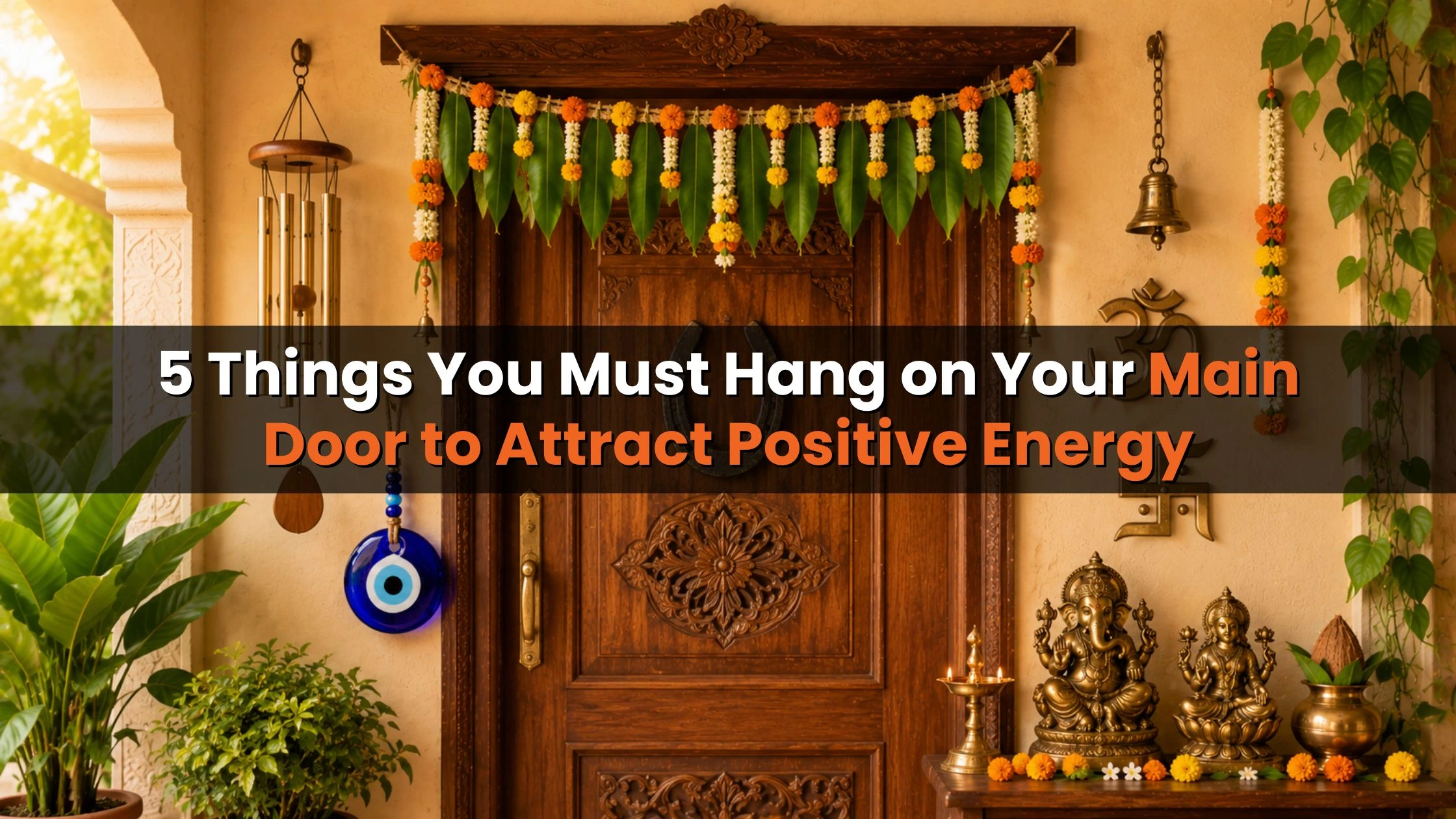
5 Things You Must Hang on Your Main Door
- 1. Toran: The First Line of Divine Welcome
- 2. Wind Chimes: Activate Stuck Energy Instantly
- 3. Horseshoe (Naal): Ancient Protection That Still Works
- 4. Sacred Symbols and Deity Idols: Om, Swastika, Ganesha, or Lakshmi
- Quick reference: which symbol for which benefit:
- 5. Nazar Battu: The Guardian Against the Evil Eye
- Quick Comparison: 5 Things to Hang on Your Main Door at a Glance
- What Not to Hang or Keep Near the Main Door
- Final Thoughts
The things you must hang on your main door to attract positive energy are far more intentional than most homeowners think. Your main door is not just the physical entry to your home, in Vastu Shastra, it is the "mukha" of the house, the primary channel through which prana (life force energy) enters your living space. Get this right and you set the tone for everything inside. Get it wrong and you risk blocking prosperity, harmony, and health before they even cross your threshold.
The good news? You do not need a renovation. The right sacred items, placed correctly, can transform your entrance into a magnet for abundance, with no structural changes required.
Why Your Main Door Matters in Vastu Shastra
In Vastu Shastra, the main door is often seen as the most energetically active corner in any house. It basically decides what kind of energy comes into your space, and also how freely it moves from room to room, so it feels, you know , alive but balanced. When the main door is carefully adorned, sits in the right Vastu position, it gives an instant feeling of calm, helps invite favorable vibrations, and it works like a protective shield , guarding against unwanted negativity.
Both Vastu Shastra and Feng Shui kind of agree on one core principle, like this: a clutter-free, well-lit, symbolically charged entrance is the single most impactful change you can make for your home’s energy, even if it sounds small. Yeah, the five items below are the most powerful, most recommended, and easiest to put into practice, for any home, any budget, any city.
Also Read: Akshaya Tritiya: Why It’s the Best Time to Register Your Land
5 Things You Must Hang on Your Main Door
1. Toran: The First Line of Divine Welcome
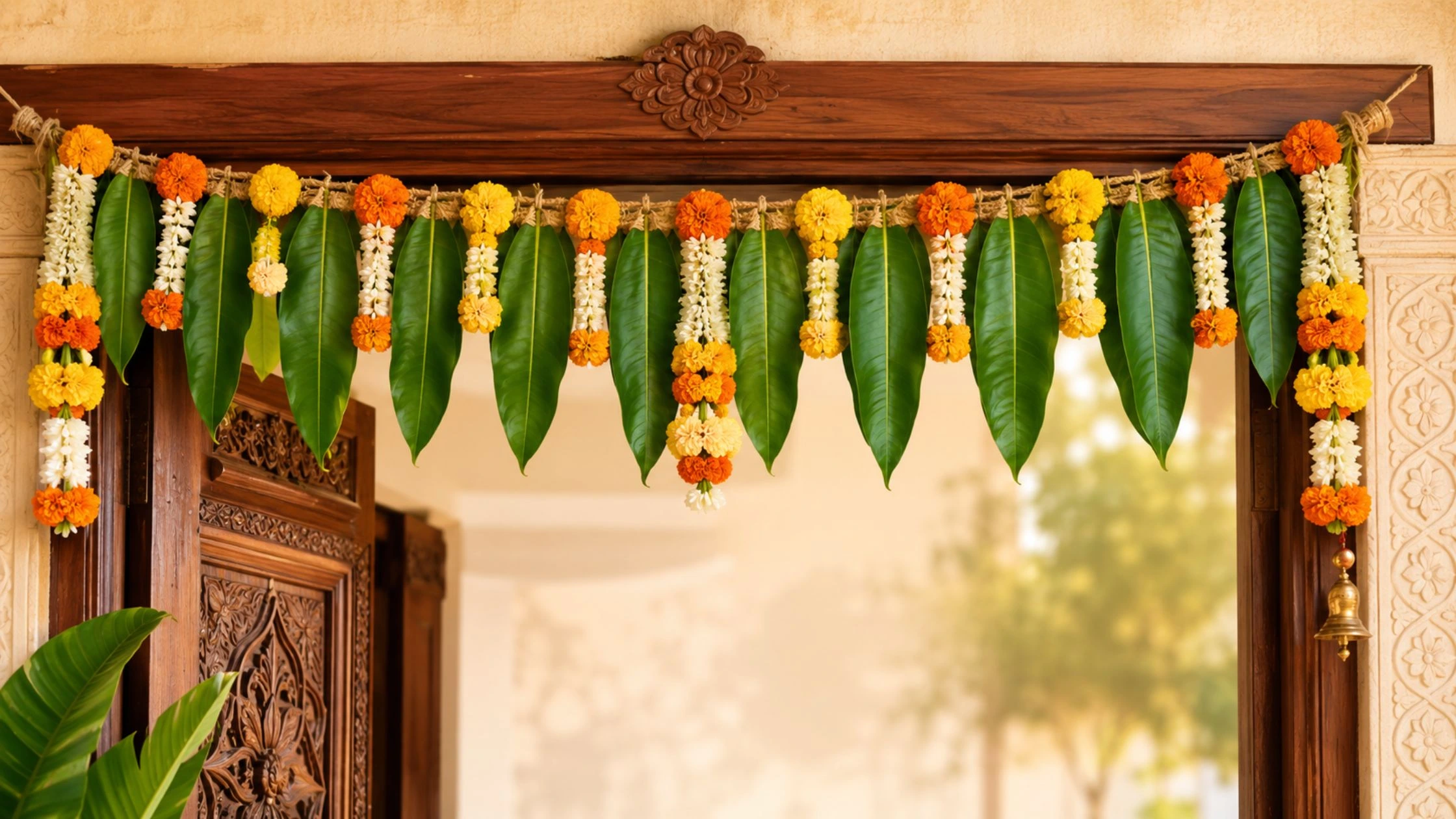
A toran is one of the most traditional and the commonly recommended things for door hanging in Vastu Shastra, like really. It’s made from mango leaves, Ashoka leaves, or sometimes marigold flowers, and when it is placed at the main door it sort of tells everyone purity, joy, and a warm invitation to positive energy.
- Purification: Mango and Ashoka leaves release natural compounds that are thought to help cleanse the aura at the entrance , kind of like a natural sieve filtering out negativity before it actually steps inside.
- Divine invitation: a toran is basically seen as a standing invitation to Goddess Lakshmi, so it becomes one of those most auspicious items, for drawing wealth and prosperity into your home, somehow.
- Festivity and warmth: Beyond its spiritual role, a toran gives an almost immediate visual kind of coziness , so guests feel genuinely welcomed the moment they arrive.
Best placement: Hang the toran at the centre of the main door frame, above the door. Ensure it does not block door movement. Works best for north and east-facing main doors. Replace fresh leaf torans every 2–3 weeks, wilted torans stagnate rather than attract energy.
2. Wind Chimes: Activate Stuck Energy Instantly
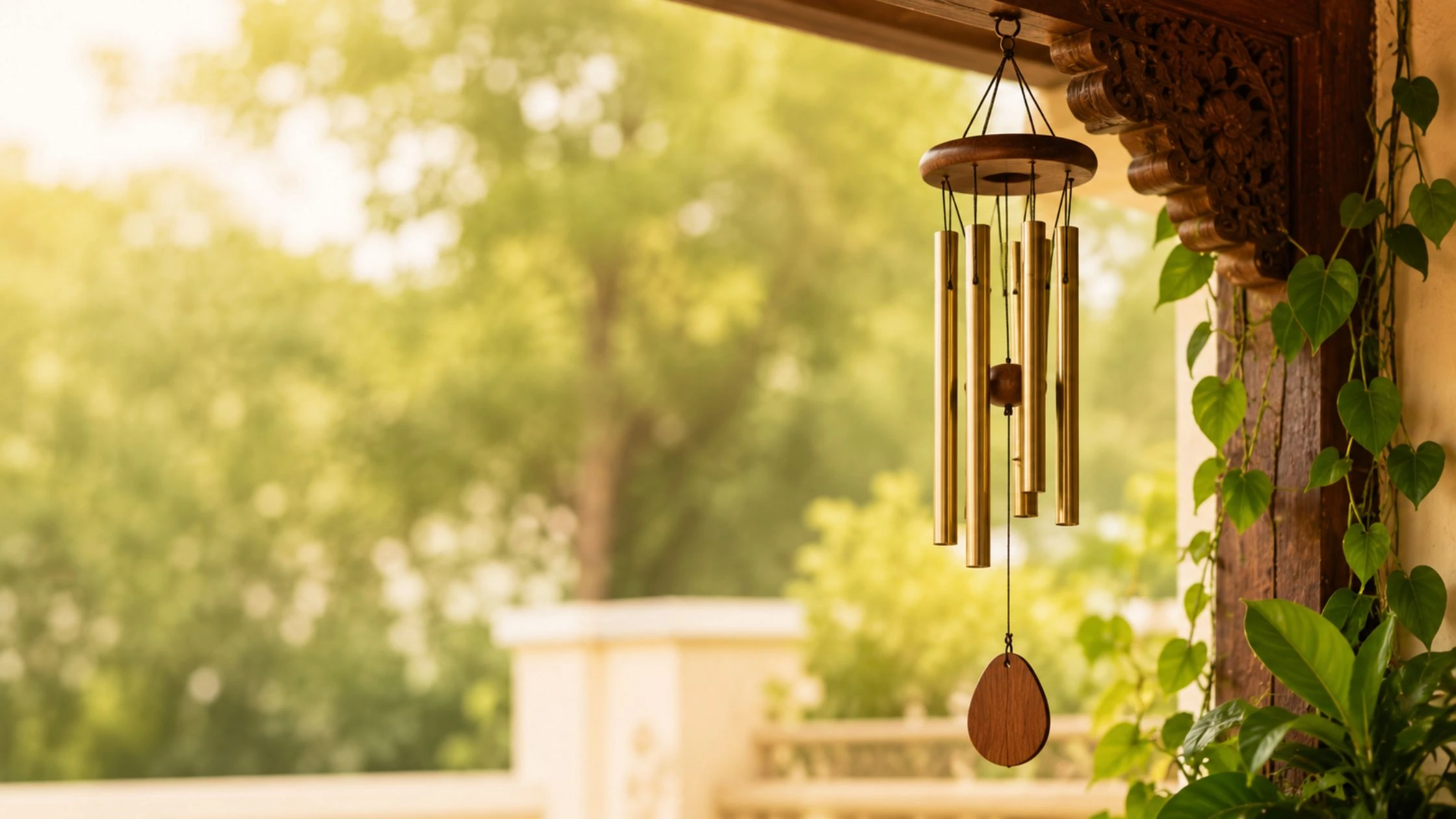
If your entrance feels heavy, dull, or shut in, a wind chime is probably the fastest Vastu fix out there. The melodious sound from a wind chime is, in a way , scientifically proven to ease anxiety and it’s also spiritually recognized in both Vastu and Feng Shui, as a device for breaking stuck chi and kind of setting favorable energy in motion.
- Energy activation: The sound vibrations from wind chimes kinda loosen stagnant prana near the threshold, so the energy around your main door stays fresh , and it keeps moving in a loop.
- Vastu dosha remedy: Correctly placed metal wind chimes are one of the most recommended remedies for reducing Vastu doshas related to the entrance direction of your home.
- Five-element harmony, you know, a well chosen wind chime kinda brings together Earth, Water, Fire, Air and Space, the five Vastu elements, into one single balanced energetic unit at your entrance. It’s like the whole set, just lined up and kept steady, there.
Choosing the right wind chime:
|
Material |
Best Direction |
Energy Benefit |
|---|---|---|
|
Metal (Brass / Copper) |
North, West, North-West |
Career growth, financial prosperity |
|
Bamboo / Wood |
East, South-East |
Family harmony, good health |
|
Ceramic |
West, South-West |
Love, relationships, stability |
|
Seashell |
South, South-East |
Tranquility, abundance |
Best placement: Hang wind chimes on either side of the main door, never directly above or on the door itself. Even the gentle draft from an opening door is enough to activate their energy-clearing properties.
3. Horseshoe (Naal): Ancient Protection That Still Works
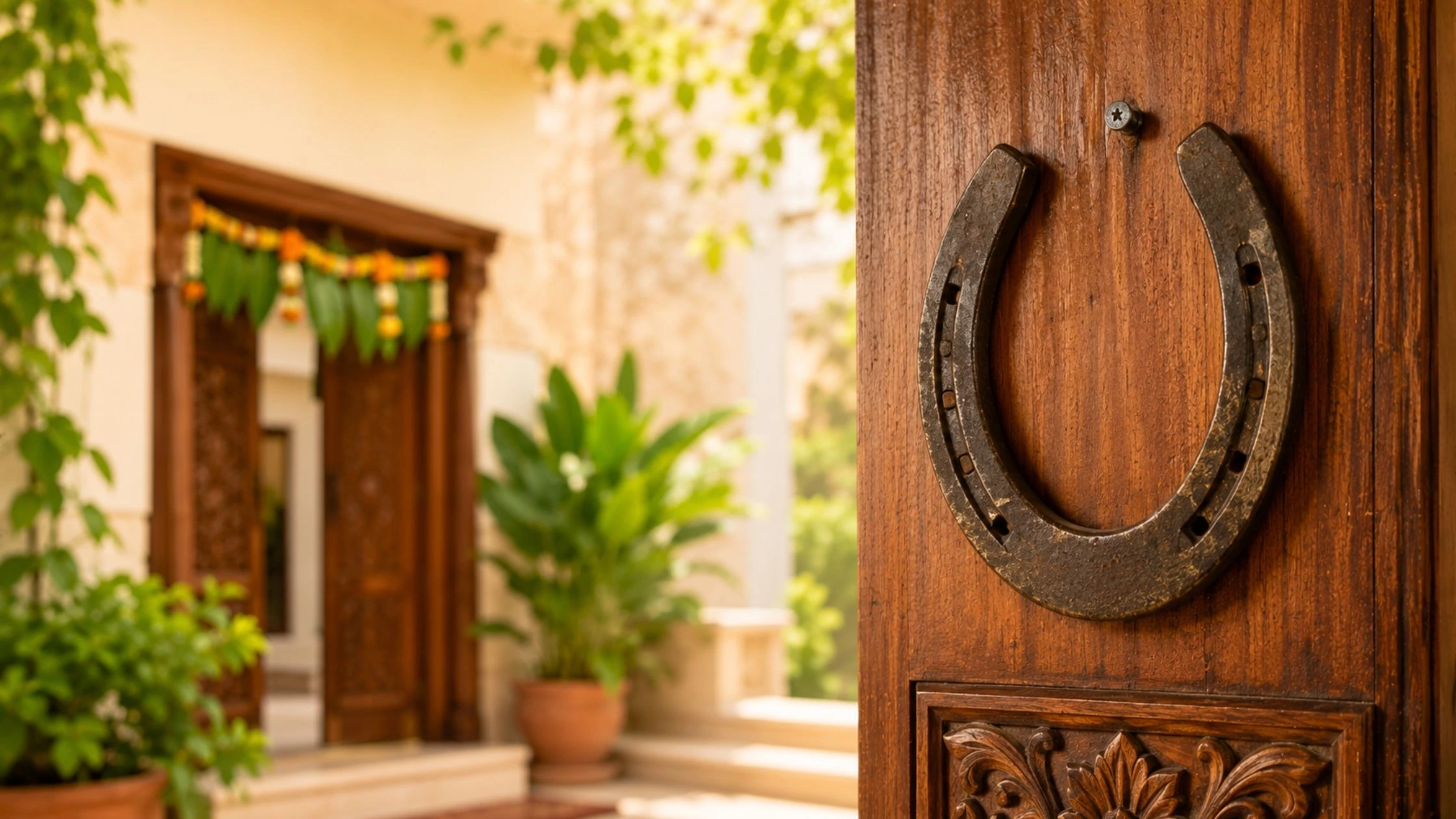
The horseshoe is basically one of the oldest protective signs people talk about across Indian, European, and Islamic traditions, all kind of at once. In Vastu Shastra, a horseshoe made from a black horse iron shoe is said to be among the most powerful shields against bad vibrations, the evil eye, and misfortune slip- ping into your home.
- Active protection: the horseshoe is believed to intercept and absorb negative energy that gets aimed at your home, kind of like a spiritual cushion between the outside world and your family, so it may keep things at bay.
- Amplified defence: Pairing the horseshoe with black thread and evil eye beads (Nazar Battu) significantly strengthens its protective effect, a combination widely recommended by Vastu practitioners across India.
- Timeless symbolism, across cultures the horseshoe stands for a kind of resilience , strength and also good fortune , it’s these qualities that when they’re charged with intent kinda resonate through your entrance every single day.
Best placement: Hang the horseshoe above the main door with the open ends pointing upward (U-shape). This position "catches and holds" positive energy. A downward-facing horseshoe is believed to let luck drain away.
4. Sacred Symbols and Deity Idols: Om, Swastika, Ganesha, or Lakshmi
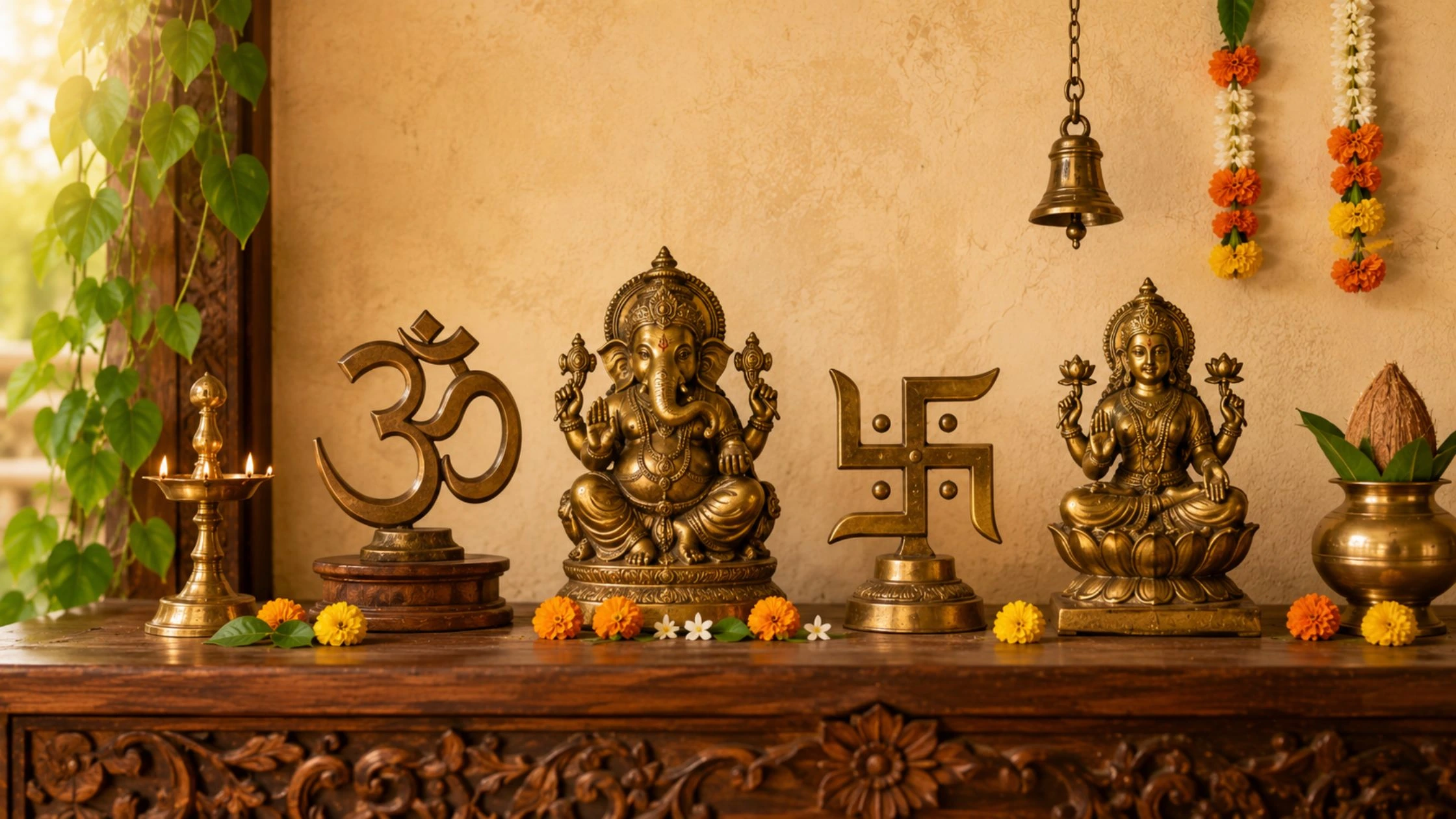
Putting sacred signs or deity figurines near the main doorway isn’t just superstition, it’s a kind of ritual that in Vastu Shastra is studied quite a lot , and each symbol has its own energetic role for the home.
- Lord Ganesha, as the one who clears obstacles, a Ganesha idol or this relief placed at the entrance, kind of helps make every new start smoother, keeps discouraging influences away, and sets a careful, divine protection mood for everyone who walks in.
- Goddess Lakshmi / Lakshmi Yantra: When Lakshmi is at the entrance, it is thought to pull in financial abundance , prosperity, and also enduring good fortune into the house and beyond. People say it creates a steady kind of lucky energy, the kind you can feel lingering.
- Om, Swastika, or Trishul: These sacred geometric symbols act as spiritual shields, each one deflecting negative forces and reinforcing the positive energy field around your main door.
Quick reference: which symbol for which benefit:
|
Symbol / Idol |
Core Significance |
Primary Benefit |
|---|---|---|
|
Om (ॐ) |
Universal vibration of creation |
Purifies energy, invites divinity |
|
Swastika |
Symbol of prosperity and auspiciousness |
Removes obstacles, activates good fortune |
|
Lord Ganesha Idol |
Remover of obstacles |
Protection, smooth beginnings |
|
Goddess Lakshmi / Yantra |
Goddess of wealth |
Financial abundance, sustained prosperity |
|
Trishul |
Divine protection symbol |
Spiritual shield against negative forces |
Best placement: Fix symbols at eye level on the outside of the main door so their energy field faces outward. Keep the surrounding area clean and, if possible, light a diya or incense near the idol daily to maintain its spiritual charge.
Also Read: Best Direction for Wind Chimes for Good Luck in Home: Vastu Rules You Must Know
5. Nazar Battu: The Guardian Against the Evil Eye
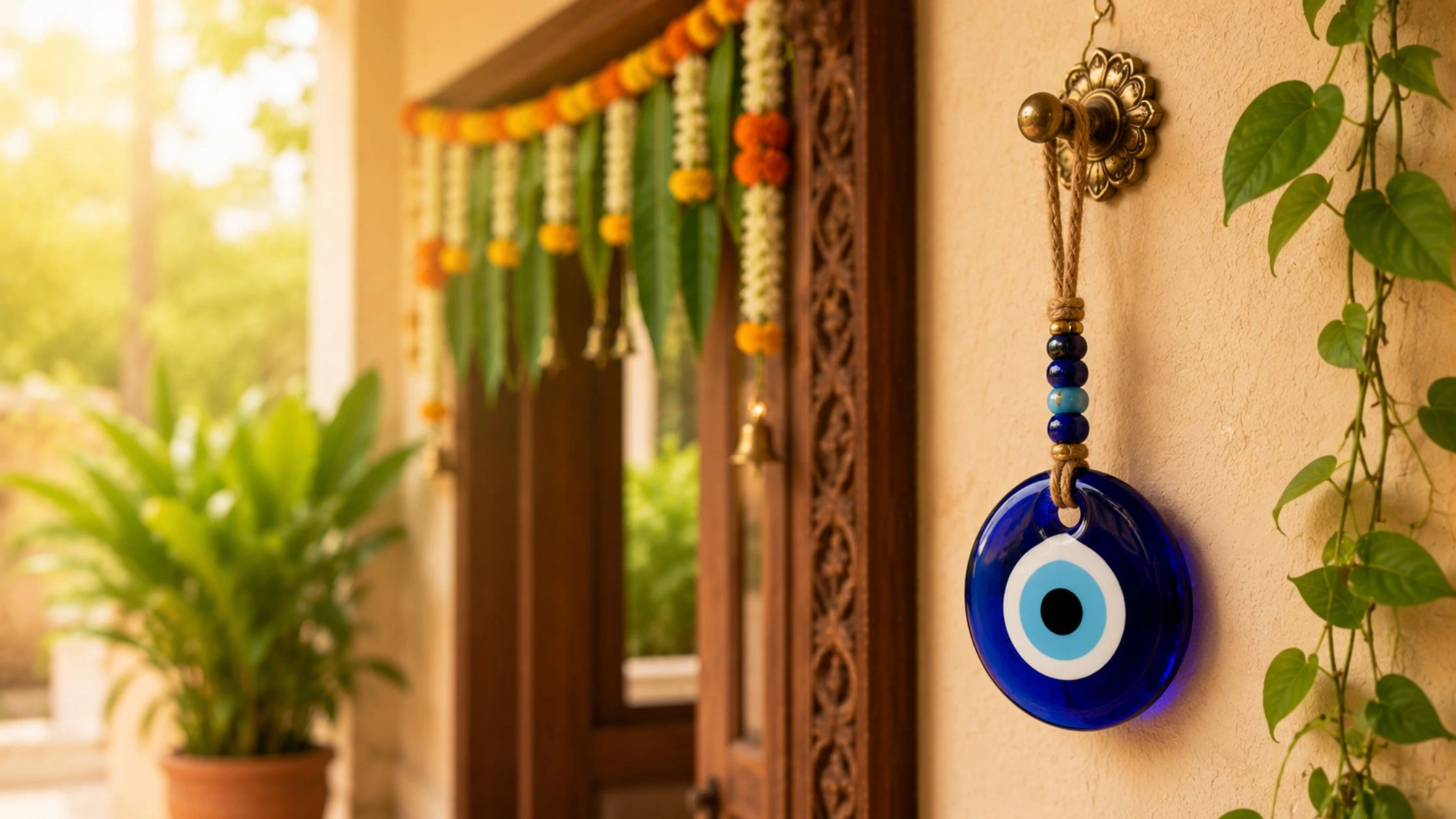
The Nazar Battu is this blue and white eye-shaped talisman that, you know, comes from Indian, Turkish, and in general Mediterranean protective traditions. Like, the main idea is just one, singular and kinda powerful function: to neutralize the nazar, that negative energy that can ride along with jealousy, envy, or ill will from visitors, or even people simply passing by
- Reflective shield: The Nazar Battu is made to intercept bad energy right at the point of entry, absorbing it and neutralizing it before it gets a chance to settle in your home and start to mess with your family wellbeing, kind of like a calm barrier that does its job quietly.
- Emotional harmony, beyond protection, they say the talisman helps soothe the feelings around the entryway, so it reduces tension and makes for a calmer, more balanced energy field right at the threshold.
- Combination power: When paired with a horseshoe, elephant motifs, or evil eye beads on a black thread, the Nazar Battu's protective radius expands significantly, a combination particularly effective for homes in high-traffic or densely populated areas.
Best placement: Hang it prominently at the centre or top of the main door, fully visible to anyone approaching from the outside. Replace it immediately if it cracks or breaks, in Vastu tradition, this signals it has successfully absorbed and neutralized a powerful negative force.
Quick Comparison: 5 Things to Hang on Your Main Door at a Glance
|
Item |
Primary Benefit |
Best Material |
Ideal Placement |
|---|---|---|---|
|
Toran |
Purification and divine welcome |
Mango/Ashoka leaves or marigold |
Centre of door frame, above door |
|
Wind Chimes |
Energy activation and Vastu dosha remedy |
Metal (brass/copper) or bamboo |
Either side of the main door |
|
Horseshoe |
Protection from negative energy |
Black horse iron shoe |
Above the door, open ends upward |
|
Sacred Symbol / Idol |
Divine protection and financial abundance |
Brass, copper, or stone |
Eye level, outside of door |
|
Nazar Battu |
Evil eye deflection and emotional harmony |
Glass or ceramic |
Centre/top of door, facing outward |
What Not to Hang or Keep Near the Main Door
- Broken or cracked décor which Symbolizes declining energy and blocked prosperity. Replace immediately.
- Dried, wilted flowers or dead plants Represent stagnation and misfortune. Refresh regularly.
- Clutter or heavy objects Physically and energetically obstruct the flow of prana at the threshold.
- Mirrors directly facing the door that Reflect positive energy back outward before it enters the home.
Final Thoughts
In Vastu Shastra, no space seems to hold more energetic weight than the main door. The things you should hang on your main door , to bring in positive energy, like a sacred toran, activating wind chimes, a protective horseshoe, divine symbols or small idols, and a powerful Nazar Battu, aren't just pretty decorations.
They are centuries-tested energetic tools that work like a team so you get a living shield of protection, and also a continuous pull toward abundance. You don’t need all five on day one , just begin with one, put it in place with intention, and then add more as you notice how the energy inside starts to shift. The entrance, honestly, sets the tone for everything beyond it . Make it count.






Ans 1. A toran made of fresh mango or Ashoka leaves is considered the most auspicious item as per Vastu Shastra. It simultaneously purifies energy at the threshold, invites Goddess Lakshmi's blessings, and prevents negative energy from crossing into the home.
Ans 2. Yes, you can combine multiple items provided they are placed in an orderly, clutter-free manner. A toran above the door, wind chimes on either side, and a Nazar Battu or horseshoe at the centre is a highly effective and commonly recommended combination.
Ans 3. As per Vastu Shastra, the most auspicious directions for the main door are North, East, and North-East. These directions are associated with wealth, health, and spiritual growth respectively. South and South-West entrances require additional Vastu remedies.
Ans 4. The horseshoe should be hung above the main door with the open ends pointing upward in a U-shape. This position is believed to catch and accumulate good luck. A downward-facing horseshoe is believed to let fortune drain away.
Ans 5. Fresh leaf torans should be replaced every 2–3 weeks or as soon as the leaves begin to dry and wilt. Wilted torans are believed to stagnate rather than attract energy. Fabric or metal torans should be cleaned regularly to maintain their positive charge.
Ans 6. Absolutely. For apartments, hang a small metal or bamboo wind chime beside the door or just inside the entrance. Even the gentle draft from the door opening and closing is sufficient to activate its energy-clearing properties.
Ans 7. The Nazar Battu is rooted in the belief that jealousy or ill-will carries negative energy that can affect a household. Placed at the entrance, it intercepts, absorbs, and neutralizes that energy before it enters your home, a practice validated by Vastu Shastra and folk traditions across multiple cultures.
Ans 8. Yes, a Ganesha idol is highly auspicious at the entrance. However, if your home has heavy outside foot traffic, it is preferable to fix a Ganesha relief directly on the door or place the idol just inside the entrance rather than as a freestanding idol outside.
Ans 9. Avoid shoe racks, dustbins, broken décor, thorny plants such as cacti, mirrors directly facing the door, and dark or dull-coloured objects near the main entrance. These are believed to obstruct the flow of positive prana into the home.
Ans 10. Yes, these items work for any home regardless of ownership. Vastu principles are based on the energy of the space you occupy, not who owns it. Placing these items at your main door will positively influence energy flow in any home you live in.