
✦ AI Summary
Table of Content
▲- What Is Wabi-Sabi Interior Design?
- Indian Terracotta: The Most Wabi-Sabi Material You Already Know
- Khadi: The Fabric That Makes Any Room Feel Like Home
- Building a Wabi-Sabi Room: Colour, Layout, and Light
- Wabi-Sabi Starter Kit for Indian Homes: What to Buy and Where
- Common Mistakes to Avoid in Wabi-Sabi Decor
- Final Thoughts
Wabi Sabi decor is changing the aesthetic landscape of Indian interiors by creating an intentional design language that focuses on imperfection, organically sourced materials and the beauty of hand-crafted items. If your living room appears cohesive on paper with neutral walls, good furniture, multiple decorative accessories and so forth, yet something about it feels 'off', that it doesn't have the ability to 'breathe', then perhaps you have created a space that does not reflect who you are. Indian homeowners often invest thousands into achieving the 'perfect' look for their home; however, they may inadvertently create an overly staged-looking home instead.
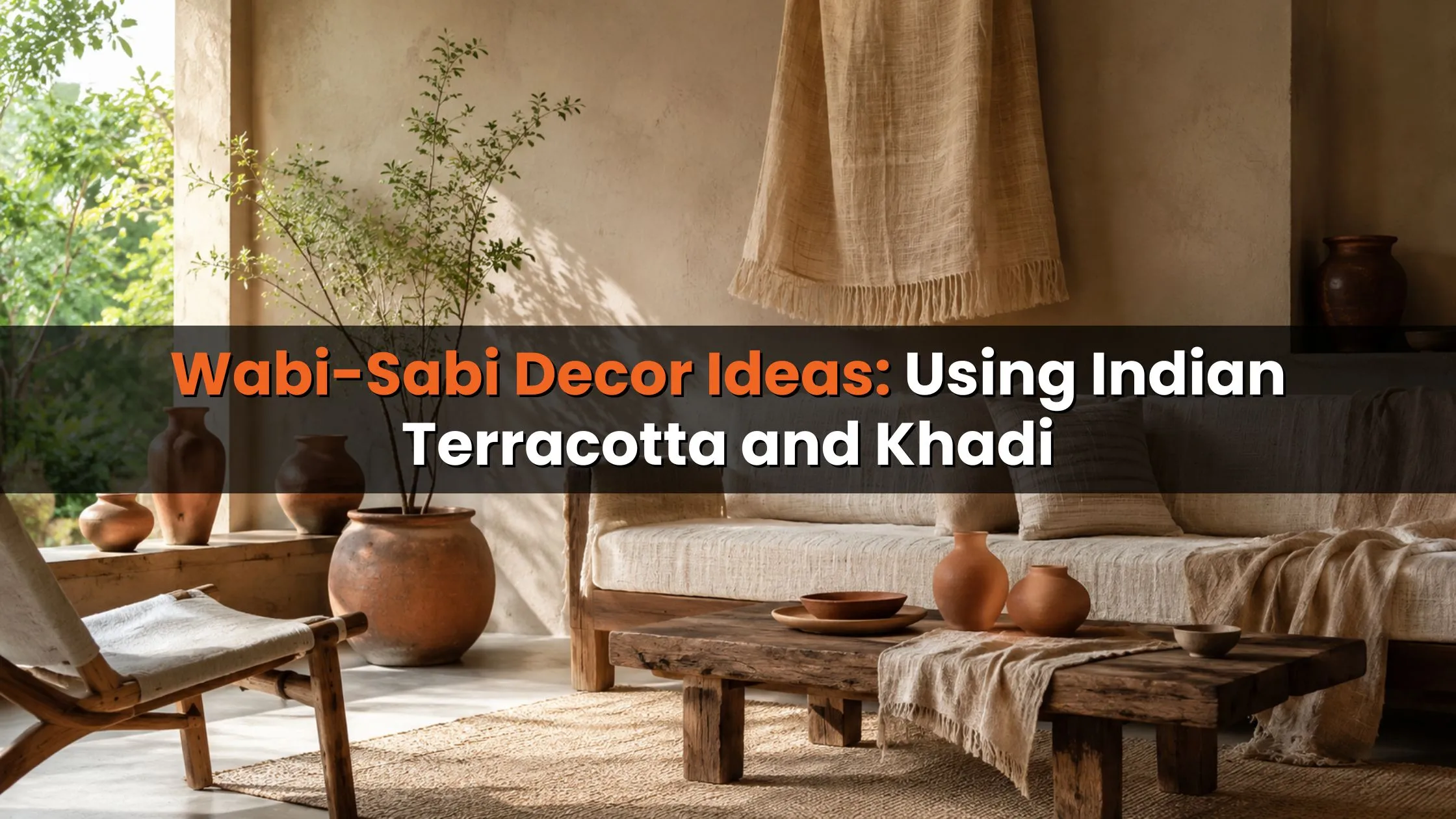
Rooted in Japanese philosophy, Wabi-Sabi is about seeing beauty in the imperfect, the impermanent, and well, the incomplete . But for Indian homes, it isn’t some borrowed look, more like a homecoming, somehow. Your grandmother’s terracotta water pot, the khadi curtain that mutes afternoon light , the a little uneven handwoven bedspread, those small things they carry Wabi-Sabi , and honestly it has always belonged here.
What Is Wabi-Sabi Interior Design?
Before you start shopping, understand what Wabi-Sabi actually means for your home. It is not about making things look old or bare. It is warm minimalism with fewer objects, but each one chosen with intention, carrying texture, history, and honest imperfection.
The fundamental attributes of a Wabi Sabi residence consist of:
- A palette that is muted in tone and utilises earth tones such as sand, clay, warm gray, old indigo and terracotta orange hues,
- Utilising natural and handcrafted materials such as clay, reclaimed wood, stone and textiles made from hand-spun fibers.
- Asymmetric layouts with deliberate negative space between furniture pieces
- Diffused warm lighting in the 2700K–3000K range
- Artisan-made or aged decor as each object has a visible story
- No clutter as one meaningful object beats ten decorative ones every time
Pro Tip: The fastest way to test if your decor is Wabi-Sabi compliant: if it looks identical to 10,000 other Instagram homes, it is not.
Indian Terracotta: The Most Wabi-Sabi Material You Already Know
Each terracotta pot is manually crafted and fired at high temperatures, resulting in slight variations in shapes from one pot to another due to human error rather than mechanical production overruns. These slight imperfections create an attractive unique "aesthetically pleasing" quality which adds to the beauty of each piece of pottery. Indian terracotta pottery has its own unique characteristics from state to state which allow it to blend well into the aesthetic of a Wabi Sabi Style Home.
Regional Indian Terracotta: Quick Comparison
|
Pottery Type |
Origin |
Finish |
Best Used For |
|---|---|---|---|
|
Bishnupur Terracotta |
West Bengal |
Deep reddish-brown, matte |
Shelf displays, lamps, wall decor |
|
Khurja Clay Pottery |
Uttar Pradesh |
Hand-painted, earthy glaze |
Vases, planters, kitchenware |
|
Nizamabad Black Pottery |
Andhra Pradesh |
Dark matte, near-black |
Accent vases, contrast styling |
|
Longpi Stone Pottery |
Manipur |
Grey, unglazed |
Tableware, minimalist accents |
How to style terracotta room by room:
- Living room: Arrange three different tall terracotta pots together on a wooden open shelf in the living room, and use them together with other styles of pots to create an interesting look.
- Kitchen: Have open shelving in the kitchen and have your hand thrown terracotta bowls as part of your decor. Allow the imperfections of the bowls to be your focal point, rather than hiding them behind a cabinet or a shelf.
- Bedroom: Replace the glossy ceramic lamp you currently have on your bedside table in the bedroom with a terracotta lamp.
- Entryway: A large terracotta planter with a trailing money plant sets the home's sensory tone before a guest steps past the door
Pro Tip: Combine Bishnupur red and Nizamabad black in the same display. The warm-cool contrast between the two is a classic Wabi-Sabi styling move, grounded, striking, and zero percent artificial.
Also Read: Terracotta Tiles: Types, Benefits, and Terracotta vs Ceramic Explained
Khadi: The Fabric That Makes Any Room Feel Like Home
Khadi, a naturally Wabi-Sabi fabric, is unique because it accepts imperfections & has no technical or commercial guarantees. This means that you'll see irregularities (like uneven weaving, varying yarn thickness, etc.) that distinguish your space as having character versus that of a hotel-like environment.
Khadi also provides practical benefits for Indian homeowners; it is climate smart because it keeps you cool in the summer & warm in the winter, making it the right choice year-round when compared to synthetic options.
Khadi vs. Machine-Woven Fabric: Wabi-Sabi Lens
|
Feature |
Khadi |
Machine-Woven Fabric |
|---|---|---|
|
Texture |
Organic, slightly uneven |
Uniform, smooth |
|
Wabi-Sabi Compatibility |
Very High |
Low |
|
Natural Dyeability |
Excellent |
Moderate |
|
Sustainability |
High, handloom, biodegradable |
Low |
|
Visual Character |
Unique per piece |
Identical units |
|
Indian Climate Suitability |
All seasons |
Varies by material |
Where to use khadi in your home:
- Curtains: Large windows can be adorned with unlined khadi drapes that will allow sunlight to enter a space while casting shadows throughout the day
- Cushion covers and throws: Layer khadi in off-white, beige, and slate. Do not match them identically; the slight variation between pieces creates depth
- Bedspreads: Using khadi as a bedcover will give your bed a soft look, regardless of its material and will also become more beautiful as time goes on
- Upholstery: Upholstering chairs or sofas with khadi provides the warm feeling of an item that has been used, unlike any other type of fabric.
Pro Tip: Always choose khadi dyed with natural pigments, indigo, turmeric, or madder root. The subtle tonal variation of naturally dyed fabric is exactly what makes it Wabi-Sabi compliant. Steer clear of bright or heavily saturated dye jobs entirely.
Building a Wabi-Sabi Room: Colour, Layout, and Light
Getting the philosophy right matters, but execution is where most homeowners slip. Here is the exact order to approach it.
- Create the Color Palette First: Start with natural looking colors like raw linen white, raw sand, terracotta orange, dusty sage green, aged indigo blue and soft charcoal grey. These shades are very calming to see because we already have confidence in what the eye perceives of nature/materials.
- Arrange the Layout Next: Place the furniture asymmetrically using intentional space between them. Avoid filling every corner of the room. The use of empty space is a conscious choice in Wabi-Sabi so that each item displayed has purpose.
- Choose the Lighting Last: Use bulbs with a color temperature of 2700 to 3000K. Provide layers of ambient, task and decorative lighting. In an Indian home, the combination of a terracotta lamp with a khadi shade is by far the most effective fixture to update your space with Wabi-Sabi design.
- Wall Treatment: Use a limewash paint or a textured plaster created from clay, sand or stone-based pigments to cover walls. A lime wash background scheme will become more beautiful over time. A high gloss paint finish on the walls would go against all principles associated with Wabi-Sabi so should be avoided entirely.
Also Read: Best Modern Kitchen Design Ideas for Indian Homes in 2026
Wabi-Sabi Starter Kit for Indian Homes: What to Buy and Where
You do not need a full renovation. These five additions can shift any room toward Wabi-Sabi immediately.
|
Element |
What to Buy |
Where to Source |
|---|---|---|
|
Terracotta accent |
Bishnupur or Khurja pottery lamp or vase |
Local craft fairs, Gaatha, Khurja pottery clusters |
|
Natural fabric |
Khadi curtains in off-white or natural beige |
House of Ekam, Khadi Gramodyog outlets, handloom stores |
|
Reclaimed wood |
Sheesham or neem wood shelf or coffee table |
Local carpenter, vintage furniture markets |
|
Natural dye textile |
Indigo or madder-dyed khadi cushion cover |
Craft exhibitions, online artisan platforms |
|
Wall treatment |
Limewash or clay-textured paint |
Asian Paints Royale, local masonry contractors |
Common Mistakes to Avoid in Wabi-Sabi Decor
Most people get the idea right but the execution wrong. Watch out for these:
- Buying too many things at once: Wabi-Sabi is not a shopping haul. Introduce two or three pieces, live with them, then add more
- Forcing symmetry: Two terracotta pots that match perfectly defeat the purpose. Intentional asymmetry is the point
- Choosing bright natural fabrics: A bright orange khadi cushion is not Wabi-Sabi. Muted, earthy, and undyed always wins
- Mixing way too many pottery origins like, more than three regional styles in one room space gets a bit loud, you know visually noisy. You should choose just two and kinda build around them, instead of throwing everything together.
- Over-accessorising open shelves: a single terracotta work that actually means something on the shelf beats seven random objects, every time.
Final Thoughts
A house constructed using Wabi-Sabi principles is not a showcase but rather an oasis of safety. Indian terracotta embodies centuries worth of craft memory through its asymmetric edge and rough texture; Khadi holds human hand-crafted texture through each fiber used in the weaving. When combined or partnered together they create spaces that are not intended to shock but to simply express their authenticity. When you opt for these materials, you will not be settling for something inexpensive. You are finally letting beauty be what it always was, honest, imperfect, and entirely your own. That is the enduring promise of Wabi-Sabi.




Ans 1. Wabi-Sabi decor is an interior design philosophy rooted in Japanese aesthetics that celebrates imperfection, impermanence, and natural materials. It favours handcrafted, earthy, and asymmetrical elements over polished or mass-produced ones, creating spaces that feel warm, honest, and genuinely lived-in.
Ans 2. Minimalism focuses on reduction with clean, often cold lines. Wabi-Sabi is warm minimalism, fewer objects, but each one carries visible texture, history, and imperfection. The key difference is emotional: minimalism looks restrained, Wabi-Sabi feels inhabited.
Ans 3. Bishnupur terracotta from West Bengal for its deep reddish-brown warmth, and Nizamabad black pottery from Andhra Pradesh for dark matte contrast, are the two most effective choices for authentic Wabi-Sabi styling in Indian homes.
Ans 4. Use khadi for curtains, cushion covers, bedspreads, throws, and sofa upholstery. Always choose undyed or naturally dyed versions in neutral tones, off-white, beige, or slate. Let the uneven weave texture deliver the visual interest, not the colour.
Ans 5. Stick entirely to muted, earth-derived tones: warm white, raw sand, clay terracotta, dusty sage, aged indigo, and warm charcoal. Bright or saturated colours directly contradict Wabi-Sabi principles and should be avoided.
Ans 6. Not at all. Indian craft markets, Khadi Gramodyog outlets, and platforms like Gaatha offer terracotta and handloom khadi at very accessible price points. The philosophy itself discourages excess purchasing, a few well-chosen pieces are always sufficient.
Ans 7. Warm, diffused lighting between 2700K and 3000K is ideal. Terracotta lamps, khadi-shade pendants, and aged brass fixtures suit the aesthetic perfectly, they cast soft shadows that highlight natural surface textures rather than flattening them.
Ans 8. Yes, very effectively. A limewashed accent wall, one open shelf with terracotta pottery, khadi curtains, and a reclaimed wood coffee table are enough to bring Wabi-Sabi into any compact urban apartment without any structural renovation.
Ans 9. Inherently so. Wabi-Sabi favours reclaimed, handmade, and locally sourced materials, terracotta, khadi, neem wood, and natural dyes, all of which are biodegradable, low-waste, and directly supportive of traditional Indian craft communities.
Ans 10. Replace one mass-produced decor object with a handmade terracotta piece, and swap synthetic curtains for khadi panels in a neutral tone. These two changes immediately shift the sensory quality of any room toward Wabi-Sabi without a large investment.