
Table of Content
▲- What is Epoxy Flooring?
- Why Consider Epoxy Flooring?
- Key Features of Epoxy Flooring
- Types of Epoxy Flooring
- Benefits of Epoxy Flooring
- Disadvantages of Epoxy Flooring
- Applications of Epoxy Flooring
- Factors Affecting Longevity
- Epoxy Flooring Designs for Homes
- How to Choose the Right Epoxy Flooring
- Epoxy Flooring Cost in India (2026)
- Installation Timeline
- Conclusion
Choosing the right flooring is one of the most important decisions when designing a home, office, or industrial space. Epoxy flooring is a durable, seamless, and low-maintenance solution made by combining epoxy resin and a hardener, forming a smooth and long-lasting surface. It is resistant to chemicals, scratches, and heavy traffic, making it ideal for garages, basements, showrooms, hospitals, and warehouses.
With various types, designs, and price points, epoxy flooring not only enhances the aesthetic appeal of your space but also offers cost-effective, long-term durability. In this article, we’ll explore everything about epoxy flooring, including its types, benefits, applications, costs, and tips to choose the right floor.
What is Epoxy Flooring?
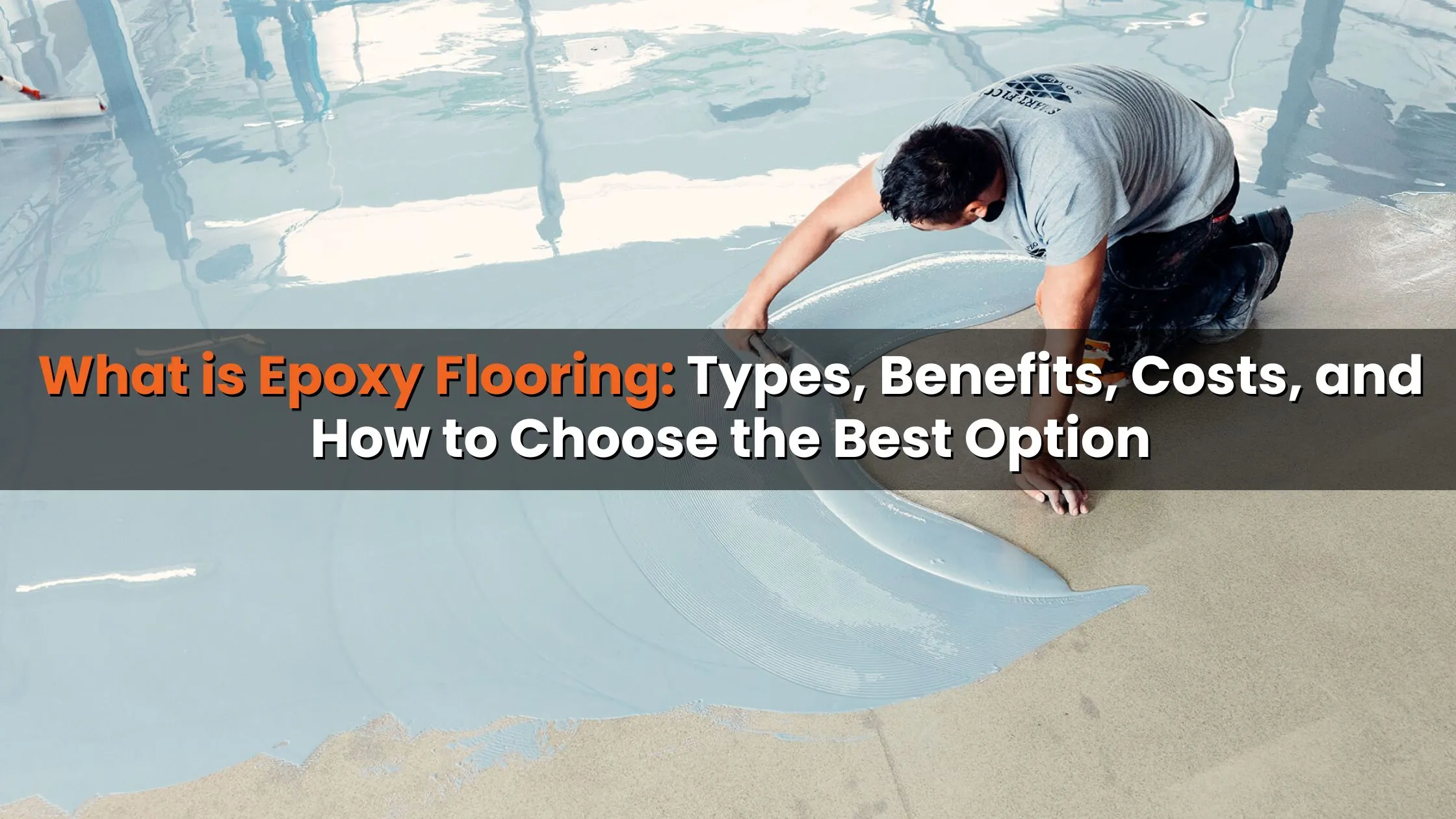
Epoxy flooring is a durable and seamless flooring solution created by combining epoxy resin and a hardener.
- Epoxy Resin: Acts as a binder.
- Hardener: Cures the resin into a solid, resilient surface.
This combination results in a smooth, glossy, and long-lasting floor suitable for residential, commercial, and industrial spaces.
Also Read: Types of Flooring Materials in India: Cost & Guide for Every Home
Why Consider Epoxy Flooring?
Choosing the right floor impacts durability, maintenance, and style. Epoxy flooring offers:
- High Durability: Resists wear, impact, and heavy traffic.
- Low Maintenance: Easy to clean, non-porous surface.
- Aesthetic Appeal: Glossy, metallic, or matte finishes.
- Cost-Effectiveness: Long-lasting flooring reduces replacement costs.
Key Features of Epoxy Flooring
|
Feature |
Description |
Ideal Use |
|
Durability |
Resists scratches, heavy traffic, and impact |
Garages, warehouses |
|
Chemical & Stain Resistance |
Withstands oils, grease, and industrial chemicals |
Labs, industrial floors |
|
Seamless Surface |
No joints or grout lines |
Hospitals, showrooms |
|
Glossy Finish |
Polished, reflective surface |
Residential & commercial interiors |
|
Customizable Design |
Available in colors, patterns, textures |
Modern homes, offices |
Types of Epoxy Flooring
1. Self-Dispersing Epoxy Flooring
Durable, suitable for industrial and warehouse floors.
2. Self-Levelling Epoxy Flooring
Smooth, seamless surface ideal for garages, showrooms, kitchens.
3. Epoxy Mortar Flooring
Epoxy mixed with aggregates; ideal for impact-resistant industrial floors.
4. Quartz-Filled Epoxy Flooring
Slip-resistant and decorative; used in schools, hospitals, and high-traffic areas.
5. Anti-Static Epoxy Flooring
Prevents static electricity; suitable for data centers and labs.
6. Epoxy Flake Flooring
Decorative flakes improve texture and slip resistance, ideal for garages/basements.
7. Epoxy Terrazzo Flooring
Marble or granite chips create low-maintenance and stylish floors for lobbies and corridors.
8. Epoxy Vapour Barrier Flooring
Prevents moisture migration, ideal for basements and garages.
9. Epoxy Gravelled Flooring
Epoxy with gravel for outdoor patios, walkways, and showrooms.
Benefits of Epoxy Flooring
- Durable: Lasts 10–20 years with proper care.
- Chemical Resistant: Ideal for industrial and residential areas.
- Low Maintenance: Easy to clean and stain-resistant.
- Aesthetic Flexibility: Glossy, matte, metallic, or 3D finishes.
- Cost-Effective: Long lifespan reduces replacement costs.
- Slip Resistance: Optional textures improve safety in wet areas.
Disadvantages of Epoxy Flooring
- Complex installation; requires professional prep.
- Slippery when wet unless anti-slip additives are used.
- UV sensitivity may cause discoloration.
- Repairs can be time-consuming and need professional help.
Applications of Epoxy Flooring
|
Area |
Examples |
|
Industrial |
Warehouses, factories, workshops |
|
Commercial |
Retail stores, showrooms, offices |
|
Healthcare & Hospitality |
Hospitals, clinics, commercial kitchens |
|
Residential |
Garages, basements, living rooms |
Factors Affecting Longevity
- Surface Preparation – dust, cracks, or moisture reduces durability.
- Material Quality – higher-grade epoxy lasts longer.
- Traffic Load – heavy foot and vehicle traffic increases wear.
- Chemical Exposure – frequent contact with chemicals degrades the surface.
- Environmental Conditions – humidity and UV exposure affect performance.
- Maintenance – regular cleaning preserves the finish.
Epoxy Flooring Designs for Homes
- Metallic Epoxy: Marbled, shimmering look for living rooms/kitchens.
- Flake Epoxy: Textured, terrazzo-like for garages/basements.
- Solid Colors: Minimalist finishes, neutral or bold.
- 3D Epoxy Designs: Printed visuals under epoxy for dramatic effects.
- Matte/Glossy Finishes: Gloss for luxury, matte for subtle elegance.
How to Choose the Right Epoxy Flooring
|
Type |
Best Use |
|
Two-Part 100% Solids Epoxy |
High-durability areas; professional installation required |
|
Two-Part Water-Based Epoxy |
DIY-friendly; light residential/commercial areas |
|
One-Part Epoxy (Epoxy Paint) |
Simple, light-use floors |
Tips:
- High-traffic areas → self-levelling or quartz-filled epoxy.
- Decorative areas → metallic, flake, or terrazzo epoxy.
- Moisture-prone areas → vapour barrier epoxy.
Epoxy Flooring Cost in India (2026)
|
Type |
Price per sq. ft (₹) |
Example Use |
|
Basic Epoxy |
40 – 100 |
Light-use residential floors |
|
Self-Levelling |
70 – 250 |
Garages, commercial spaces |
|
Quartz-Filled |
100 – 160 |
Hospitals, high-traffic areas |
|
Epoxy Mortar |
180 – 350 |
Industrial floors |
|
Anti-Static |
150 – 400 |
Labs, data centres |
|
Metallic Epoxy |
250 – 500+ |
Showrooms, luxury interiors |
|
Premium/3D Epoxy |
400 – 800+ |
Artistic & custom designs |
Example Budgets
|
Area |
Budget (₹) |
|
Small Room (100 sq. ft) |
8,000 – 40,000 |
|
Garage (250 sq. ft) |
16,000 – 60,000 |
|
Office/Showroom (500 sq. ft) |
60,000 – 2,00,000 |
|
Warehouse (1,000 sq. ft) |
80,000 – 3,00,000+ |
Tip: Prices vary based on design complexity, surface prep, and city location.
Also Read: The Ultimate Guide to Home Flooring Tiles: Types, Top Companies, and Price Comparisons
Installation Timeline
- Small residential areas: 1–3 days
- Large commercial/industrial areas: 3–7 days
Steps: Surface prep → Grinding → Primer → Epoxy application → Curing
Conclusion
Epoxy flooring is a durable, stylish, and low-maintenance solution for homes, offices, and industrial areas. By understanding the types, benefits, costs, and applications, you can make a confident choice that balances aesthetics, durability, and budget.
Whether for a residential garage, office showroom, or industrial warehouse, epoxy flooring is a smart long-term investment that enhances both functionality and style.




Ans 1. Epoxy flooring is a seamless surface created by mixing epoxy resin with a hardener, which chemically reacts to form a strong, rigid, and durable floor. Once cured, it creates a smooth, glossy or matte finish that is resistant to stains, chemicals, moisture, and heavy wear, making it suitable for homes, offices, and industrial spaces.
Ans 2. Yes, epoxy flooring is increasingly popular in residential spaces such as garages, basements, kitchens, and even living rooms. Its durability, modern appearance, ease of cleaning, and variety of design options like metallic and flake finishes make it a practical and stylish choice for homes.
Ans 3. Common types include self-levelling epoxy for smooth finishes, quartz-filled epoxy for slip resistance, epoxy mortar for heavy-duty industrial use, anti-static epoxy for labs and data centres, metallic epoxy for decorative interiors, and vapour barrier epoxy for moisture-prone areas like basements.
Ans 4. With proper surface preparation and regular maintenance, epoxy flooring can last between 10 to 20 years. High-quality materials, controlled moisture levels, and appropriate use based on traffic conditions significantly increase its lifespan.
Ans 5. Epoxy floors can become slippery when wet if left untreated, but this issue is easily managed. Anti-slip additives, quartz aggregates, or flake finishes can be added to improve grip, making epoxy flooring safe for homes, hospitals, commercial kitchens, and industrial spaces.
Ans 6. Epoxy flooring is highly durable, chemical-resistant, easy to maintain, and visually appealing. Its seamless surface prevents dust accumulation and staining, while its long life makes it a cost-effective flooring option over time compared to traditional tiles or concrete.
Ans 7. Epoxy flooring requires professional installation and careful surface preparation, which can increase upfront costs. It is also sensitive to UV exposure, which may cause discoloration in outdoor areas, and repairs can be time-consuming if the surface gets damaged.
Ans 8. Epoxy flooring is widely used in warehouses, factories, garages, showrooms, hospitals, laboratories, retail stores, offices, and residential basements due to its strength, hygiene, and resistance to wear and chemicals.
Ans 9. Epoxy flooring costs in India typically range from ₹40 to ₹800 per square foot, depending on the type, design complexity, surface preparation, and location. Basic residential epoxy is more affordable, while metallic, 3D, or industrial-grade epoxy costs more.
Ans 10. The right epoxy flooring depends on usage and environment. High-traffic or industrial areas need self-levelling or mortar epoxy, decorative spaces benefit from metallic or flake epoxy, and moisture-prone zones require vapour barrier epoxy for long-term durability.
Ans 11. Installation usually takes one to three days for small residential areas and up to a week for larger commercial or industrial spaces. The process includes surface preparation, priming, epoxy application, and curing time.
Ans 12. Epoxy flooring offers better durability, fewer joints, lower maintenance, and greater chemical resistance than tiles or marble. While tiles and marble provide a traditional look, epoxy delivers a modern, seamless finish with better long-term performance in high-use areas.