Table of Content
▲- Why Developers Are Turning to the Insolvency Route
- Insolvency Code Plays a Growing Role in Land Consolidation
- Clear Titles and Faster Execution Attract Developers
- Mumbai Emerges as a Hub for Insolvency Acquisitions
- Conglomerates Use IBC to Build Large Land Banks
- Legal Clarity Boosts Institutional Confidence
- A Structural Shift in Urban Real Estate Strategy
As land availability tightens and competition intensifies across India’s major metropolitan markets, developers and large corporate groups are increasingly turning to the Insolvency and Bankruptcy Code (IBC) to acquire prime urban real estate assets. The corporate insolvency resolution process is emerging as a preferred pathway to secure large land parcels with clear titles, regulatory approvals, and reduced execution risks.
Recent tribunal approvals and high-value acquisitions across cities such as Mumbai, Delhi NCR, and Noida highlight how insolvency-led transactions are reshaping land consolidation strategies in supply-constrained real estate markets.
Why Developers Are Turning to the Insolvency Route
India’s urban real estate market is facing structural constraints. Large, contiguous land parcels in established city locations have become scarce, while traditional land acquisitions are often complicated by fragmented ownership, approval delays, and legal disputes.
In this environment, insolvency-led acquisitions offer a clear advantage. Assets acquired through the bankruptcy process typically come with court-approved resolution plans, ensuring certainty on ownership and shielding buyers from legacy liabilities. This clarity is proving increasingly attractive to institutional developers and well-capitalised buyers.
Insolvency Code Plays a Growing Role in Land Consolidation
Data from the Insolvency and Bankruptcy Board of India (IBBI) underscores the growing relevance of the bankruptcy framework in real estate transactions. By the end of September, more than 8,600 companies had entered insolvency proceedings, of which nearly 1,900 belonged to the real estate sector. Importantly, resolution plans have been received for over 1,470 of these real estate companies.
This trend indicates that insolvency proceedings are no longer confined to debt recovery. Instead, they are facilitating ownership transitions and enabling developers to assemble strategic land banks in high-demand urban locations.
Clear Titles and Faster Execution Attract Developers
Industry experts say the appeal of insolvency-led deals lies in their predictability. Once a resolution plan is approved by the tribunal, execution risks reduce significantly compared to conventional land purchases.
According to Sanjay Daga, MD and CEO of Anex Advisory, developers are willing to commit large capital at the resolution stage because insolvency-acquired projects come with clear titles, regulatory approvals, and no hidden liabilities. This level of certainty is difficult to achieve through traditional land negotiations, especially in congested city markets.
Also Read: India’s REITs Make Up Just 19% of Listed Real Estate, Highlighting Growth Potential
Mumbai Emerges as a Hub for Insolvency Acquisitions
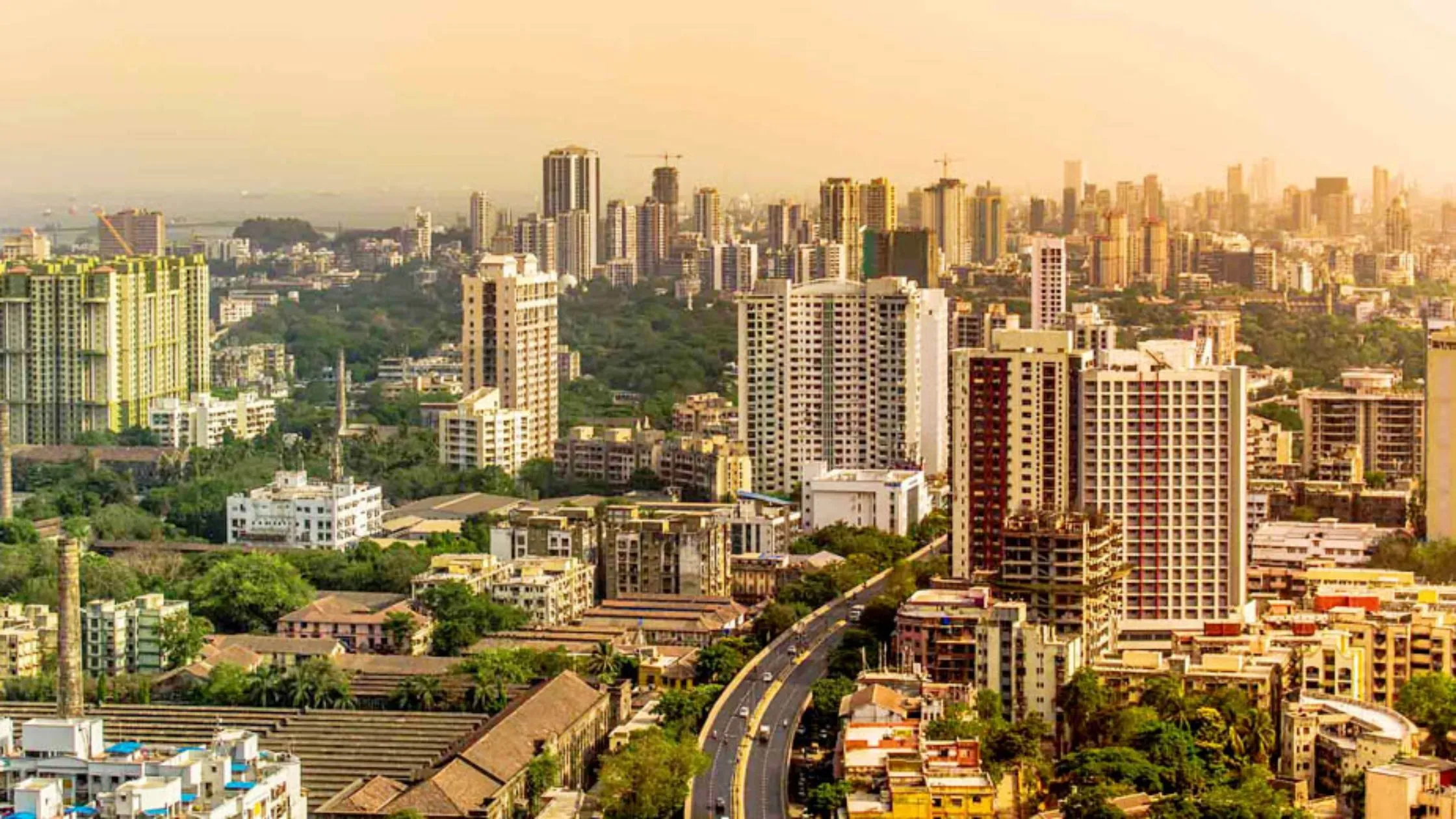
Mumbai has seen a steady flow of insolvency-driven real estate transactions, reflecting the city’s acute land shortage and strong developer appetite for premium locations.
Notable deals include Shree Naman Developers’ acquisition of Neptune Developers, which had admitted liabilities exceeding ₹2,100 crore, and the tribunal-approved takeover of Hotel Horizon by a consortium led by Oberoi Realty. The latter deal involves a prime land parcel in Juhu overlooking the Arabian Sea.
In another case, Oberoi Constructions acquired Nirmal Lifestyle Realty under a structured resolution plan, settling claims of more than ₹700 crore. These transactions demonstrate how insolvency mechanisms are unlocking access to assets that rarely come to market otherwise.
Conglomerates Use IBC to Build Large Land Banks
Large corporate groups are also actively using the insolvency framework to scale their real estate presence. Adani Enterprises recently secured lenders’ approval to acquire Jaiprakash Associates under a resolution plan valued at over ₹14,500 crore, gaining access to nearly 4,000 acres of land across Noida and Greater Noida.
The group has also acquired distressed assets in Mumbai, including a commercial property in Bandra-Kurla Complex and a peripheral land parcel at Kalyan-Shahad. These acquisitions highlight how insolvency-led consolidation is reshaping land ownership patterns across key urban regions.
Legal Clarity Boosts Institutional Confidence
Legal experts note that insolvency-acquired assets are increasingly preferred because they offer “clean” ownership, free from past encumbrances. Developers are prioritising projects with approved layouts, regulatory clearances, and established locations, particularly at a time when housing and commercial demand is seeing renewed momentum.
The insolvency process delivers legal finality that is often missing in traditional land assemblies, making it a powerful tool for institutional investors and listed developers.
A Structural Shift in Urban Real Estate Strategy
The growing reliance on the insolvency framework signals a broader shift in how developers approach land acquisition in India. With land scarcity expected to persist in major cities, insolvency-led deals are likely to remain a key strategy for accessing prime urban assets.
By offering faster execution, reduced legal risk, and greater transparency, the bankruptcy route is emerging as a critical pillar in India’s evolving real estate landscape, enabling developers to navigate land constraints while supporting long-term urban growth.