
Table of Content
▲- What Did the Karnataka Cabinet Approve?
- What Is a Khata and Why Is It Important?
- What Is B-Khata and Why Is It Considered Problematic?
- What Is A-Khata and What Legal Benefits Does It Offer?
- Why Has Karnataka Allowed Karnataka B-Khata to A-Khata Conversion?
- Which Properties Are Eligible Under the New Policy?
- What Changes for Homeowners After Conversion?
- Impact on Bengaluru and Other Urban Local Bodies
- Effect on Property Values, Loans, and Transactions
- Legal and Planning Safeguards Going Forward
- What This Means for Buyers, Sellers, and Investors
- Conclusion
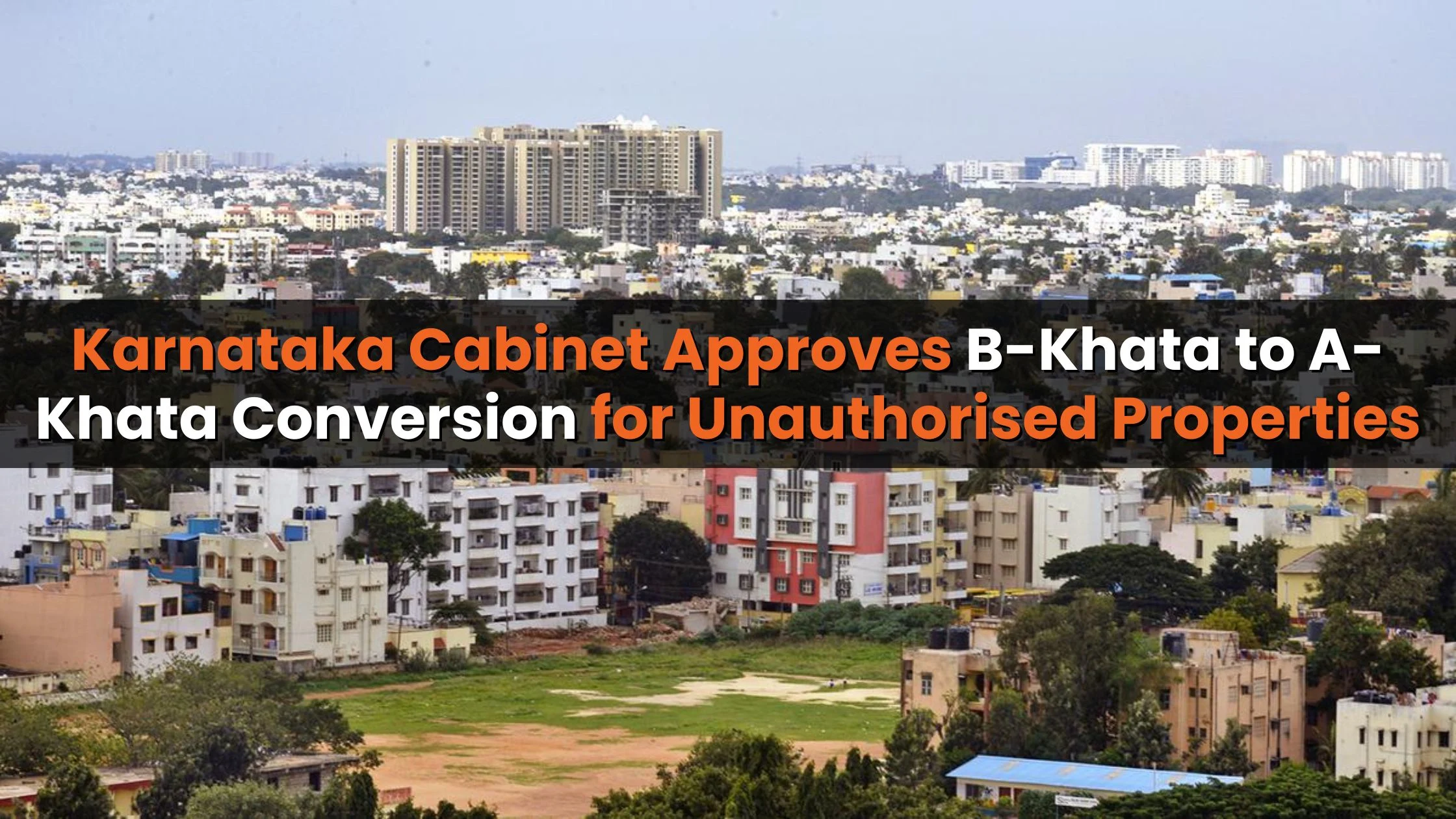
The Karnataka Cabinet’s approval to allow Karnataka B-khata to A-khata conversion marks a major shift in the state’s urban property policy. The decision enables properties located in unauthorised layouts but falling within urban local body limits to gain legal recognition through A-khata certification. For thousands of homeowners, this move promises improved legal clarity, access to loans, smoother transactions, and better long-term property value.
What Did the Karnataka Cabinet Approve?
The Karnataka government has cleared a policy that allows Karnataka B-khata to A-khata conversion for properties developed in layouts that were not formally approved at the time of construction. The decision applies to:
- Individual buildings
- Apartments and flats
- Residential units within urban local body jurisdictions
Law and Parliamentary Affairs Minister H.K. Patil confirmed that this is a policy decision, not a one-time relief, and is not currently stayed by any court.
Also Read: India’s Real Estate Sector Raises Rs 17,867 Crore via Capital Markets in FY26 YTD
What Is a Khata and Why Is It Important?
A khata is an official property account maintained by municipal authorities in Karnataka. It records key details such as:
- Property size and location
- Ownership details
- Tax assessment
A khata is essential for:
- Paying property tax
- Registering property transactions
- Applying for building approvals and trade licences
Without a valid khata, owners face legal and financial limitations.
What Is B-Khata and Why Is It Considered Problematic?
B-khata properties are recorded for tax purposes but lack full legal compliance. These typically include:
- Properties in unauthorised layouts
- Buildings without approved plans
- Constructions lacking occupancy certificates
While owners must pay taxes, B-khata properties are not fully legal.
Key Limitations of B-Khata Properties
- Difficulty in selling or transferring ownership
- Limited access to bank loans
- Restrictions on redevelopment or expansion
- Lower market value compared to compliant properties
This is why the Karnataka B-khata to A-khata conversion has been a long-standing demand.
What Is A-Khata and What Legal Benefits Does It Offer?
An A-khata is issued only to properties that fully comply with planning and building regulations. These properties enjoy:
- Clear legal status
- Eligibility for home loans
- Unrestricted sale and registration
- Approval for redevelopment or commercial use
A-khata properties are considered the safest form of urban real estate ownership in Karnataka.
Why Has Karnataka Allowed Karnataka B-Khata to A-Khata Conversion?
Unplanned urban growth over the past two decades led to lakhs of properties being classified under B-khata. According to the state government, continuing to ignore these properties would:
- Freeze large portions of the urban housing stock
- Reduce municipal revenue
- Increase legal disputes
By permitting Karnataka B-khata to A-khata conversion, the government aims to regulate existing housing while preventing future violations.
Which Properties Are Eligible Under the New Policy?
The policy applies only to properties that meet specific criteria:
|
Eligibility Condition |
Status |
|
Located within urban local bodies |
Yes |
|
Used for residential purposes |
Yes |
|
Built before the cut-off date |
Yes |
|
Properties created after Sept 30, 2024 |
No |
The Greater Bengaluru Governance Act prohibits issuing B-khata for unauthorised properties created after the cut-off date.
What Changes for Homeowners After Conversion?
Once a property undergoes Karnataka B-khata to A-khata conversion, owners can expect:
- Legal recognition of ownership
- Improved resale prospects
- Eligibility for bank finance
- Ability to redevelop or renovate with approvals
This conversion also reduces the risk of future penalties or legal action.
Impact on Bengaluru and Other Urban Local Bodies
Bengaluru is expected to be the biggest beneficiary, given the high concentration of B-khata properties in peripheral and fast-growing areas. Other urban centres such as Mysuru, Hubballi-Dharwad, and Mangaluru will also benefit.
Municipal bodies are likely to see:
- Higher tax compliance
- Increased registration activity
- Better urban planning control
Effect on Property Values, Loans, and Transactions
Real estate experts say the Karnataka B-khata to A-khata conversion could lead to:
- 10–25% improvement in property values
- Increased housing loan approvals
- Faster transactions and registrations
Banks typically prefer A-khata properties, making financing easier and cheaper for homeowners.
Also Read: Indian Real Estate Sees 16% Dip in Foreign Investment at $3.65 Billion
Legal and Planning Safeguards Going Forward
The state government has clarified that this move does not encourage illegal construction. Stricter enforcement under town planning laws will continue, and no fresh unauthorised layouts will be regularised.
The policy aims to clean up legacy issues while preventing future misuse.
What This Means for Buyers, Sellers, and Investors
For buyers, A-khata conversion reduces legal risk. For sellers, it improves liquidity. For investors, it opens up previously restricted housing stock in urban Karnataka.
However, due diligence remains critical, especially to confirm eligibility under the policy.
Conclusion
The Karnataka Cabinet’s decision to allow Karnataka B-khata to A-khata conversion is a landmark reform that balances urban reality with regulatory discipline. By legalising existing housing while tightening future controls, the state has taken a pragmatic step towards improving property governance, boosting homeowner confidence, and stabilising urban real estate markets.




Ans 1. The Karnataka B-Khata to A-Khata conversion is a policy approved by the state government that allows properties recorded under B-Khata, often in unauthorised layouts, to gain full legal recognition as A-Khata properties, provided they meet specific eligibility criteria.
Ans 2. A khata is an official property account maintained by municipal authorities. It records ownership, property size, and tax details, and is necessary for paying property tax, registering property transactions, applying for building approvals, and obtaining trade licences.
Ans 3. B-Khata properties are recorded for tax purposes but lack full legal compliance, which limits resale, financing, and redevelopment options. A-Khata properties fully comply with planning regulations and offer clear legal status, eligibility for loans, unrestricted sale, and redevelopment approvals.
Ans 4. Properties eligible for conversion must be located within urban local body limits, used for residential purposes, and built before September 30, 2024. Properties created after this cut-off date are not eligible under the new policy.
Ans 5. Homeowners who convert their B-Khata property to A-Khata gain legal recognition, better resale value, eligibility for bank loans, and the ability to redevelop or renovate with proper approvals, reducing the risk of future penalties or legal complications.
Ans 6. Bengaluru, with its high concentration of B-Khata properties in peripheral and fast-growing areas, is expected to benefit the most. Other urban centres such as Mysuru, Hubballi-Dharwad, and Mangaluru will also see improvements in property legalisation, transactions, and tax compliance.
Ans 7. Experts predict that A-Khata conversion could increase property values by 10–25%, improve housing loan approvals, and speed up property registrations and transactions, making financing easier and more secure for homeowners.
Ans 8. No. The government has clarified that the policy addresses legacy B-Khata properties and does not encourage new unauthorised construction. Future enforcement under town planning laws will remain strict to prevent misuse.
Ans 9. For buyers, the conversion reduces legal risk. For sellers, it improves liquidity and marketability. For investors, it opens up previously restricted residential stock, but due diligence is essential to confirm eligibility and compliance under the policy.
Ans 10. The B-Khata to A-Khata conversion balances urban reality with regulatory discipline by legalising existing housing while tightening future controls, improving property governance, boosting homeowner confidence, and stabilising Karnataka’s urban real estate markets.