
✦ AI Summary
Table of Content
▲- The bigger picture for Mumbai real estate
- Why is redevelopment attracting investors in Mumbai?
- What does the fund mean for Mumbai's housing supply?
- What does it mean for Mumbai homebuyers?
- Could redevelopment change established Mumbai neighbourhoods?
- What does this mean for Mumbai property investors?
A six-year fund structure also fits the longer timeline associated with residential projects. Investors need to wait while projects move through planning, approvals, construction and sales.
The targeted 20%–25% gross IRR suggests the fund is seeking a relatively high return profile, but actual performance will depend on the projects selected and how effectively they are executed.
The bigger picture for Mumbai real estate
Mumbai's redevelopment cycle is becoming increasingly important to the city's housing story.
As vacant land becomes harder to find in established locations, existing residential land becomes an important source of future housing supply.
The ₹2,000 crore fund reflects that reality.
For developers, it brings another potential source of capital. For housing societies, it points to greater availability of institutional funding for redevelopment opportunities. For buyers, the eventual impact will depend on whether these investments translate into completed homes.
The announcement is therefore less about an immediate change in property prices and more about where Mumbai's next wave of residential supply may come from.Mumbai's housing market is attracting another large pool of institutional money, but this time the focus is as much on redevelopment as new residential construction.
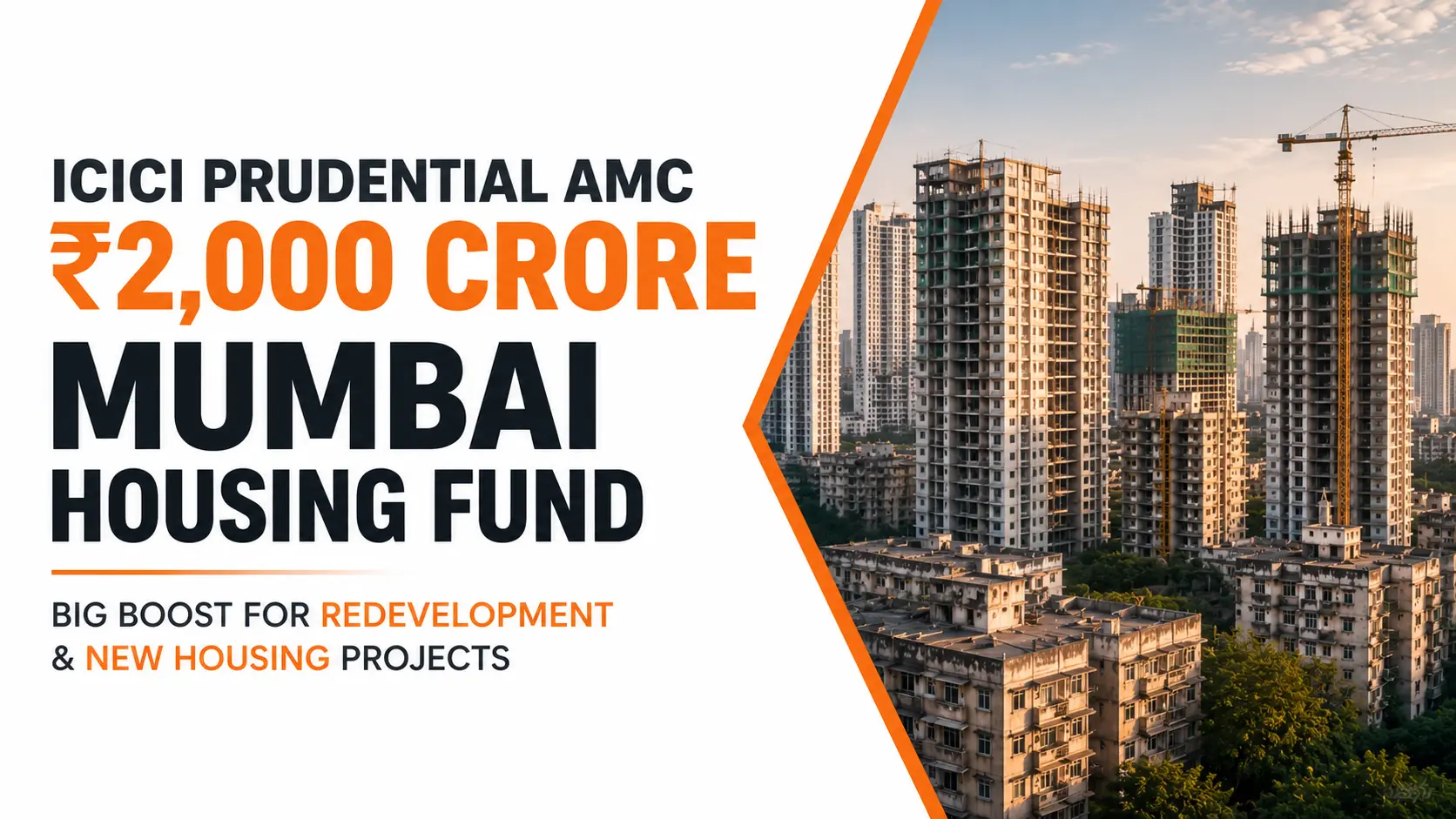
ICICI Prudential Asset Management Company is raising a ₹2,000 crore residential development fund focused on the Mumbai Metropolitan Region (MMR). The fund will look at residential development and society redevelopment in established parts of the region, where redevelopment has become an important source of new housing.
The fund is being structured as a Category II Alternative Investment Fund (AIF). It will have a six-year tenure and is targeting a gross annual internal rate of return of 20% to 25%. The announced corpus includes a ₹1,000 crore green-shoe option, which would allow the fund to raise additional capital if demand from investors is strong.
Why is redevelopment attracting investors in Mumbai?
Mumbai has a basic problem that is difficult to solve through conventional land development: there is limited availability of vacant land in many established residential locations.
That makes redevelopment an important route for adding housing. Mumbai's redevelopment market is already seeing strong activity across several established locations.
Older societies can be reconstructed on existing plots, allowing developers to create newer buildings in neighbourhoods that already have roads, transport links, schools, markets and other infrastructure.
The financing requirement also begins well before a project starts generating sales. Society payouts, transit accommodation, premiums and approvals can require substantial capital before construction finance becomes available. Industry data cited by Economic Times shows that more than 1,100 society-level redevelopment agreements were recorded in Mumbai between 2020 and 2025, covering around 432 acres.
That helps explain why dedicated institutional funding is becoming relevant to the redevelopment cycle.
Key details of the fund
|
Fund detail |
Announcement |
|
Target corpus |
₹2,000 crore |
|
Green-shoe option |
₹1,000 crore |
|
Focus |
Residential development and society redevelopment |
|
Geography |
Mumbai Metropolitan Region |
|
Structure |
Category II AIF |
|
Tenure |
Six years |
|
Target gross IRR |
20%–25% |
The return figure is a target for the fund and not a guaranteed return for investors. Real estate projects can face approval delays, construction risks, cost increases and changes in market conditions.
What does the fund mean for Mumbai's housing supply?
The immediate effect will not be visible in the form of new homes hitting the market.
A redevelopment project can take considerable time to move from due diligence and agreements to approvals, construction and possession. The new capital therefore needs to be viewed as financing for the pipeline rather than an instant increase in housing supply.
Over a longer period, however, institutional capital can help projects that might otherwise struggle to secure sufficient early-stage funding. This comes as Mumbai prepares for a much larger redevelopment pipeline, with thousands of new homes expected through redevelopment.
Read About : Mumbai Redevelopment to Add More than 44,000 Homes Worth ₹1.3 Lakh Crore by 2030
That matters in Mumbai because redevelopment projects often involve several financial commitments before construction progresses at full pace.
If more projects receive funding and eventually reach completion, the benefit could be an increase in the supply of modern housing in established neighbourhoods.
What does it mean for Mumbai homebuyers?
For homebuyers, the fund is more of a medium-term market development than an immediate price signal.
A larger flow of capital into residential projects could support new supply, but it does not automatically mean property prices will fall or rise.
Prices will continue to depend on factors such as location, connectivity, project quality, demand and the availability of competing homes.
Buyers considering redevelopment projects should also look beyond the developer's brand.
The project's approvals, development agreement, construction schedule, RERA registration where applicable and possession commitments can all matter when assessing the risk of a property purchase.
Could redevelopment change established Mumbai neighbourhoods?
It already is.
Redevelopment allows older structures to be replaced without moving residential activity to a completely new part of the city.
For residents, the attraction can include newer buildings, better layouts, improved infrastructure and modern amenities. For developers, the opportunity comes from unlocking the development potential of land that is already located in established areas.The scale of this opportunity is also visible in MHADA's redevelopment plans.
But redevelopment is rarely straightforward.
Society negotiations, approvals, temporary accommodation and construction timelines can all affect how quickly a project moves.
Institutional capital can solve one part of the problem- funding- but it cannot remove every regulatory or execution risk.
What does this mean for Mumbai property investors?
The fund is another indication that institutional investors continue to see opportunities in Mumbai's residential market.
The interesting part is the focus on development and redevelopment rather than simply completed properties.


Ans 1. ICICI Prudential Asset Management Company is raising a ₹2,000 crore fund focused on residential development and society redevelopment in the Mumbai Metropolitan Region. It is structured as a Category II Alternative Investment Fund and has a six-year tenure.
Ans 2. Mumbai has limited availability of large vacant land parcels in established areas, making redevelopment an important source of new housing. The fund is looking to participate in this redevelopment cycle as well as conventional residential development.
Ans 3. The fund has a target size of ₹2,000 crore, including a ₹1,000 crore green-shoe option. The additional option allows the fund to raise more capital if investor demand is strong.
Ans 4. A green-shoe option simply gives a fund the ability to accept additional investment beyond its initial target size. In this case, the ₹2,000 crore fund can potentially raise another ₹1,000 crore if the green-shoe option is fully exercised.
Ans 5. Not necessarily. The fund could eventually support additional housing supply, but property prices depend on several factors, including location, demand, construction costs and available inventory. The investment should therefore not be treated as a direct signal that Mumbai home prices will fall.
Ans 6. It could support more redevelopment projects by providing institutional capital, but funding alone does not guarantee that a project will move ahead quickly. Society approvals, developer agreements, permissions, construction and market conditions can still affect the timeline.
Ans 7. The impact is likely to be gradual. If funded projects move successfully from planning to construction and completion, buyers could eventually see more newly developed homes in established Mumbai locations. For buyers, however, the individual project's approvals, RERA status, developer track record and possession timeline remain more important than the fund itself.