
✦ AI Summary
Table of Content
▲- What Is a CIBIL Score?
- Why Your CIBIL Score Matters for a Home Loan
- Factors That Affect Your CIBIL Score
-
10 Smart Ways to Improve Your CIBIL Score
- 1. Pay All Outstanding Dues Immediately
- 2. Reduce Your Credit Card Utilisation
- 3. Check Your CIBIL Report for Errors
- 4. Avoid Applying for Multiple Loans
- 5. Continue Paying EMIs on Time
- 6. Don't Close Your Old Credit Cards
- 7. Avoid Becoming a Loan Guarantor
- 8. Maintain a Healthy Credit Mix
- 9. Avoid Large Purchases Before Applying
- 10. Build Consistent Financial Discipline
- 30-Day CIBIL Score Improvement Checklist
- Mistakes That Can Lower Your CIBIL Score
- Can Your CIBIL Score Improve in 30 Days?
- Tips Before Applying for a Home Loan
- Conclusion
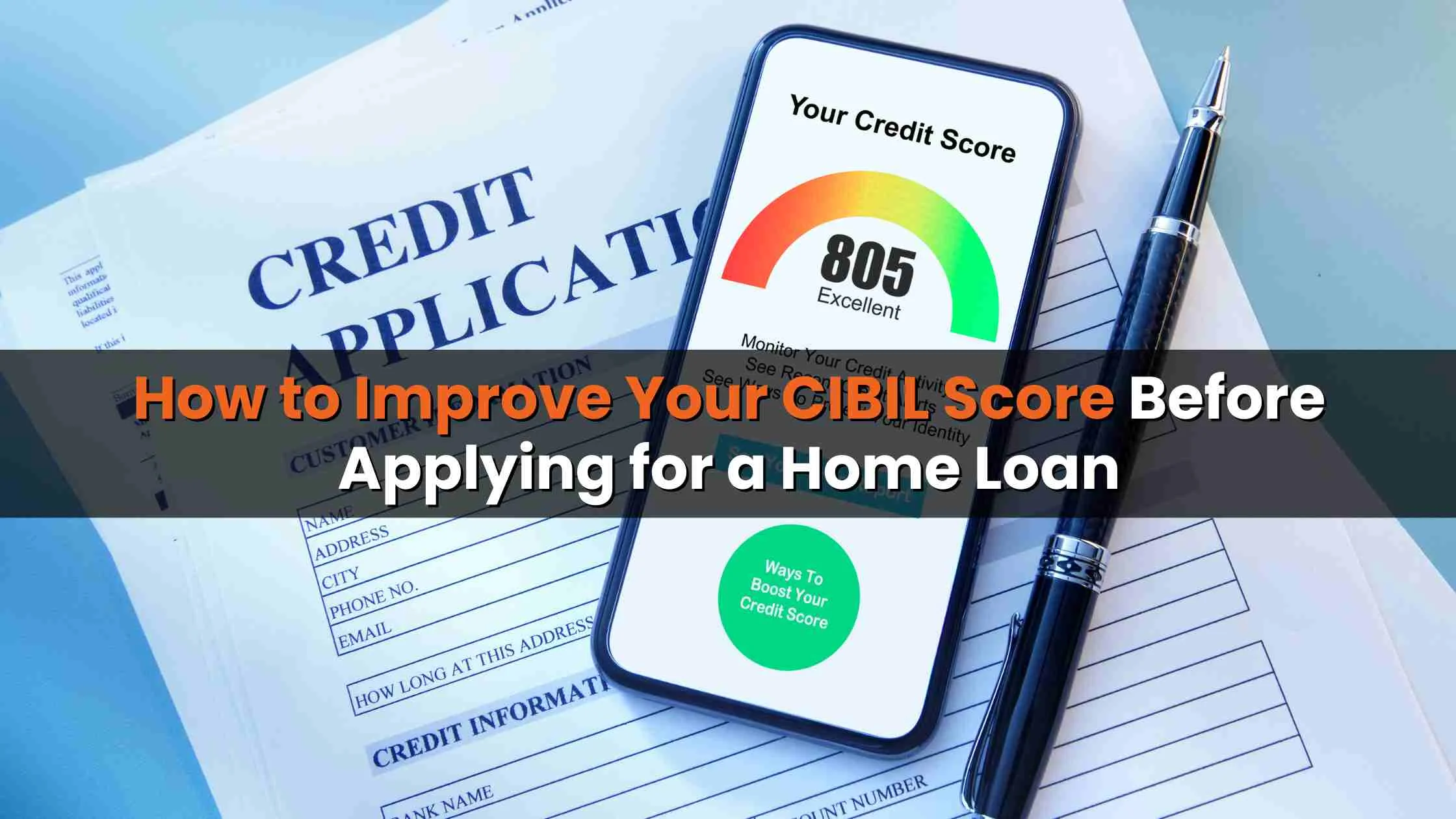
When you apply for a home loan, lenders usually check your CIBIL score first. A good credit score increases your chance of getting a loan and lowers the interest rates you pay. Although it takes time to build a good score, here are a few things you can do to improve your score in 30 days or less before applying for a home loan. This guide explains how to get a better CIBIL score within 30 days, how your score is determined, and how to develop good habits of money management to get an advantageous loan.
What Is a CIBIL Score?
A CIBIL score is a number that ranges between 300 to 900, which has been formed by TransUnion CIBIL, the oldest credit bureau in India. The score has been derived from an individual's record of borrowing and repayment. The CIBIL score, which indicates how a person has handled credit in the past, is used by lenders to process home loan applications quickly and efficiently.
|
CIBIL Score |
Meaning |
Home Loan Approval Chances |
|
750–900 |
Excellent |
Very High |
|
700–749 |
Good |
High |
|
650–699 |
Fair |
Moderate |
|
550–649 |
Low |
Limited |
|
Below 550 |
Poor |
Very Difficult |
Most banks prefer borrowers with a score of 750 or above for home loans.
Why Your CIBIL Score Matters for a Home Loan
A strong credit score can help you:
- Get faster loan approval
- Receive lower home loan interest rates
- Qualify for a higher loan amount
- Enjoy flexible repayment options
- Improve your bargaining power with lenders
Even a small increase in your score before applying can make a noticeable difference.
Also Read: Missed Your Home Loan EMI: How to Avoid ECS Penalties and Save Your CIBIL
Factors That Affect Your CIBIL Score
Before getting into specific improvement tactics, understanding what drives your score helps you prioritise where to focus.
Payment history is the largest single factor in how consistently you've paid EMIs and credit card bills on time across all your credit accounts over your entire borrowing history. One missed payment doesn't destroy a good score, but a pattern of late payments significantly depresses it, and the impact persists for years.
Credit utilisation is how much of your available credit card limit you're using at any given time. Using 80% of your limit regularly signals credit dependence; staying below 30% signals comfortable financial management. This factor is also one of the most immediately changeable, which is why it's central to a 30-day improvement strategy.
Credit history length, the age of your oldest credit account and the average age across all accounts matters because longer histories provide more data for lenders to assess your reliability. Older accounts contribute positively; closing them removes their positive contribution.
Credit mix refers to the variety of credit types you've managed home loans, auto loans, personal loans, credit cards. A mixture suggests broader financial management experience, while relying entirely on one type (typically unsecured credit cards) is somewhat less positively viewed.
Recent enquiries every time you apply for any credit product, the lender makes a "hard inquiry" on your CIBIL report, which is visible to other lenders and can slightly reduce your score. Multiple applications within a short window send a signal of financial stress that lenders read negatively.
10 Smart Ways to Improve Your CIBIL Score
1. Pay All Outstanding Dues Immediately
The quickest way to improve your credit profile is to clear overdue EMIs and unpaid credit card bills.
Prioritise:
- Credit card payments
- Personal loan EMIs
- Consumer loan dues
- Auto loan instalments
Even paying overdue amounts before applying for a home loan creates a positive impression.
2. Reduce Your Credit Card Utilisation
Experts recommend keeping credit utilisation below 30% of your available credit limit.
For example:
|
Credit Limit |
Ideal Monthly Usage |
|
₹1,00,000 |
Below ₹30,000 |
|
₹2,00,000 |
Below ₹60,000 |
|
₹5,00,000 |
Below ₹1,50,000 |
Paying down balances before the billing cycle closes may help improve your reported utilisation.
3. Check Your CIBIL Report for Errors
Sometimes your credit report may contain mistakes such as:
- Incorrect loan balances
- Closed loans marked as active
- Wrong payment status
- Duplicate accounts
- Incorrect personal information
Dispute any inaccuracies immediately with the credit bureau, as correcting errors can positively affect your score.
4. Avoid Applying for Multiple Loans
Every loan or credit card application results in a hard inquiry. Too many enquiries within a short period may signal financial stress to lenders.
Instead:
- Apply only after comparing lenders
- Avoid unnecessary credit card applications
- Focus on improving your existing credit profile first
5. Continue Paying EMIs on Time
Never miss an EMI during the month before applying for a home loan. Even one missed payment can reduce your score and remain on your credit history for years. Setting automatic payments can help avoid delays.
6. Don't Close Your Old Credit Cards
Many people think closing old credit cards improves their score.
In reality, older accounts:
- Increase average credit age
- Improve credit history
- Maintain a higher available credit limit
Unless there is a compelling reason, keep older cards active with minimal usage.
7. Avoid Becoming a Loan Guarantor
If someone defaults on a loan where you are the guarantor or co-borrower, your credit score may also suffer. Until your home loan is approved, avoid taking on new financial responsibilities linked to someone else's borrowing.
8. Maintain a Healthy Credit Mix
Banks like borrowers who have responsibly managed different types of credit.
Examples include:
- Home loans
- Vehicle loans
- Education loans
- Credit cards
A balanced mix often appears more stable than relying entirely on unsecured borrowing.
9. Avoid Large Purchases Before Applying
Avoid financing expensive items shortly before your home loan application.
Examples include:
- New car loans
- Personal loans
- Consumer durable financing
- Buy Now Pay Later schemes
Keeping your debt obligations low improves your debt-to-income ratio.
10. Build Consistent Financial Discipline
Even within 30 days, consistent behaviour matters.
Follow these habits:
- Pay bills before due dates
- Keep sufficient bank balance
- Monitor spending
- Avoid unnecessary borrowing
- Track your credit report regularly
Banks evaluate overall financial responsibility, not just your credit score.
Also Read: How Much Home Loan Can I Get on a ₹1 Lakh Monthly Salary?
30-Day CIBIL Score Improvement Checklist
Here's how to structure the four weeks before your application:
|
Week |
Priority Actions |
|
Week 1 |
Download CIBIL report, identify all errors and overdue accounts. File disputes for errors. Clear overdue credit card bills and EMIs immediately. |
|
Week 2 |
Reduce credit card balances below 30% of limits. Stop all new credit applications and card enquiries. Review guarantor obligations. |
|
Week 3 |
Maintain timely EMI payments through automatic instructions. Follow up on dispute resolutions with CIBIL. Continue keeping card usage low. |
|
Week 4 |
Review updated credit profile for any score changes. Organise income documents and bank statements. Avoid any major financial decisions. Compare lenders and prepare applications. |
Mistakes That Can Lower Your CIBIL Score
Several common behaviours actively work against your CIBIL score improvement, and avoiding them matters as much as taking the positive steps.
- Missing EMI payments
- Paying only minimum credit card dues repeatedly
- Maxing out credit card limits
- Applying for multiple loans simultaneously
- Ignoring report errors
- Frequently closing old credit cards
- Defaulting on co-signed loans
These habits can delay home loan approval or result in higher borrowing costs.
Can Your CIBIL Score Improve in 30 Days?
Yes, but only if your score is affected by factors that can be corrected quickly.
Examples include:
- Paying overdue balances
- Reducing outstanding credit card usage
- Correcting reporting errors
- Clearing missed payments
- Lowering recent credit utilisation
Major improvements from long-term defaults or poor repayment history usually require several months of disciplined credit management.
Tips Before Applying for a Home Loan
Before submitting your application:
- Check your latest CIBIL score.
- Clear outstanding dues.
- Keep your credit utilisation low.
- Avoid fresh loan applications.
- Maintain regular income records.
- Organise all financial documents.
- Compare lenders before applying.
A well-prepared application improves both approval chances and loan terms.
Conclusion
Improving your CIBIL score in a month would not change things from a low credit history perspective, but at least it could enhance your financial profile enough to raise your home loan application chances. Making timely payments, bringing down credit card utilization ratio, ensuring that your report does not contain mistakes, and refraining from taking on new debt are just a number of steps that could prove beneficial.
If you combine that with steady income and a sensible borrowing approach, you’ll be able to approach your lenders more confidently and increase your chances of getting a home loan on favorable terms.





Ans 1. Most banks and housing finance companies in India prefer a CIBIL score of 750 or above for home loan approval, as this range is considered excellent and qualifies borrowers for the most competitive interest rates. Scores between 700 and 749 are generally considered good and typically still result in approval, though possibly at slightly higher rates. Scores between 650 and 699 may lead to approval with more stringent conditions. Scores below 650 significantly reduce approval chances, and scores below 550 make home loan approval very difficult with most institutional lenders.
Ans 2. The timeline for improving a CIBIL score depends on why the score is low in the first place. Factors that can improve relatively quickly within one to two reporting cycles, typically 30 to 60 days include clearing overdue balances, reducing credit card utilisation, and correcting errors through the dispute process. Factors that improve more slowly include recovering from a history of chronic late payments, resolving settled accounts, or rebuilding after a default; these typically require 6 to 18 months of sustained responsible credit behaviour before meaningful score improvement occurs.
Ans 3. No. When you check your own CIBIL score, it's classified as a "soft inquiry" and does not affect your score. Only "hard inquiries" which occur when a bank or lender pulls your report in response to a credit application can affect your score, and even these have a minor impact individually. You should regularly check your own credit report to monitor for errors and track your score, and doing so has no negative consequence.
Ans 4. Credit utilisation, the percentage of your available credit card limit that you're using a significant factor in your CIBIL score calculation. High utilisation, particularly above 50% to 60% of your limit, signals credit dependence and can reduce your score. Keeping utilisation below 30% is the recommended target for optimal score impact. Paying down card balances before your statement date, so that the lower balance is what gets reported to CIBIL, is the most effective way to reduce utilisation quickly.
Ans 5. Yes, errors in your CIBIL report can be disputed and corrected. Common errors include closed accounts shown as active, incorrect outstanding balances, wrong payment statuses, and duplicate account entries. You can raise a dispute through CIBIL's official online dispute mechanism, and you should also contact the concerned lender directly to request a correction at their end. Disputes that are valid typically resolve within 30 days, and the corrected information is updated in your CIBIL report in the subsequent reporting cycle. Correcting significant errors can produce meaningful score improvement.
Ans 6. Closing old credit cards typically hurts your CIBIL score rather than helping it. Old credit accounts serve two positive functions: they increase the average age of your credit history, which is a positive scoring factor, and they maintain a higher total available credit limit, which keeps your credit utilisation ratio lower at any given spending level. Closing old cards removes both these benefits simultaneously. Unless an old card has an annual fee that outweighs its credit profile benefit or there's a specific security concern, it's generally better to keep old cards open with minimal occasional usage.
Ans 7. The improvement achievable in 30 days depends on what's suppressing the score. Applicants who clear significant overdue balances can see score improvements of 20 to 50 points in a reporting cycle. Those who correct errors through the dispute process can see improvements of similar or larger magnitude. Reducing credit card utilisation from a high level to below 30% can also produce measurable improvement within one to two billing cycles. However, applicants whose scores are low due to a long history of late payments, defaults, or settlements should expect improvement to take six months or more of sustained responsible credit behaviour rather than 30 days.
Ans 8. Yes, applying to multiple lenders for home loans within a short period creates multiple hard enquiries on your CIBIL report, which can collectively reduce your score and signal financial stress to lenders who review your full report. Each individual hard enquiry has a relatively small direct impact, but the pattern of multiple recent enquiries is read negatively by credit evaluators. The recommended approach is to compare lenders thoroughly before applying and submit to the most suitable one or two lenders rather than applying simultaneously to many lenders to see who approves first.
Ans 9. Most banks assess home loan eligibility partly on the basis of how much of your gross monthly income is already committed to existing loan EMIs. As a general guideline, lenders prefer that total monthly EMI obligations, including the proposed home loan EMI, don't exceed 40% to 50% of gross monthly income. Keeping your existing debt obligations low before applying for a home loan therefore directly improves both your CIBIL score profile and your calculated home loan eligibility. Avoid taking on new credit or financing large purchases in the months before applying.
Ans 10. Yes, significantly. If you are a guarantor or co-borrower on someone else's loan, the repayment behaviour of the primary borrower is reflected on your CIBIL report as well as theirs. A default or late payment on a loan you've guaranteed is recorded as a negative entry on your credit profile even though you haven't personally borrowed or spent the money. Before applying for your home loan, review all guarantor obligations you hold and ensure that any loans you've co-signed or guaranteed are in good standing.