
✦ AI Summary
Table of Content
▲
A jhula isn't just another piece of furniture to place the moment it starts swinging, it's placing repeated, dynamic stress on whatever it's anchored to, which is genuinely different from the static load a shelf or cabinet places on a wall. Getting the mounting decision right matters more here than for almost any other furniture choice, before size and material even come into it.
Stand or Ceiling-Hung? Start Here
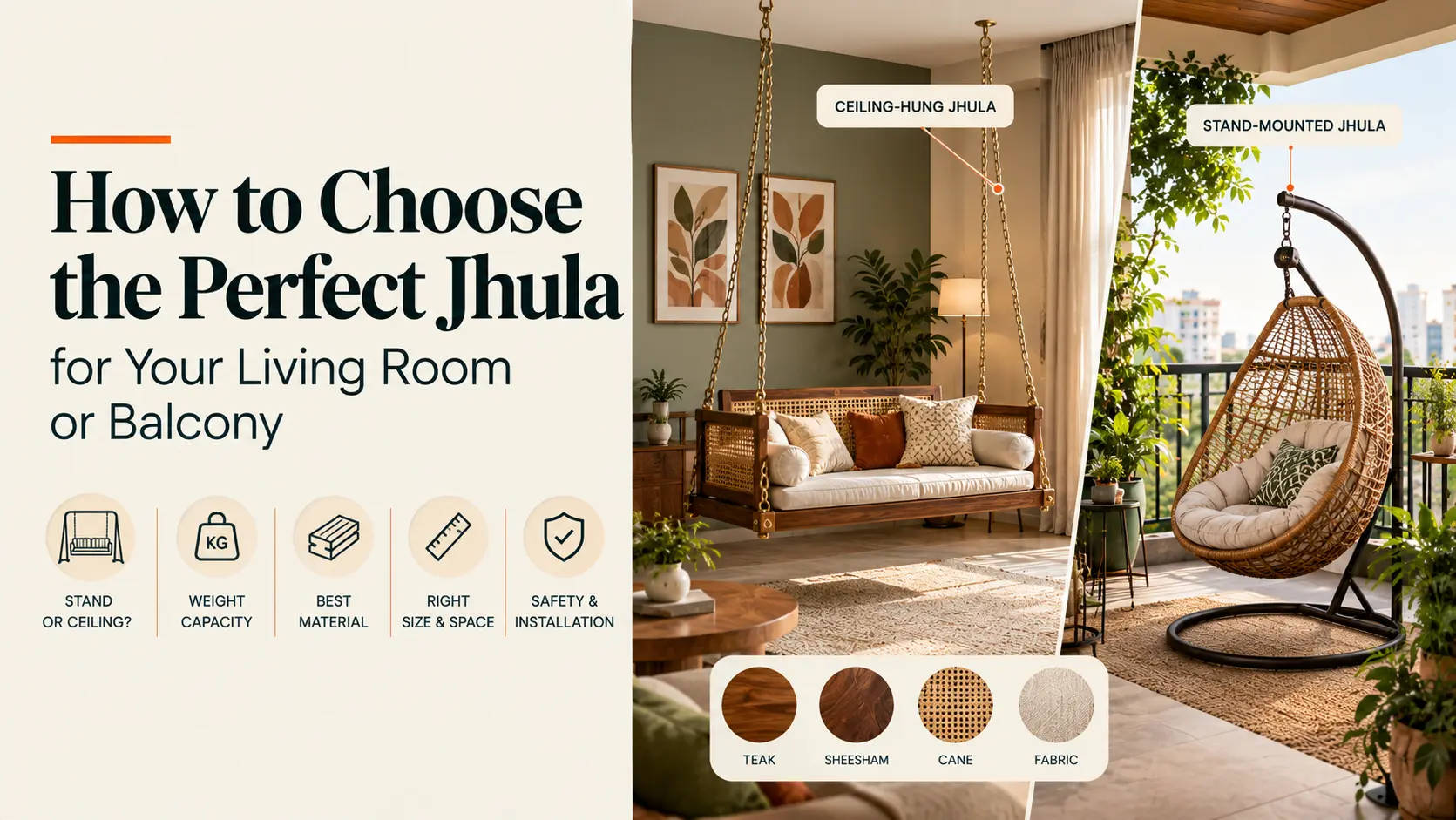
This is the first, most consequential decision. A stand-mounted jhula needs no installation at all; it comes with its own frame, works in a rented home without any drilling or landlord approval, and can be moved around if you rearrange the room or relocate. A ceiling-hung jhula needs a solid slab or structural beam to anchor into, and rewards you with a genuine floating look and more open floor space beneath it, but only makes sense if you own the home and have confirmed a proper structural anchor point exists where you want to hang it.If you're renting, cannot drill, or simply want the flexibility to move the swing later, a stand is the straightforward, lower-risk choice.
.jpg)
If You're Ceiling-Mounting, Check This First
This is worth being explicit about, since it's the one safety point most jhula buying content doesn't state clearly. A swing in motion doesn't apply a fixed, static weight to its anchor point the way a stationary fixture does; the repeated swaying motion creates dynamic, cyclical stress that's genuinely more demanding on the anchor over time than the same person's static weight would be. This is exactly why a ceiling-hung jhula needs to be anchored into a genuine structural beam or reinforced concrete slab, not a false ceiling or a weak point in the structure, and why the hardware (hooks, chains, brackets) should be rated with real margin above the expected combined weight, not right at the limit.
If you're at all unsure whether your ceiling has a suitable structural anchor point, this is worth confirming with a contractor before installation, exactly the same caution that applies to mounting a heavy chandelier or ceiling fan, where the same structural principle applies.
The same structural principle applies when installing other heavy ceiling fixtures. Our guide to chandelier and pendant lighting ideas for homes explains why heavy fixtures should be anchored to the structural RCC slab rather than the false-ceiling framework.
Sizing and Weight Capacity
For a balcony swing specifically, leave roughly 60 to 75 cm of clearance on each side for the swing's sway, and check that a parapet or railing doesn't sit in its path before finalising the spot.
Weight capacity figures vary somewhat by source and construction; a hand-woven cane swing chair is commonly cited as comfortably holding a single adult in the 100 to 120 kg range, with some wooden jhula designs rated higher, up to roughly 150 kg. If two people will regularly share the swing, size up to a larger jhula and, critically, confirm the ceiling anchor or stand is rated for the combined weight, not just a single occupant's.
Before finalising the position, also check your balcony grill design and ensure the swing does not interfere with the railing, access path or existing safety features.
Choosing the Right Material for Your Space
Teak handles rain and open-air moisture considerably better than most alternatives, making it the sensible choice for a genuinely open, weather-exposed balcony. Sheesham is a durable, popular choice for a covered balcony or indoor living room, where it won't face direct rain exposure. Cane swing chairs are lighter and often more affordable, well suited to a covered balcony or indoor space, but should be kept away from prolonged damp conditions, since cane doesn't handle sustained moisture as well as teak.
Whatever material you choose, keep cushions and any fabric elements away from rain and long periods of damp weather regardless even a weather-resistant frame doesn't protect fabric left out through the monsoon.
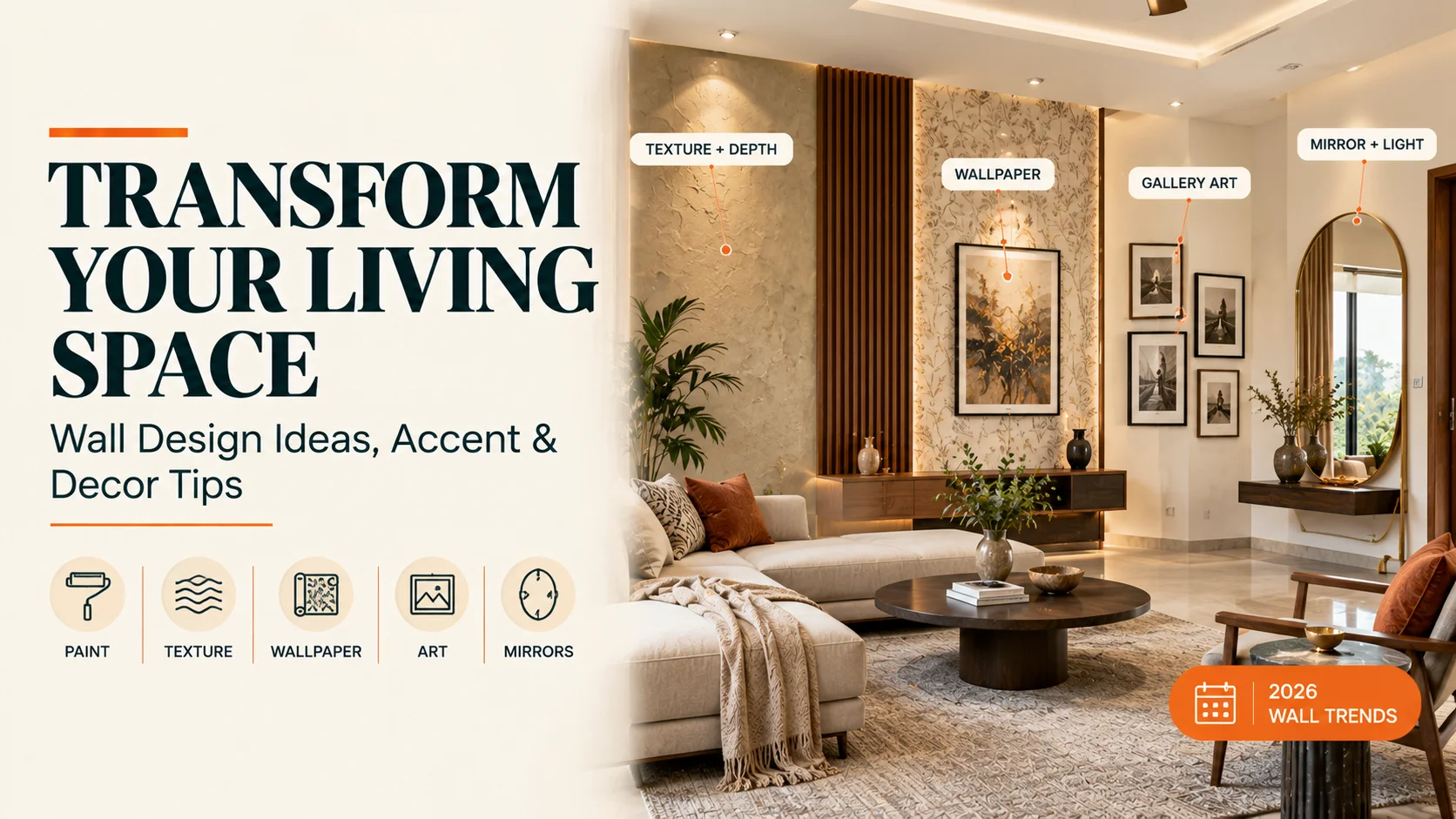
If you're incorporating a swing into your living room, see these trending living room themes for 2026 for ideas on balancing the jhula with the room's overall colour, furniture and decor.
What Does a Good Jhula Cost?
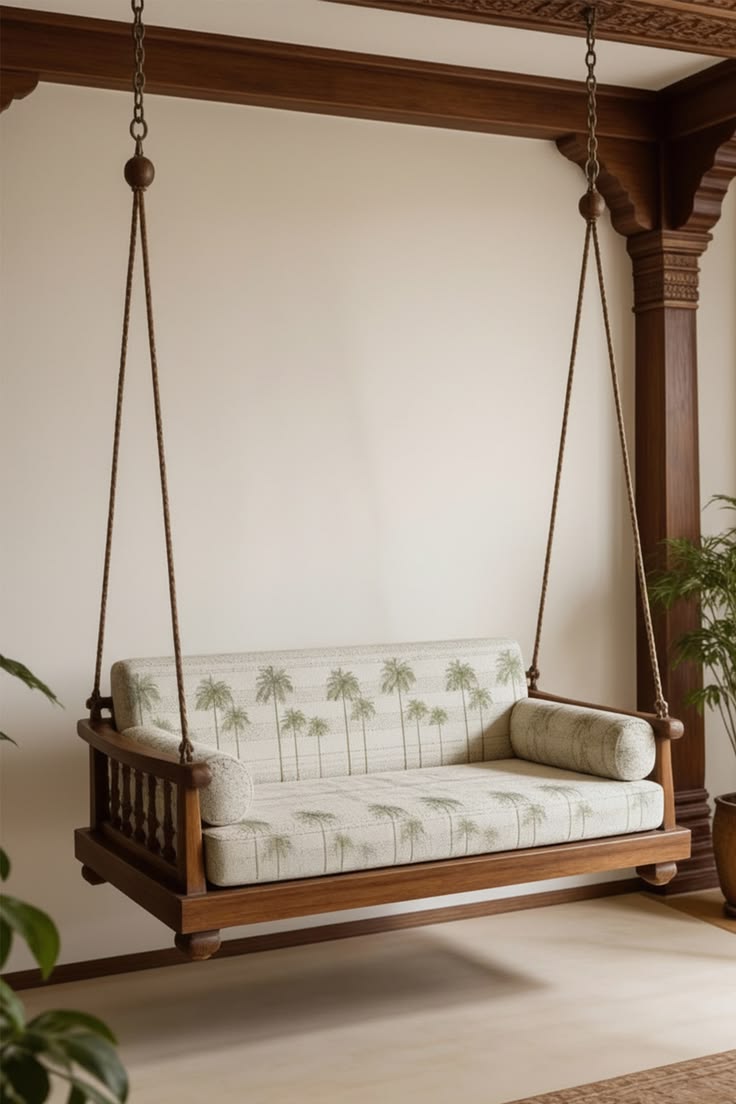
A good handcrafted cane jhula, the most accessible option, typically runs roughly ₹13,000-19,000 in India, varying with size, design, and whether a stand is included. Solid wood options in teak or sheesham, particularly larger or more elaborately carved designs, run meaningfully higher pricing in the ₹29,000-57,000+ range is common for substantial hand-carved wooden swings from specialist makers. Material choice is consistently the single biggest driver of price across this range, more than design complexity or brand.







Ans 1. Choose a stand if you're renting, can't drill, or want the flexibility to move the swing later it needs no installation. Choose ceiling-hung only if you own the home and have a confirmed solid slab or beam to anchor into.
Ans 2. Only if it's anchored into a genuine structural beam or reinforced concrete slab, not a false ceiling. A swing's motion creates dynamic, repeated stress on its anchor point, more demanding than a static weight of the same size, so this needs confirming before installation, ideally with a contractor.
Ans 3. A single-seat cane swing chair is commonly rated for 100-120 kg, with some wooden designs rated higher, up to roughly 150 kg. For two people sharing, size up and confirm the anchor or stand is rated for the combined weight.
Ans 4. Teak handles rain and open-air moisture best, making it the sensible choice for an open, weather-exposed balcony. Sheesham and cane suit a covered balcony or indoor living room well but should be kept from prolonged damp conditions.
Ans 5. Roughly 60-75 cm on each side for the swing's sway, and check that a parapet or railing doesn't sit in its swinging path.
Ans 6. A handcrafted cane jhula typically runs ₹13,000-19,000. Solid wood teak or sheesham designs, especially larger or elaborately carved ones, commonly run ₹29,000-57,000 or more.
Ans 7. Jhulas work well indoors; the idea that they're outdoor-only is a common misconception. A living room jhula is a popular, comfortable addition, and the same stand-versus-ceiling-hung and weight-capacity considerations apply indoors as they do outside.