
✦ AI Summary
Table of Content
▲- How did the project get stuck?
- Why did the Supreme Court intervene?
- How much of the project is complete?
- What does the development mean for homebuyers?
- Why this case matters beyond Crossings Republik
- What should buyers check before buying a delayed project?
- Could this affect Crossings Republik property?
- What happens now?
For nearly two decades, homebuyers in an Ansal housing project near Crossings Republik have been waiting for their homes. The project, launched around 2007-08, ran into financial trouble and later became entangled in insolvency proceedings.
Regulatory approvals added another hurdle.
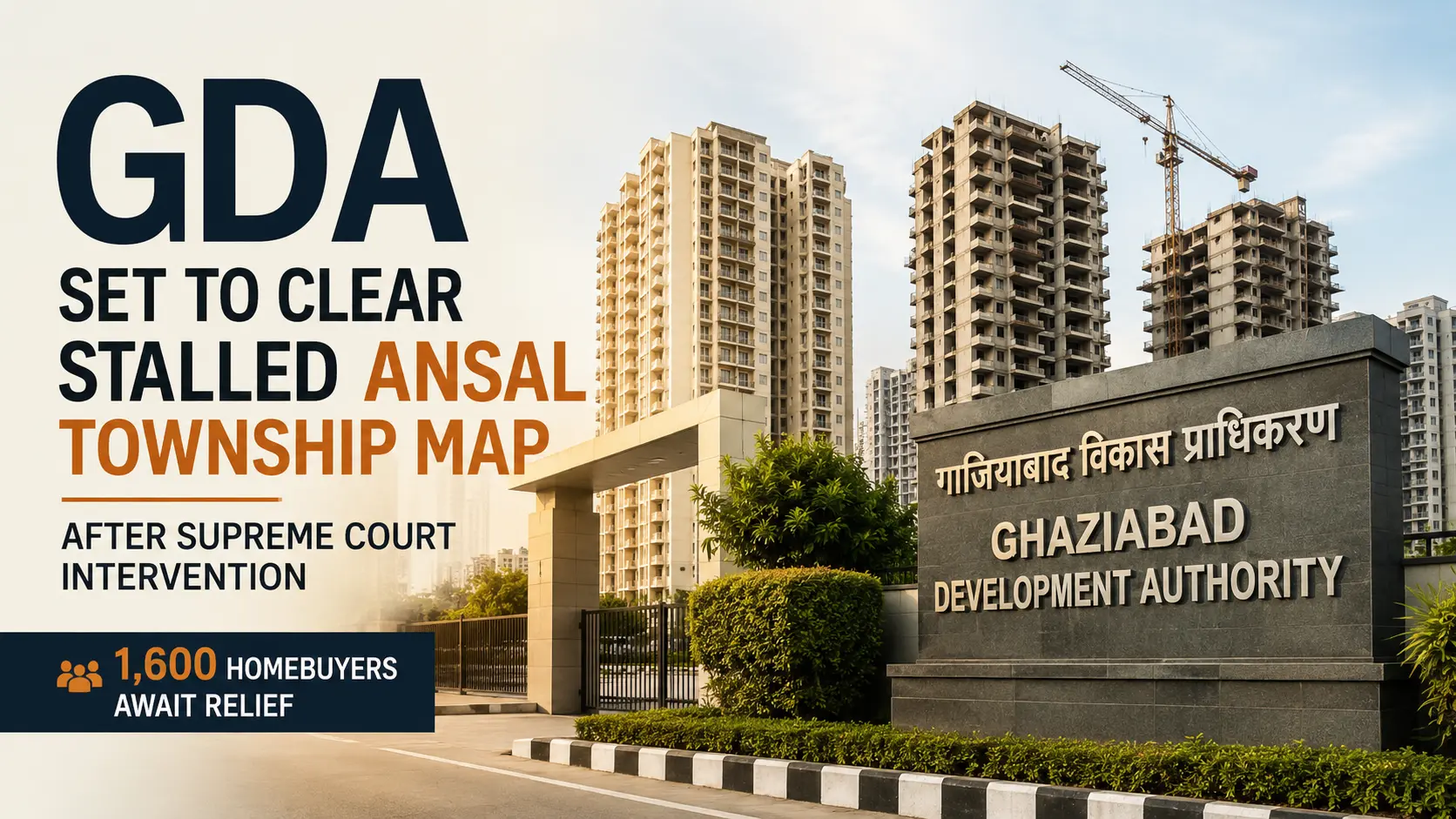
Now, there is a possible way forward. The Ghaziabad Development Authority (GDA) is expected to take up the long-pending layout plan of the township following intervention by the Supreme Court.
The project involves around 1,600 homebuyers.
For them, the development is important. But it is not the same as getting possession. The project still has considerable construction work ahead.
How did the project get stuck?
The township was developed by Ansal Urban Condominiums Pvt Ltd and was launched nearly 20 years ago.
Over time, financial difficulties affected the project. The developer subsequently went through insolvency proceedings, and a resolution process was initiated to find a way to complete the development.
One City Infrastructure Pvt Ltd emerged as the successful resolution applicant.
That, however, did not immediately get the project moving.
Some of the approvals required to implement the resolution plan were still pending with the development authority. These included the renewal of the development licence and approval of revised building plans.
So while there was a proposed route for the project's revival, the regulatory pieces were not yet in place.
That is where the dispute remained for years.
Why did the Supreme Court intervene?
The prolonged delay eventually reached the Supreme Court.
During proceedings in July, the court questioned the delay in dealing with the approvals required for the project's resolution plan. It directed the relevant authorities to examine the pending matters and take a decision.
The intervention appears to have pushed the approval process forward.
The GDA board is now expected to consider the township's layout plan.
For the project, this could remove an important regulatory roadblock.
It is worth making one distinction, though: approval of the layout does not mean the project is ready for possession.
How much of the project is complete?
There is still substantial work to be done.
The township covers around 26 acres and was planned with 18 towers. Reports indicate that only four towers have been completed so far.
That gives some idea of the scale of the task ahead.
For buyers who booked homes when the project was launched, another approval may feel like only one more step in a very long process. What they ultimately need is visible construction activity and a credible completion schedule.
The next phase will therefore be closely watched by the existing allottees.
What does the development mean for homebuyers?
After years of uncertainty, buyers now have a clearer indication that the project has a route towards revival.
But they should not assume that possession is around the corner.
The pace of construction will depend on several things, including the completion of regulatory formalities, funding and implementation of the approved resolution plan.
The eventual possession timeline will also depend on how much construction and infrastructure work remains. For buyers considering an unfinished or under-construction property, it is also worth checking the additional documents and approvals required for such purchases.
For someone who has already waited years, these details matter more than a revised announcement date.
Why this case matters beyond Crossings Republik
The Ansal project is another example of how complicated a housing project can become when developer finances, insolvency proceedings and regulatory approvals collide.
For a buyer, these problems are not always visible when a project is launched.
A brochure may show a planned township, amenities and a possession date. Years later, however, the developer's financial position may change, or approvals may become disputed.
The buyer remains stuck in between.
That is why the history of a project deserves attention, particularly when purchasing an older development or a project that has already faced delays. For buyers still comparing projects, a step-by-step home-buying approach can also help separate a good location from a property that carries avoidable risks.
What should buyers check before buying a delayed project?
RERA is an obvious starting point, but it should not be the only one.
A buyer should check the project's current RERA registration, construction status and declared completion timeline. Before proceeding, buyers can also check the project's RERA details using its registration number and compare the approved information with what is being offered. The sanctioned plans and development approvals should also be examined.
If the developer has gone through insolvency proceedings, it is worth understanding who is now responsible for completing the project and what the resolution plan provides.
Some of the important checks include:
- Current RERA registration and extensions
- Sanctioned building plans
- Development licence
- Construction status
- Revised completion date
- Details of the current developer or resolution applicant
- Pending litigation
- Land and title documents. Buyers should also understand the property registration process and documents involved before completing a transaction.
- Outstanding dues or encumbrances
- Possession terms
The important point is to check the current position, not simply rely on what was promised when the project was first marketed.
Could this affect Crossings Republik property?
The immediate impact is likely toA buyer should check the project's current RERA registration, construction status and declared completion timeline remain limited to the project and its existing buyers.
Crossings Republik, however, is already a sizable residential market serving buyers looking towards Ghaziabad, Noida and Greater Noida.
A stalled project of this size can weigh on buyer confidence, particularly when construction remains incomplete for years.
If the Ansal project eventually resumes and reaches completion, it could provide some confidence that even long-delayed developments can be revived.
It would be too early, though, to suggest that the GDA decision will push property prices across Ghaziabad higher.
Local prices will continue to depend on factors such as connectivity, new supply, employment centres, project quality and buyer demand.
What happens now?
The GDA's proposed approval is an important step. It is not the end of the project.
The real test will begin once the regulatory clearance is in place.
Homebuyers will be looking for three things: construction to restart, work to progress consistently and a realistic possession timeline.
For people who have been waiting since the project's early years, that is the measure that will matter.
The case also offers a lesson to new homebuyers.
A well-known developer or an attractive location cannot compensate for unresolved approvals or financial problems. Before booking a property, buyers need to look at the project's RERA status, approvals, development history and legal position.
For the Ansal township near Crossings Republik, the long wait may finally be entering a different phase.
The paperwork is moving.
Now buyers will be watching to see whether the construction does too.



Ans 1. The project faced financial difficulties and later became part of insolvency proceedings. Pending approvals from the development authority further delayed efforts to restart the development.
Ans 2. Around 1,600 homebuyers are linked to the stalled project.
Ans 3. The project is located near Crossings Republik in Ghaziabad, an established residential area connected to the wider NCR market.
Ans 4. No. The approval is only one step. Construction, infrastructure work and other regulatory requirements still need to be completed before possession.
Ans 5. Check the property's RERA registration, sanctioned plans, development approvals, construction status, litigation history and the developer's current legal and financial position.