
Table of Content
▲
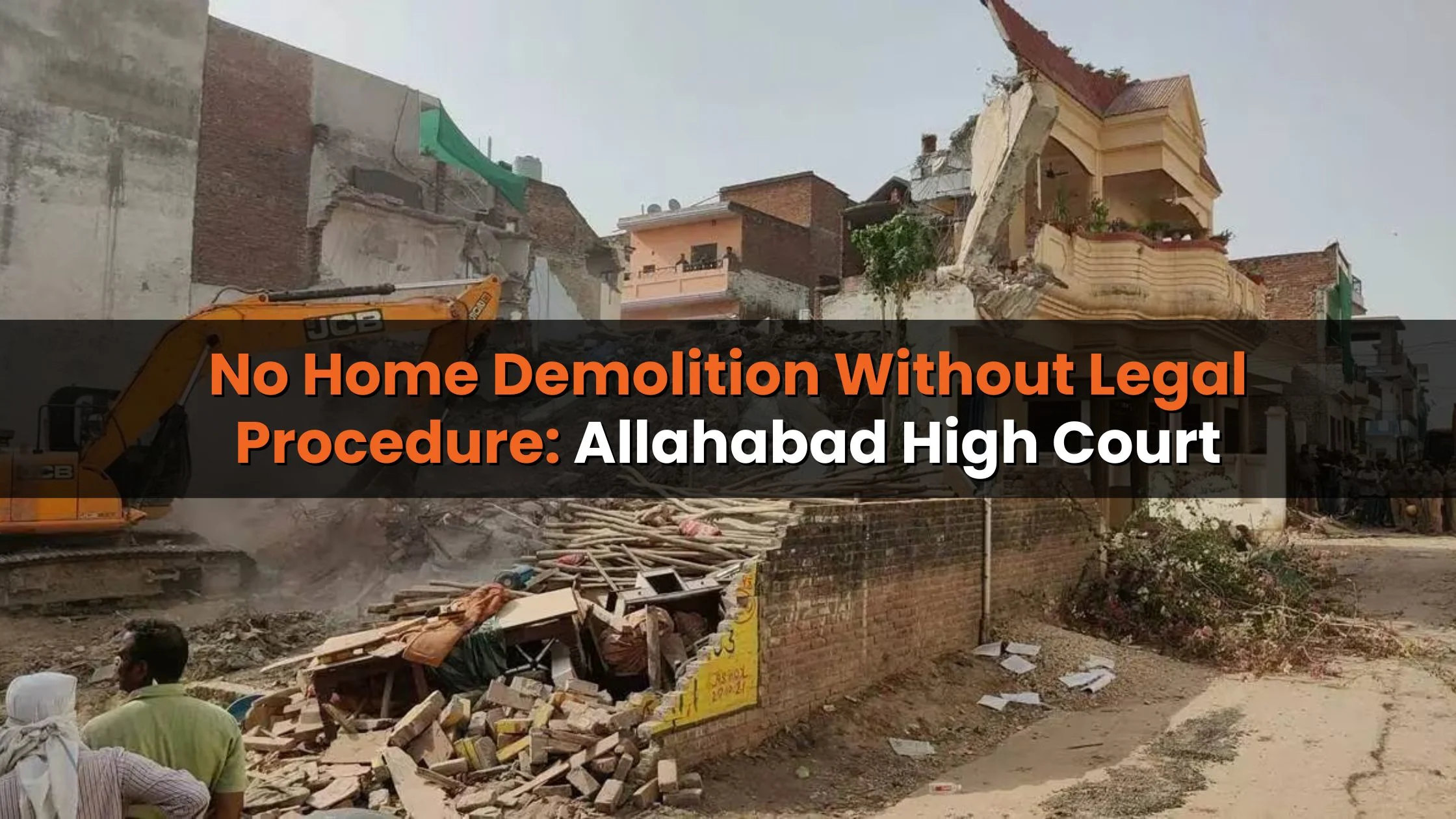
Demolitions are among the most stressful events a homeowner can face. Recently, residents of Shahabad in Bareilly received notices that their homes were illegal and could be demolished. While these notices sparked fear, the Allahabad High Court stepped in to ensure that house demolition rules are followed and no home is destroyed without due process. This case underscores the legal safeguards homeowners have under Indian law and highlights why knowing house demolition rules is crucial for every property owner.
The Allahabad High Court Case: Key Facts
In Bareilly's Shahabad area, 27 houses in Prem Nagar were issued demolition notices in October 2025. The residents, who had been paying municipal taxes for years, argued that their homes could not be deemed illegal overnight.
The Allahabad High Court, in a landmark order, stayed the demolition and directed civic authorities not to take any coercive action until a final decision was made. The bench of Justices Ajit Kumar and Satyavir Singh laid down clear instructions:
- Each petitioner must file an individual reply within four weeks.
- The civic authorities must issue a reasoned, speaking order within two months after granting a personal hearing.
- No demolition is allowed for three months or until the final order, whichever is earlier.
This intervention highlights that even when authorities issue notices, homeowners are protected under house demolition rules that guarantee due process.
Also Read: Karnataka RERA Warns Builders: Insure Common Areas or Bear Disaster Repair Costs
Why Due Process is Crucial
Due process ensures that homeowners are given fair treatment before any action is taken against their property. This includes:
- Receiving proper notice about the proposed demolition.
- Having an opportunity to respond or present objections.
- Ensuring authorities issue a reasoned order after considering all submissions.
The HC’s order reiterates that no home can be demolished arbitrarily. House demolition rules are designed to prevent forced evictions and protect the fundamental rights of property owners.
Background of Demolition Notices in Bareilly
The notices in Shahabad came in the wake of the September 26 protests near Islamia Grounds. Municipal authorities claimed that the homes were built illegally and ordered residents to vacate. However, homeowners pointed out that they had been paying taxes for years, signaling recognition by the Bareilly Municipal Corporation.
Interestingly, a similar direction was issued by the Supreme Court concerning the demolition of ‘Aiwan-e-Farhat’, a marriage hall in Bareilly, reinforcing the principle that demolitions cannot proceed without judicial oversight.
Legal Guidelines on House Demolition Rules in India
Under Indian law, municipal authorities must adhere to specific house demolition rules before taking action:
- A valid notice must be issued to the homeowner, detailing the alleged violation.
- Homeowners should have adequate time to respond and present evidence or objections.
- Demolition orders must be reasoned and legally justified.
- Authorities cannot bypass statutory procedures, and any demolition without compliance is illegal.
Several precedents, including the Allahabad HC and Supreme Court rulings, reinforce that authorities cannot exercise arbitrary power, ensuring homeowners' rights are protected.
Also Read: Supreme Court Rules: No GST on Leasing Residential Properties for Student Hostels
Practical Implications for Homeowners
For homeowners, the Bareilly case offers several lessons:
- Always respond promptly to any municipal notice.
- Keep records of property taxes, ownership documents, and any communication with authorities.
- Seek legal assistance immediately if faced with a demolition notice.
- Understanding house demolition rules empowers residents to safeguard their property and prevent unlawful eviction.
Being aware of these rules not only protects your home but also ensures authorities act fairly and transparently.
Conclusion
The Allahabad High Court’s intervention in Bareilly is a clear reminder that no home can be demolished without due process. Proper adherence to house demolition rules protects homeowners from arbitrary action and ensures fairness in property governance. By knowing their rights and responding appropriately to notices, homeowners can safeguard their property while authorities fulfill their obligations under the law.



Ans 1. No. Under Indian law, authorities cannot demolish any home arbitrarily. They must follow house demolition rules, issue proper notices, and provide homeowners an opportunity to respond before taking action.
Ans 2. The court stayed the demolition of 27 homes in Shahabad, Bareilly, directing authorities not to take any coercive action until a final order is passed, ensuring due process and personal hearings for each homeowner.
Ans 3. Homeowners have the right to receive a valid notice, file a reply, present objections or evidence, and ensure that any demolition order issued is reasoned, lawful, and based on proper procedure.
Ans 4. Demolition is stayed for three months or until the final order is issued, whichever is earlier, providing homeowners time to respond and authorities to complete the due process.
Ans 5. Homeowners should promptly respond to the notice, maintain records of property taxes and ownership documents, and seek legal assistance to safeguard their rights.
Ans 6. Yes. Regular payment of municipal taxes can serve as evidence of lawful occupancy and recognition by local authorities, strengthening the homeowner’s case against arbitrary demolition.
Ans 7. Authorities must issue a detailed notice, allow homeowners to respond, conduct a personal hearing, and issue a reasoned, legally justified order. Skipping these steps makes the demolition unlawful.
Ans 8. Yes. The Supreme Court has reinforced that no property can be demolished without judicial oversight, including cases like the ‘Aiwan-e-Farhat’ marriage hall in Bareilly.
Ans 9. Due process ensures fairness, transparency, and protection of fundamental property rights, preventing arbitrary eviction and unlawful destruction of homes.
Ans 10. Understanding the rules empowers homeowners to respond effectively, safeguard their property, challenge unlawful notices, and ensure authorities act within the law.