
✦ AI Summary
Table of Content
▲- Why Is Staircase Vastu Important?
-
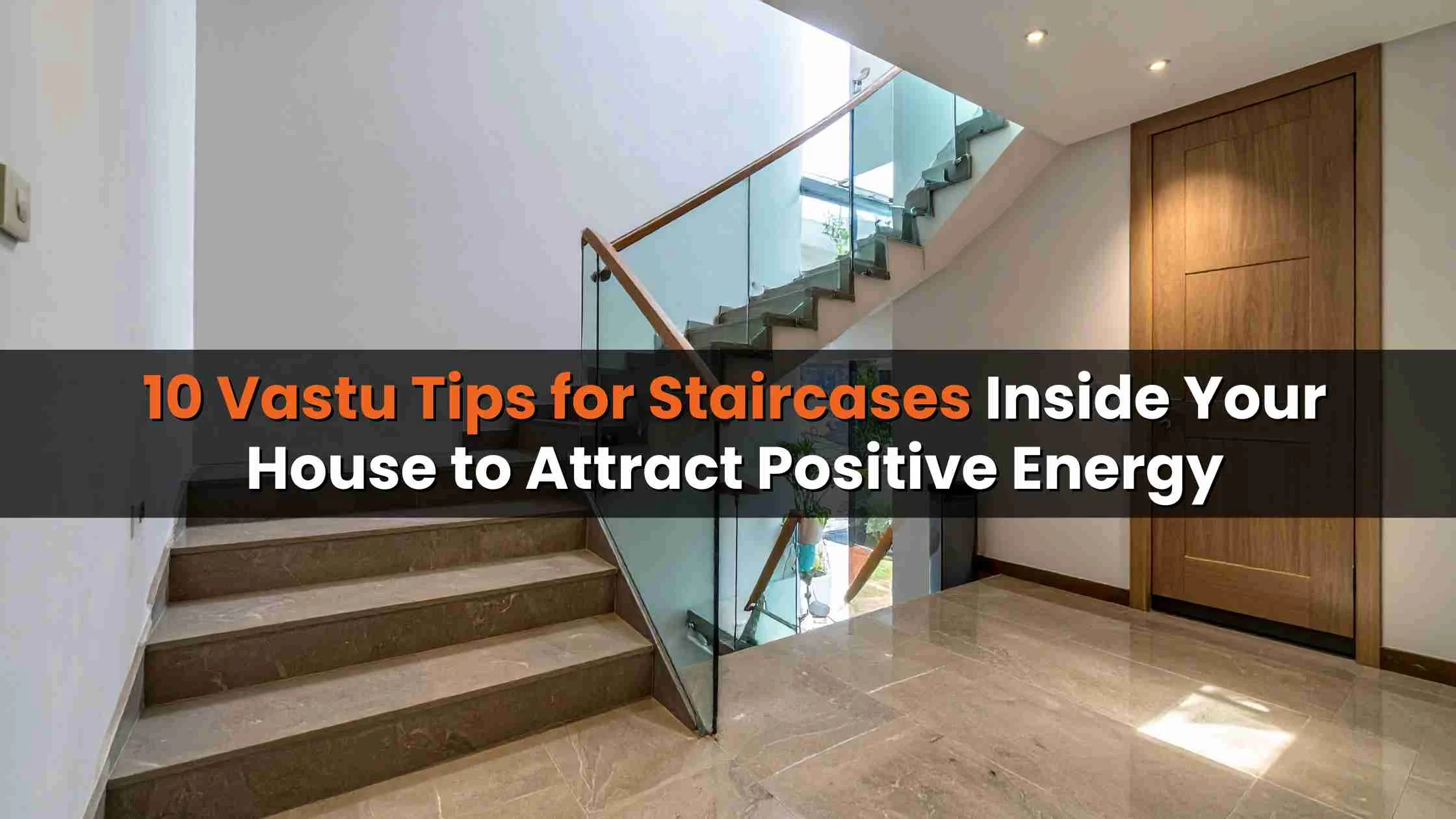
10 Vastu Tips for Staircases Inside Your House
- 1. Choose the Right Direction
- 2. Always Build the Staircase Clockwise
- 3. Keep the Centre of the House Open
- 4. Avoid Staircases in the North-East
- 5. Keep the Area Under the Staircase Clean
- 6. Use Strong and Durable Materials
- 7. Select Light and Pleasant Colours
- 8. Maintain Proper Lighting
- 9. Avoid Broken or Uneven Steps
- 10. Install a Strong Handrail
- Staircase Vastu Dos and Don'ts
- Best Staircase Shapes According to Vastu
- Common Staircase Vastu Mistakes
- Modern Homes and Staircase Vastu
- Conclusion
Creating a calming and balanced home is not only about the choice of the appropriate furniture and paint colors. According to the Vastu Shastra theory, all the different spaces in the house contribute to forming specific patterns of energy which are also influenced by the staircase or staircases. In particular, staircases are needed to connect the floors, and their orientation and design can affect the life of the owner tremendously.
Irrespective of whether you're building a new house or renovating the existing one, following some simple Vastu guidelines for staircases can help create a favorable environment in your home. This write-up gives you the most favorable direction of staircases, the mistakes frequently committed while following Vastu, the best colours, and other important things to know.
Why Is Staircase Vastu Important?
Before getting into the specific tips, it helps to understand the reasoning behind staircase Vastu rather than treating it as a list of arbitrary rules. In Vastu Shastra, a staircase is considered a heavy structural element. Its location influences how positive energy moves throughout the home. A poorly placed staircase may lead to financial instability, stress, or blocked energy, while a correctly positioned staircase is believed to promote stability and growth.
Benefits of following staircase Vastu include:
- Better flow of positive energy
- Improved family harmony
- Financial stability
- Better health and mental peace
- Balanced home layout
Also Read: Mirror Vastu Tips: Why You Should Avoid Mirrors in Front of Your Bed
10 Vastu Tips for Staircases Inside Your House
1. Choose the Right Direction
If there's one staircase Vastu decision that matters more than all others, it's the direction. Where the staircase sits within the home determines its relationship to the directional energy fields that Vastu maps across the building.
Best directions include:
- South
- West
- South-West
These directions are considered ideal because they support stability and strength.
Avoid placing staircases in:
- North-East
- Centre of the house (Brahmasthan)
2. Always Build the Staircase Clockwise
The turning of the staircase when climbing up either clockwise or counter clockwise is an aspect of Vastu that most homeowners completely ignore due to its absence in typical construction talks. Vastu suggests that in order to ascend a staircase, one must turn to the right. This is because movement in a clockwise direction at the time of climbing up signifies positively flowing energy according to Vastu.
An anti-clockwise staircase where you turn left as you climb is considered less harmonious and is best avoided in planning. For straight staircases this obviously doesn't apply, but for L-shaped, U-shaped, or spiral designs, the direction of rotation is a deliberate choice during design and is worth discussing with your architect before finalising the plan.
3. Keep the Centre of the House Open
The Brahmasthan has a fundamental place in Vastu Shastra theory and should be treated with special attention, but its application is much broader than the mere construction of staircases. This is a region that ought to be left unimpeded and free from loads and bulky architecture.
The Brahmasthan functions as an energetic core in Vastu's mapping of the home. When this space is obstructed by a staircase, a heavy pillar, a closed room, or a storage structure, the energy that should circulate freely through the home from this central point is blocked or compressed. The effects are felt throughout the house rather than in one specific zone.
4. Avoid Staircases in the North-East
This tip flows directly from the directional guidance in Tip 1 but deserves standalone emphasis because the north-east is the specific direction where a misplaced staircase creates the most significant problems according to Vastu.
A staircase here may:
- Block positive energy
- Affect financial growth
- Create unnecessary stress
- Reduce mental peace
If your staircase already exists in this direction, consult a qualified Vastu expert for suitable remedies.
5. Keep the Area Under the Staircase Clean
Almost every home with an internal staircase has the practical question of what to do with the triangular or irregular space that forms underneath it. This space is useful but Vastu has clear guidance on which uses are appropriate and which should be avoided.
The under-staircase area is considered a slightly heavy and compressed space in Vastu, which makes it suitable for storage but inappropriate for activities or functions that require positive, open energy. The appropriate uses for this space are practical storage purposes: closed cabinets, a shoe rack, utility storage, or a general storage area. These uses acknowledge the area's character and use it practically without expecting it to host activities that require better energy quality.
According to Vastu:
Good uses include:
- Closed cabinets
- Shoe storage
- Utility storage
Avoid:
- Temple or pooja room
- Bedroom
- Kitchen
- Water tank
- Bathroom
The area should always remain neat and clutter-free.
6. Use Strong and Durable Materials
In Vastu, the construction materials used for the installation of stairs have artistic and functional significance. Stairs suggest a way of development. The way they are constructed reveals progress in achieving that development.
Vastu suggests using high-quality, durable materials that can represent strength. Among the best materials are marble and granite, which are durable and beautiful; natural stone with its inherent strength and durability; solid wooden types of wood that offer warmth to the entire structure; and also reinforced concrete.
7. Select Light and Pleasant Colours
Colour selection also plays a role in Vastu.
Recommended colours include:
- White
- Beige
- Light cream
- Soft grey
- Light brown
Avoid very dark colours like:
- Black
- Dark red
- Dark grey
Lighter shades make the staircase appear spacious while promoting calmness.
8. Maintain Proper Lighting
A poorly lit staircase may create negative energy and increase safety risks.
Ensure:
- Bright LED lighting
- Natural daylight if possible
- Well-lit landings
- Decorative wall lights
Good lighting also improves the visual appeal of your interiors.
9. Avoid Broken or Uneven Steps
Damaged staircases are considered inauspicious.
Regularly inspect for:
- Broken edges
- Loose railings
- Uneven steps
- Water leakage
- Cracks
Well-maintained staircases improve both safety and positive energy.
10. Install a Strong Handrail
The handrail is both a safety essential and, in Vastu terms, a symbol of support and stability, the physical embodiment of something solid to hold on to as you navigate between levels. A strong, well-maintained handrail therefore, positive symbolic resonance as well as obvious practical importance.
Also Read: East-Facing House Vastu: Benefits, Ideal Placements, & Mistakes to Avoid
Staircase Vastu Dos and Don'ts
|
Vastu Aspect |
Recommended |
Avoid |
|
Direction |
South, West, South-West |
North-East |
|
Rotation |
Clockwise |
Anti-clockwise |
|
Centre of House |
Keep Open |
Staircase |
|
Colours |
White, Beige, Cream |
Black, Dark Red |
|
Under Staircase |
Storage |
Temple, Kitchen, Bathroom |
|
Lighting |
Bright |
Dark Corners |
|
Maintenance |
Regular Repairs |
Broken Steps |
Best Staircase Shapes According to Vastu
The design of the staircase also influences energy flow.
Straight Staircase
- Simple
- Easy to use
- Considered Vastu-friendly
L-Shaped Staircase
- Suitable for compact homes
- Helps smooth energy movement
U-Shaped Staircase
- Common in duplex homes
- Acceptable when placed correctly
Spiral Staircase
Spiral staircases are generally not preferred inside homes because they may disrupt energy flow.
They are more suitable for:
- Outdoor areas
- Terrace access
- Gardens
Common Staircase Vastu Mistakes
Many homeowners unknowingly make design errors.
- Understanding what to avoid is as practically useful as knowing what to do, and there are a handful of staircase Vastu errors that come up repeatedly in both new construction and renovation contexts.
- Placing the staircase in the north-east is the most consequential directional error, and unfortunately one of the harder to fix once the house is built. Building in the centre of the house is similarly serious and similarly difficult to remedy afterward. These two decisions should be made correctly during the planning stage.
- Using the space under the staircase for a pooja room or a bedroom is a common practical choice that creates energetic problems Vastu practitioners consistently flag. The compressed, active quality of the under-stair zone isn't suitable for sacred or sleeping use.
- Poor lighting in the staircase is another recurring mistake, often the result of treating the staircase as a utilitarian space that doesn't need the same lighting quality as living areas. This affects both safety and energy quality.
- Allowing broken or uneven steps to persist without repair rather than attending to them promptly is a maintenance oversight that has both practical and Vastu implications.
- Dark colours chosen for impact or drama rather than for the calm and lightness the staircase zone benefits from is a design choice that looks striking in a showroom but works against the positive energy quality Vastu recommends for this space.
Correct planning during construction helps prevent expensive changes later.
Modern Homes and Staircase Vastu
Contemporary apartment and compact residential designs don't always allow for ideal staircase placement according to every Vastu principle. Floor plates are smaller, structural constraints are tighter, and developers sometimes make layout decisions that don't prioritise Vastu optimisation.
If you have a staircase in your home that isn't aligned with Vastu principles, there are still ways in which you can implement energy-enhancing methods without making structural changes. One of the most important energy factors is proper lighting in the staircase area. Additionally, ensuring that the space under your staircase is tidy and free of any clutter will help get rid of stagnant energy.
Choosing light, calming colours for the staircase zone creates the spaciousness and brightness recommended by Vastu. Adequate ventilation, either from windows or a fan, is vital for good energy flow around the staircase. Finally, it would help if you had a small plant, preferably with rounded leaves, located at the base of the staircase.
Conclusion
A staircase is responsible for more than connecting the floors of a house; it plays a significant role in the energy movement of your home. Using Vastu principles for staircases will help you boost the positive energy and stability of the space. Choosing the right location and direction of stairs, maintaining cleanliness, using good lighting, and avoiding errors in Vastu application can significantly contribute to creating a harmonious atmosphere at home.
It doesn't matter if you are building a new house or renovating your old house; following these simple Vastu tips will help you to create a stair that meets both the functionality and Vastu requirements.


Ans 1. According to Vastu Shastra, the best directions for a staircase inside a home are south, west, and south-west. These zones are associated with stability, strength, and grounding, qualities that align well with the physical weight and structural nature of a staircase. The north-east direction should be avoided as it is considered the most sacred and energetically light zone of the home, and placing a heavy structural element there disrupts positive energy flow. The centre of the house, called the Brahmasthan, should also never have a staircase.
Ans 2. Vastu Shastra recommends that the staircase should rise in a clockwise direction as you climb, meaning you turn toward your right as you ascend. Clockwise movement is associated with positive, forward-moving energy and is believed to encourage smooth progress and growth in the household. Anti-clockwise rotation is considered less harmonious and should be avoided in staircase design where the shape involves directional turns, such as L-shaped, U-shaped, or spiral configurations.
Ans 3. No, a staircase in the north-east direction is considered one of the more significant Vastu violations in residential design. The north-east zone, called Ishan kona, is associated with spirituality, mental clarity, and water elements. It should remain light, open, and unencumbered. A staircase introduces structural weight and physical complexity into this zone, which Vastu considers disruptive to positive energy flow and potentially adverse to financial wellbeing and mental peace. If an existing staircase is already in the north-east, consulting a qualified Vastu practitioner for specific remedial measures is recommended.
Ans 4. According to Vastu Shastra, several uses of the under-staircase space are considered inauspicious. Specifically, a pooja room or temple, a bedroom or sleeping area, a kitchen, a bathroom or toilet, and water storage tanks should all be avoided under the staircase. These activities require positive, open energy that is incompatible with the compressed and heavy energetic quality of the under-stair zone. Appropriate uses include organised closed storage, shoe racks, and general utility storage, keeping the area clean and clutter-free.
Ans 5. Vastu recommends light, warm, and neutral colours for the staircase area. White and off-white promote brightness and openness. Beige, warm cream, and light brown add warmth without heaviness. Soft grey creates calm without darkness. These lighter shades align with the positive, transitional energy the staircase should embody and make the space feel more open and spacious. Very dark colours including black, deep red, and dark charcoal should be avoided as they create heaviness incompatible with the staircase's role as a space of movement and progress.
Ans 6. Spiral staircases are generally not recommended for use inside homes according to Vastu Shastra. The continuous circular movement pattern is considered energetically disruptive, creating a vortex-like quality that doesn't support the stable, ascending energy a staircase should generate. Vastu practitioners typically suggest spiral staircases for exterior applications, terrace access, garden structures, where the concern about interior energy disruption applies less directly. For inside the home, straight, L-shaped, or U-shaped staircases placed in the correct directional zone are preferred.
Ans 7. Vastu Shastra recommends strong, durable, high-quality materials for staircase construction because the staircase symbolises stability and progress. Recommended materials include marble, granite, and other natural stone for their durability and elegance; solid hardwood for its warmth and natural quality; and reinforced concrete for structural reliability. The principle is to choose materials that will last and maintain their quality over time, deteriorating or low-quality materials are considered inauspicious as they symbolise instability. Damaged, cracked, or visually deteriorating staircase materials should be repaired or replaced promptly.
Ans 8. Staircase lighting is considered very important in Vastu Shastra. A poorly lit staircase creates dark corners that represent stagnant, blocked energy, and also creates obvious practical safety risks. Vastu recommends ensuring that every step is clearly visible at all times through natural daylight where the design allows, supplemented by bright LED lighting, well-lit landings at direction changes, and decorative wall lighting that adds visual appeal alongside functional illumination. Good staircase lighting improves both the safety and the energy quality of this transitional space significantly.
Ans 9. The centre of the house, known as the Brahmasthan, is considered the energetic heart of the home in Vastu Shastra. It should remain open, unencumbered, and free from heavy structural elements. Building a staircase in the Brahmasthan is considered a serious Vastu violation because it places structural weight and movement directly at the home's energetic core, disrupting energy circulation throughout the entire house. If an existing home has a staircase or other heavy structure at its centre, working with a Vastu practitioner to identify compensating measures, maximising light, ventilation, and openness in the surrounding area is advisable.
Ans 10. In apartments and flats, the staircase is often a shared building element rather than a feature within the individual flat, so many of the specific Vastu tips relating to placement and direction are relevant to common staircases rather than within the flat itself. For internal stairs in duplex apartments or where a flat has an internal mezzanine connection, the same Vastu principles regarding direction, rotation, colours, lighting, and maintenance apply. For standard single-floor apartments, the relevant guidance relates more to ensuring the entry and visible area near the building's staircase is well-lit, uncluttered, and welcoming.