
✦ AI Summary
Table of Content
▲- What Is Pichwai Art and Why Is It Trending in Indian Homes?
- Types of Pichwai Paintings: Which One Is Right for Your Space?
- How to Frame Pichwai Art the Right Way
- Where to Hang Pichwai Art: Room-by-Room Placement Guide
- How to Style Pichwai Art With Your Existing Decor
- Authentic Pichwai vs. Printed Reproduction: How to Tell
- Care and Preservation Tips
- Final Thoughts
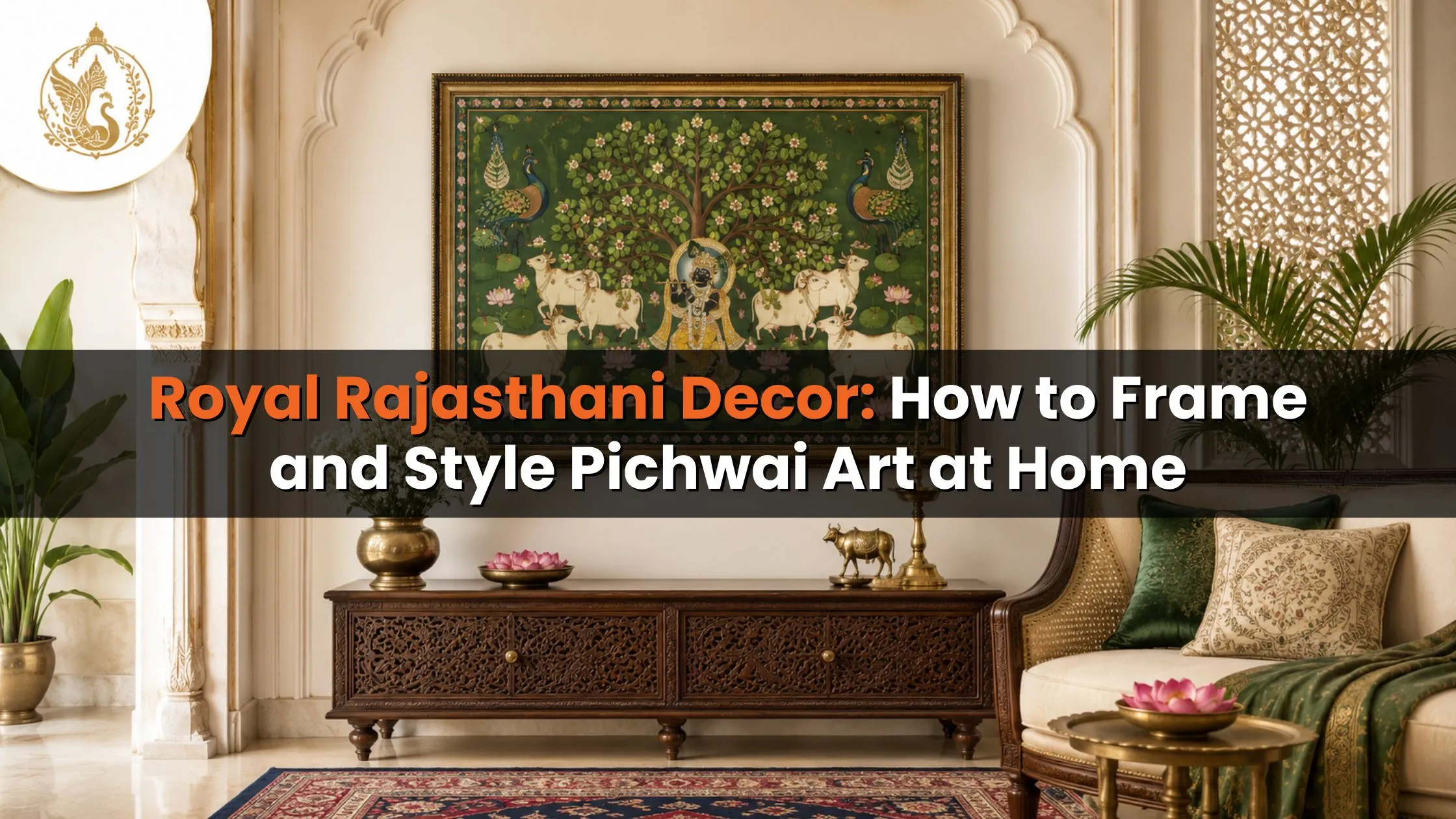
Pichwai art is one of the most underused yet most powerful decor moves you can make for an Indian home. While global design trends keep cycling through Japandi and coastal minimalism, there is something going on closer home, and it feels like a genuine growing pull toward heritage Indian art that carries meaning not only visual weight. Also Pichwai, with its devotional roots and its intricate compositions, plus the extraordinary craft behind it, sits right at the top of that whole conversation.
Originating more than 400 years back in Nathdwara, Rajasthan, this sacred town sits around 45 km from Udaipur, and these hand-painted cloth masterpieces were made first as backdrops for the idol of Lord Shrinathji within temple shrines. Nowadays it feels like they’ve done this whole, smooth transition into living rooms, entrance foyers, dining spaces and even small pooja corners all across India. This guide has you covered with the real details, like how to pick the right kind, frame it properly, position it smartly, and style it in that designer way you know.
What Is Pichwai Art and Why Is It Trending in Indian Homes?
Pichwai comes from the Hindi words pich (back) and wai (hanging), literally “that which hangs behind.” And yeah, most traditional Pichwai compositions kind of have Shrinathji in the middle, like the child form of Krishna, with lotus ponds around, gopis cows , peacocks too and then little seasonal motifs that connect to particular temple festivals across the Hindu calendar.
What makes this art form genuinely distinct is the material and the process sort of like you can see it in the work. Authentic Pichwai paintings are made on hand spun cotton or silk cloth , using natural mineral pigments , ochre, indigo, saffron, gold leaf, and coal derived black. It’s all applied with those fine goat hair brushes, over weeks sometimes months. The Nathdwara painting school still teaches this through the traditional guru–shishya system , so the heritage, that same lineage is exactly what makes a real Pichwai worth every rupee it costs.
The reason it is trending in 2026 isn’t just some temporary, passing aesthetic thing. Indian homeowners, especially the ones upgrading or putting money into a new flat, or even a villa, are actively stepping away from generic wall art, and toward pieces with provenance and a real story behind them. Pichwai manages to deliver both, in a way that feels more grounded than just decor.
Also Read: 10 Space-Saving Furniture Ideas to Make Your Small House Bigger
Types of Pichwai Paintings: Which One Is Right for Your Space?
|
Pichwai Type |
Key Motifs |
Mood / Energy |
Best Room |
|---|---|---|---|
|
Kamal Talai |
Lotus pond, Shrinathji, cows |
Calm, serene |
Bedroom, meditation room |
|
Raas Leela |
Krishna, Radha, gopis dancing |
Celebratory, vibrant |
Living room, drawing room |
|
Annakoot / Govardhan |
Mountain of food, devotees |
Abundant, auspicious |
Dining room, entrance foyer |
|
Gocharan Leela |
Krishna with cows, pastoral scenes |
Earthy, grounding |
Study, home office |
|
Radha Krishna |
Divine couple, flute, forest |
Romantic, devotional |
Bedroom, pooja corner |
Pro Tip: Match the painting's narrative to the room's function, a Kamal Talai in a bedroom feels intentional, a Raas Leela in a living room creates instant energy. It is not just placement, it is storytelling.
How to Frame Pichwai Art the Right Way
Framing is where most homeowners quietly get it wrong, kind of. The wrong frame competes with the painting's intricate borders and undercuts the whole thing. Here is what actually works:
Frame Material by Interior Style
- Antique gold or brass frame: Best fit for traditional, ethnic, or Indo-colonial interiors. Pichwai's gold leaf and that warm pigment palet te go just right, it really feels per fectly matched in a kind of live way.
- If you go with a dark walnut or teak wood frame it works especially well in those transitional spaces where heritage and contemporary furniture mix a bit, even if you dont plan it.
- On the other hand a slim black or matte metal frame is ideal for minimalist interiors, where the Pichwai is basically the only real statement piece, so the frame just fades out and the art speaks, plainly.
- No frame / wooden rod hanging: Preserves the original tapestry format of cloth Pichwais. Works very well in bohemian or ethnic-modern interiors.
Frame Width Rule
Keep frame width at 2–4 inches proportional to the painting size. For pieces above 24x36 inches, never go thinner than 2 inches, a hairline frame looks structurally wrong against a large-format composition.
Glazing
Always opt for UV-protective glass for original handmade pieces. Natural mineral pigments are sensitive to ambient light and will fade without protection over time.
Pro Tip: Avoid overly ornate frames with their own carved detailing, they compete with the painting's intricate border work instead of supporting it.
Where to Hang Pichwai Art: Room-by-Room Placement Guide
Living Room
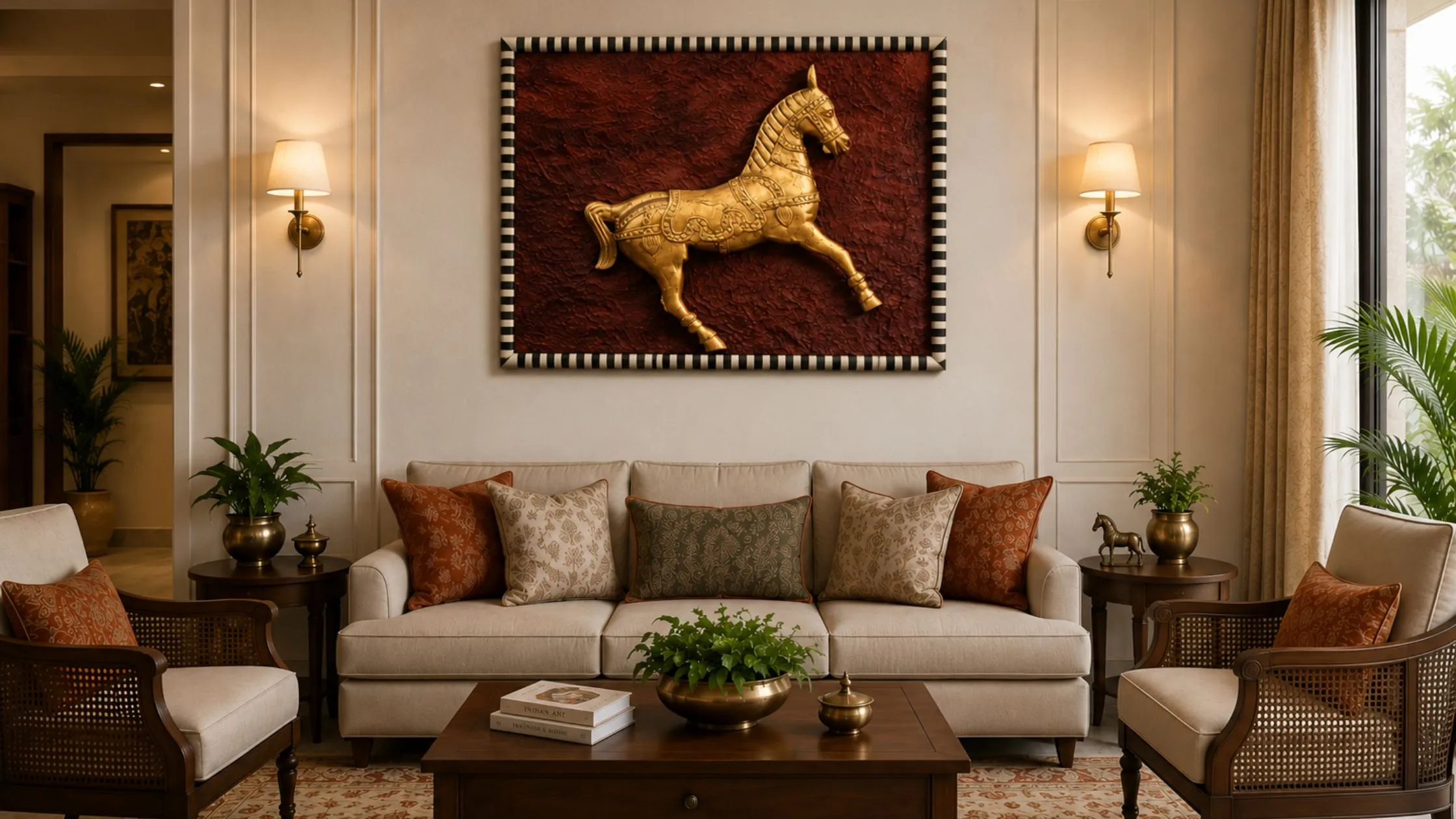
Position on the focal wall directly opposite the entrance, or behind the main sofa. Centre the artwork at eye level, approximately 57–60 inches from the floor. Leave 6–12 inches of breathing room between the sofa's top edge and the frame's lower edge. This is the standard that looks right, sort of without exception.
Entrance Foyer
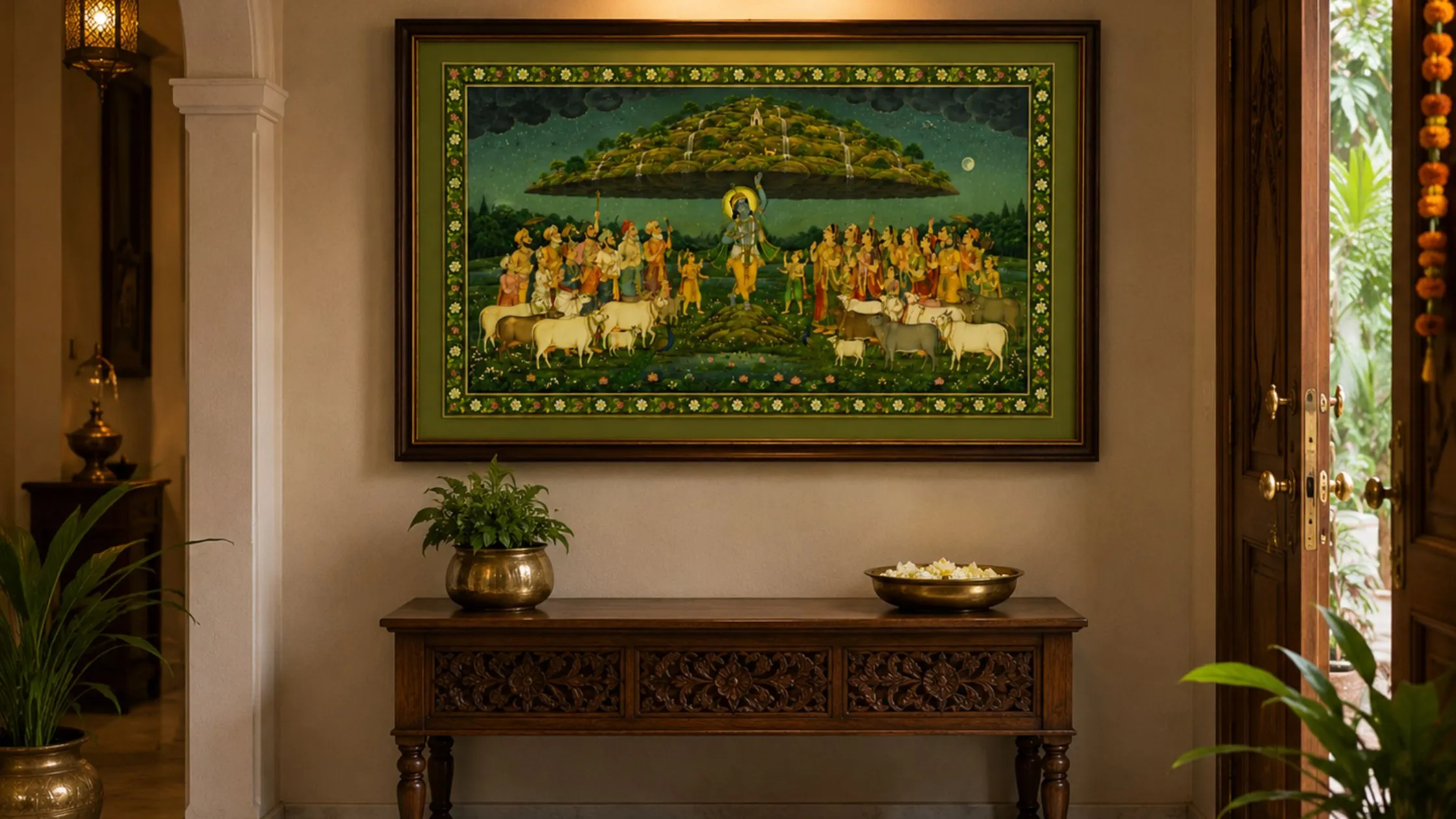
A single large Pichwai here sets your home's entire cultural tone before anything else does. Govardhan or Kamal Talai themes work particularly well at entrances, they signal abundance and welcome simultaneously.
Dining Room
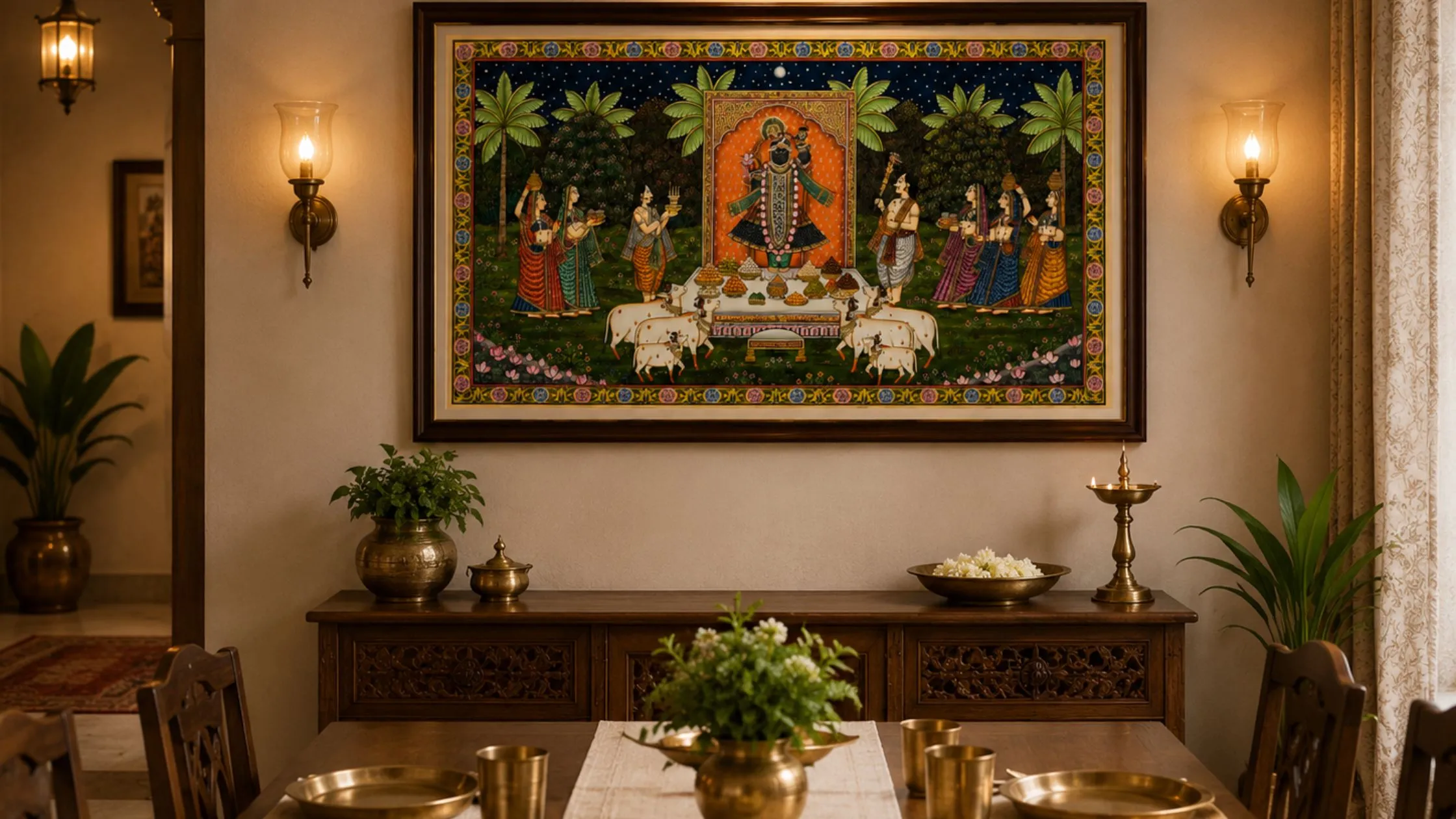
The Annakoot theme, with this mountain of food offerings, is kind of fitting here, like spot-on in a way. You get a large-format piece that ends up being a dramatic focal wall too, so even the everyday meals feel more considered.
Pooja Room / Prayer Corner
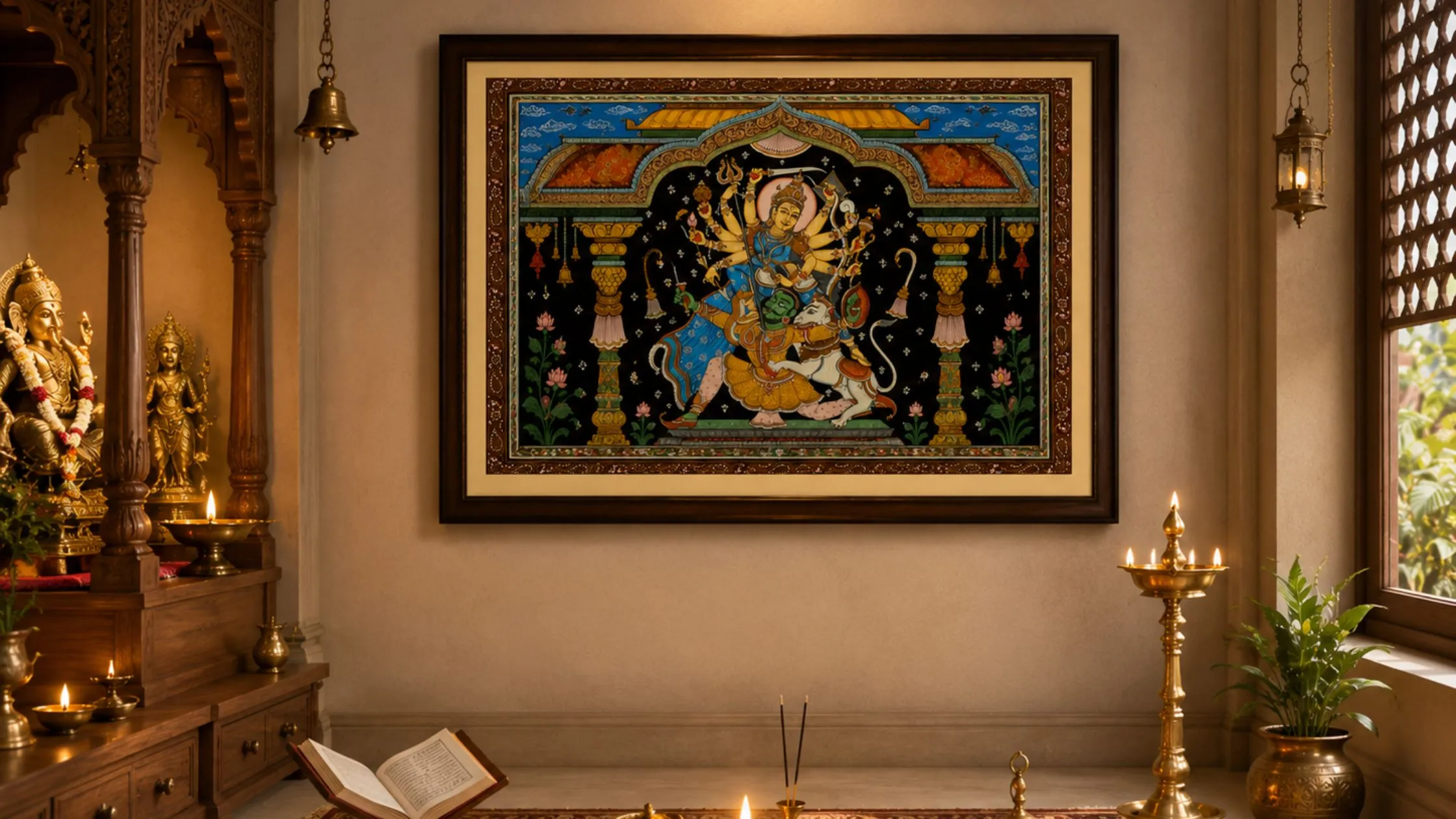
East or north wall placement per Vastu Shastra principles. This returns Pichwai to its original devotional purpose and is genuinely the most spiritually resonant placement in any home.
Bedroom
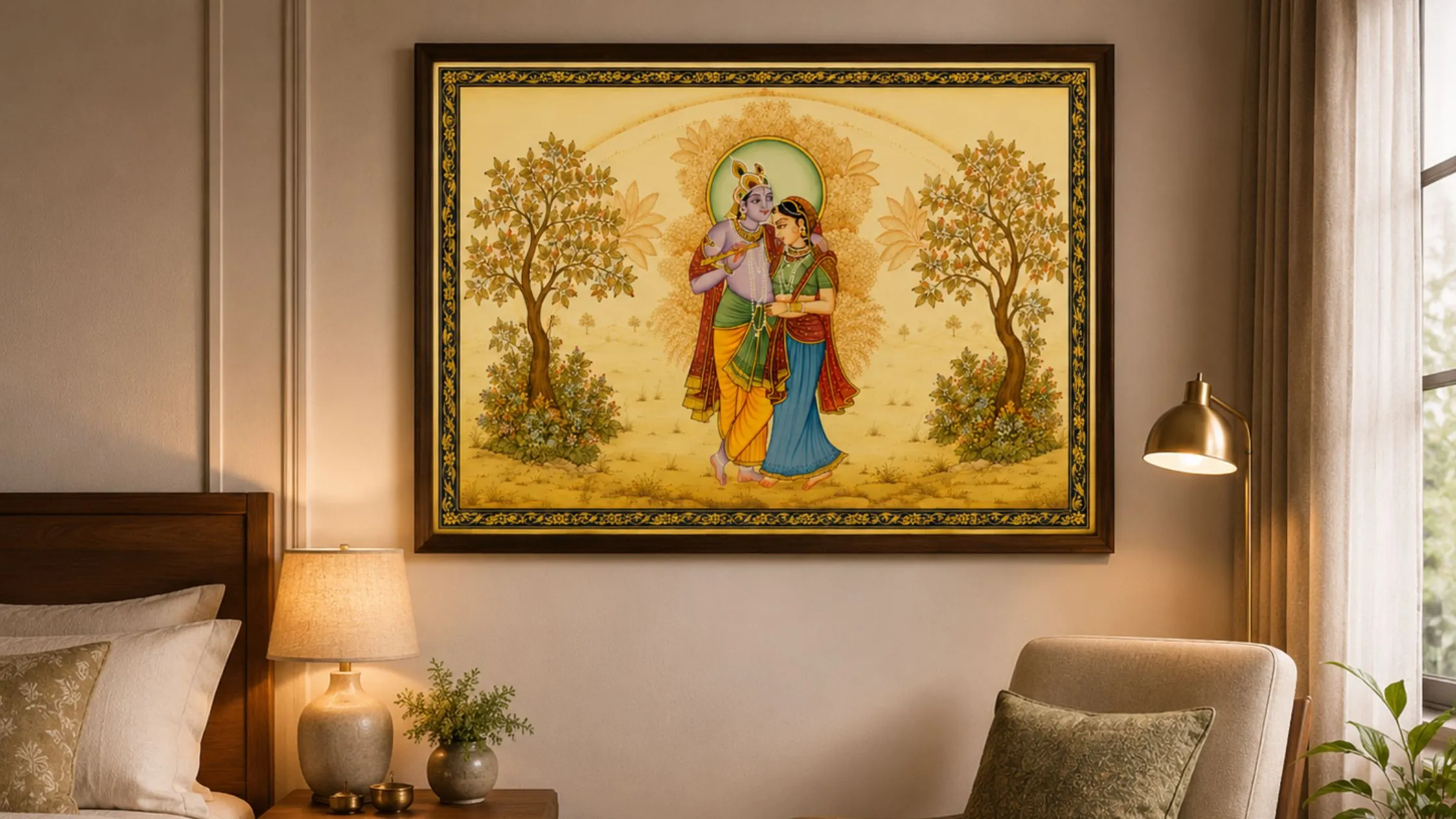
Choose calm, compact compositions, Kamal Talai or Radha Krishna, above the headboard or near a reading chair. Avoid large, visually busy pieces in sleeping spaces; they work against the rest the bedroom is supposed to create.
Hallway / Staircase
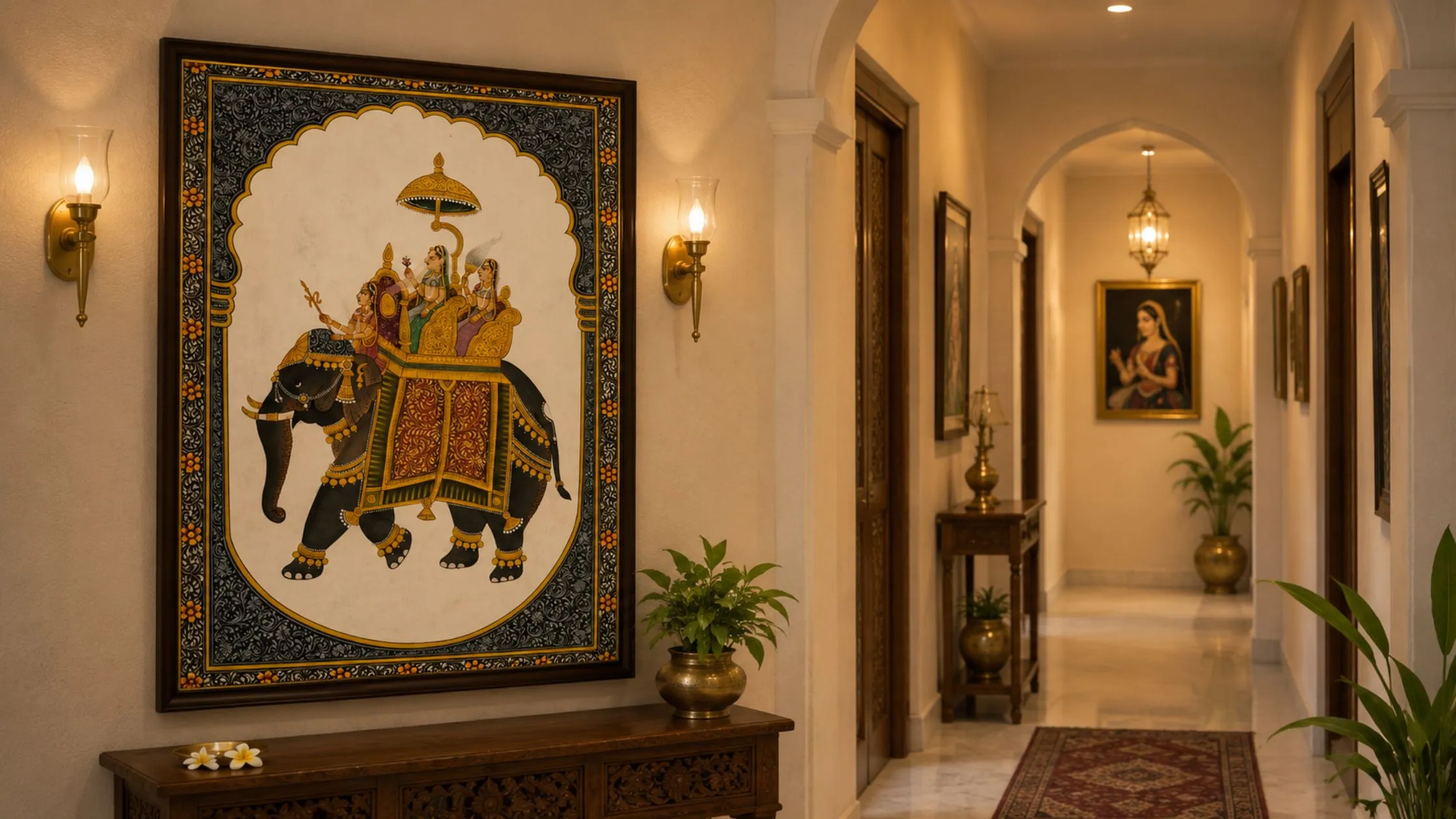
A curated series of smaller Pichwai pieces at consistent 2–3 inch spacing creates a gallery corridor effect. Use consistent frame finishes across all pieces for a cohesive, designed look.
How to Style Pichwai Art With Your Existing Decor
Wall Colour
Pichwai seems to work the best against cream, warm white, beige or charcoal grey walls. Try not to use other wall colours, the painting should anchor the palette not fight it, it kinda should pull the room together.
Lighting: This One Matters a Lot
- Light temperature, go for warm-white LEDs around 2700K–3000K for those picture lights, or use an angled track light.
- Try to angle it about 30° toward the canvas surface, so it catches the gold leaf shimmer, and the small texture details.
- Avoid cool-white lighting or anything that feels fluorescent, because it tends to neutralize the warmth in ochres, saffrons, and those deep indigos.
Complementary Decor Pairing
- Brass lamps, diyas, and old brass artifacts kind of echo Pichwai metallic tones, like you can almost hear it.
- Block-print cushions and hand woven throws, in the painting dominant colour, extend the palette beyond the wall , very quietly, at least thats how it feels.
Gallery Wall Approach
Mix Pichwai with Madhubani, Patachitra, or Mughal miniature pieces, maintaining consistent frame finishes and 2–3 inch gaps between frames. Do not mix frame metals, pick either all-brass or all-dark-wood and stay with it.
Also Read: Best Modern Kitchen Design Ideas for Indian Homes in 2026
Authentic Pichwai vs. Printed Reproduction: How to Tell
|
Feature |
Authentic Handmade |
Printed Reproduction |
|---|---|---|
|
Surface texture |
Raised, tactile brushwork |
Flat, uniform |
|
Colour quality |
Earthy, layered, deepens with age |
Overly bright, fades quickly |
|
Base material |
Hand-spun cotton or silk cloth |
Paper or thin canvas |
|
Pigments used |
Natural mineral, gold / silver leaf |
Synthetic inkjet inks |
|
Close-up detail |
Sharp, fine brushlines |
Pixelated or blurred |
|
Price range |
₹3,000 – ₹1,00,000+ |
₹500 – ₹3,000 |
Care and Preservation Tips
Taking care of a Pichwai painting really isn't that hard, but if you skip even the basics it can harm a piece that took months to make.
- Dust it only with a soft, dry microfiber cloth, and don’t ever splash water or any cleaning solution right onto the surface.
- Keep it away from kitchens, bathrooms, and those humidity prone places where air feels restless. For original works UV protective glass is basically a must, non negotiable , no exceptions.
- Also, re-check the frame and backing every 2–3 years, just to catch moisture, or pests, early.
- If it is antique, or something museum-grade, then talk with a professional art conservator and don’t try to DIY restoration
Final Thoughts
Pichwai art isn’t like a trend you just grab this season and then rotate out next year or whatever, no. It’s this 400-year-old living tradition, it still has devotional intent inside it, plus this extraordinary craft and a kind of visual language that mass-produced prints really cannot imitate. So whether you hang a big Raas Leela as the main thing in your living room or you put a calm Kamal Talai above the bed headboard, you’re kind of elevating the whole space in a real way.
Just frame it with intention, get the lighting correct, and style it alongside decor that actually matches it, not random things. Then one Pichwai painting will end up doing more for a room than a dozen generic wall art pieces ever.






Ans 1. Pichwai art is a traditional Indian painting style originating from Nathdwara, Rajasthan. Created on hand-spun cloth using natural mineral pigments, it depicts scenes from Lord Shrinathji's (Krishna's) life and was originally used as a backdrop in temple shrines. The tradition is over 400 years old.
Ans 2. Antique gold or brass frames work best for traditional interiors, dark walnut or teak frames suit transitional spaces, and slim black matte frames are ideal for minimalist contemporary rooms. Avoid frames with heavy decorative carving that compete with the painting's own border detailing.
Ans 3. The east or north wall is recommended per Vastu Shastra, particularly for pooja rooms and meditation spaces. For living rooms, the focal wall behind the main sofa or opposite the entrance is ideal regardless of direction.
Ans 4. Hang the painting so its centre sits at eye level, approximately 57–60 inches from the floor. When placed above a sofa, maintain a 6–12 inch gap between the top of the furniture and the bottom of the frame.
Ans 5. Tilt the painting in light, authentic pieces show raised brushstroke texture and layered pigment depth. Prints appear flat and uniform up close. Genuine Pichwais are painted on hand-spun cloth or silk; if the base material feels thin or paper-like, it is likely a reproduction.
Ans 6. Yes, and it works very well. Choose calm compositions like Kamal Talai (lotus pond) or Radha Krishna. Place above the headboard or near a reading nook. Avoid large, busy compositions in sleeping spaces.
Ans 7. Warm-white LED lights at 2700K–3000K, positioned at a 30° angle to the canvas. This brings out gold leaf shimmer and pigment texture. Avoid cool-white or fluorescent lighting, it strips warmth from the natural pigment palette.
Ans 8. Pichwai is devotional folk art centred on Krishna's stories, painted on cloth with natural pigments in Nathdwara. Mughal paintings depict court life, portraiture, and nature scenes, rendered on paper with fine brushwork from royal ateliers. Both are distinct traditions with separate techniques and visual vocabularies.
Ans 9. Dust only with a dry microfiber cloth, avoid humidity and direct sunlight, and always frame originals behind UV-protective glass. Do not use water or chemical cleaners on the surface. For antique pieces, consult a professional art conservator.
Ans 10. Absolutely. A single large Pichwai on a neutral wall in a minimalist room creates a powerful heritage-versus-contemporary contrast that elevates both the art and the interior. Use a slim black or matte frame, keep surrounding decor minimal, and let the painting do all the work.