
✦ AI Summary
Table of Content
▲- What Changed on April 14, 2026
- Which Markets Will Benefit?
-
Market Deep Dive: Where to Buy and Why
- 1. Ghaziabad (Sahibabad Belt) & East Delhi: Best for End-Users
- 2. Dehradun: Best for Second Homes and HNI Buyers
- 3. Baghpat, Shamli & Saharanpur: Best for Investors with a 2–3 Year Horizon
- 4. Noida, Greater Noida & Meerut: Best for Industrial and Institutional Investors
- 5. Haridwar & Rishikesh: Best for Hospitality and Vacation Home Investment
- Property Type vs. Market: Quick Reference for Buyers
- What Buyers Must Know Before Investing
- Key Facts at a Glance
- Conclusion
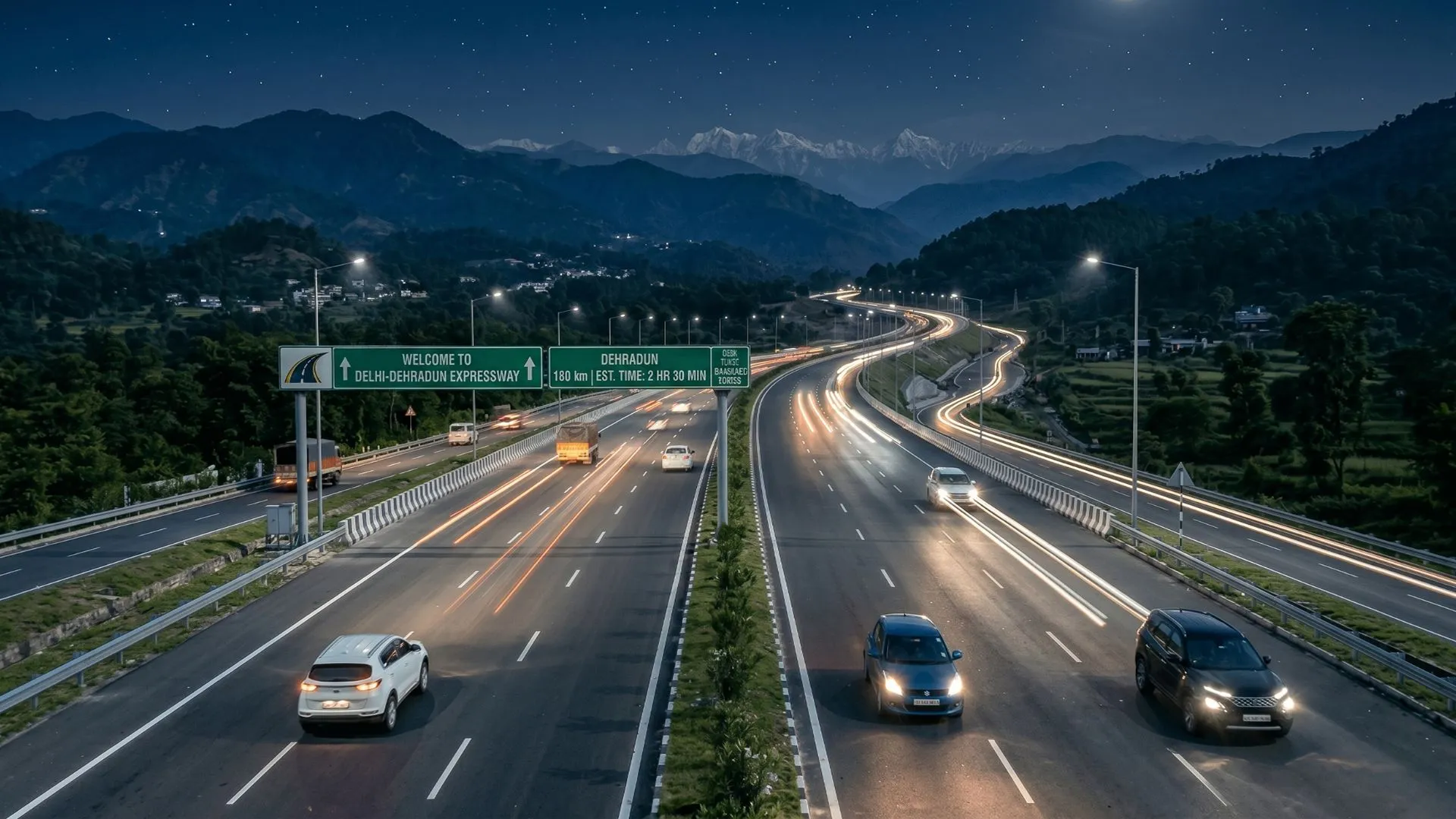
The Delhi–Dehradun Expressway is open. Prime Minister Narendra Modi inaugurated the 213 km, six-lane corridor on April 14, 2026, cutting the Delhi–Dehradun travel time from 6 hours to 2.5–3 hours. Built under the Bharatmala Pariyojana at a cost of over Rs 12,000 crore and executed by the National Highways Authority of India (NHAI), this is now one of the most consequential infrastructure completions in North India.
The present functions as an opportunity for real estate buyers while the future remains unavailable to them. The corridor property markets have reached their first demand surge. Experts from Colliers India, Square Yards, and leading NCR developers forecast 15–25% property price appreciation across key micro-markets within 18–24 months. This analysis shows which markets provide maximum returns together with the buyer evaluation requirements for capital investment.
What Changed on April 14, 2026
The opening of the Delhi–Dehradun Expressway represents a complete transformation of North India's transportation system. The new highway network establishes a fresh method for transportation from North India to other regions.
The Delhi–Dehradun journey took approximately 6 hours before April 14 2026. The travel time now takes 2.5 to 3 hours which represents a 50 percent decrease in time spent traveling. The residential market experiences its single direct result because Dehradun Haridwar and Rishikesh became permanent residential areas. The industrial and logistics market now operates with continuous freight transportation throughout Western UP and into Uttarakhand.
The corridor extends through six areas which include Delhi (Akshardham) and Ghaziabad and Baghpat and Shamli and Muzaffarnagar and Saharanpur before reaching Dehradun. The route features a 12 kilometer elevated section which passes over Rajaji National Park and contains the longest wildlife-safe corridor in Asia.
Which Markets Will Benefit?
Table below should reveal the correlation to the expected price extension, timeline of investment, main growth driver, and effective buyer profile.
|
Market / Location |
Price Appreciation |
Timeline |
Primary Driver |
Buyer Type |
|
Ghaziabad (Sahibabad Belt) |
15–25% |
18–24 months |
Improved NCR access |
End-users & Investors |
|
East Delhi |
15–25% |
18–24 months |
Expressway entry point |
End-users |
|
Baghpat / Shamli / Saharanpur |
10–20% |
24–36 months |
New investment hub |
Investors |
|
Dehradun |
30.9% YoY (2025) |
Ongoing |
Second-home demand |
HNIs & Second-home buyers |
|
Haridwar / Rishikesh |
High (hospitality-led) |
12–24 months |
Tourism & hospitality |
Investors & lifestyle buyers |
|
Noida / Greater Noida / Meerut |
Industrial & warehousing upside |
2–3 years |
Grade A supply push |
Institutional investors |
Market Deep Dive: Where to Buy and Why
1. Ghaziabad (Sahibabad Belt) & East Delhi: Best for End-Users
These NCR micro-markets sit at the expressway's origin point. They gain the most immediate connectivity dividend and the sharpest near-term appreciation timeline.
Pyush Lohia, MD of Lohia Worldspace, projects Sahibabad and key East Delhi locations to see 15–25% appreciation within 18–24 months. The area benefits from existing infrastructure, metro connectivity, and a large pool of working professionals for whom reduced commute times directly translate into purchase intent.
Ideal for: Residential flats, affordable and mid-segment housing
Buy now because: Prices are pre-surge. End-user demand is rising sharply as the expressway moves from announcement to operational reality.
Watch for: Congestion relief at the expressway's entry point improving overall liveability and daily commuter sentiment.
2. Dehradun: Best for Second Homes and HNI Buyers
The housing market in hill destinations experienced 8.2% annual growth during the July to September 2025 quarter according to Magicbricks data. Dehradun registered 30.9% price growth during this period. The city now serves as a permanent residential option because its travel times to Delhi match those of the typical NCR-to-Gurugram commute.
The development of villas, gated communities, and luxury apartments requires plots while residential projects need developed land.
The market still retains its early-mover benefits. The market has not yet reached its full valuation for complete marketwide revaluation.
The upcoming projects will focus on Rajpur Road and areas close to expressway exits and IGBC-certified green developments. The Dehradun to Mussoorie elevated road project will complete 26 kilometers of construction which will decrease Delhi to Mussoorie travel times to approximately four hours. This development will create a second round of value increases for Dehradun investors.
Also Read: BMC's OC Amnesty Scheme Offers Legal Relief to 25,000 Mumbai Housing Societies
3. Baghpat, Shamli & Saharanpur: Best for Investors with a 2–3 Year Horizon
These tier-2 cities along the expressway corridor are emerging as the next investment hotspots. Yash Miglani, MD of Migsun Group, identifies this belt as one where land prices remain accessible while infrastructure and commercial activity are beginning to scale.
Investors entering now are positioned ahead of the mainstream pricing curve, which is the entire point of corridor investing at this stage.
Ideal for: Plotted land, early-stage township projects
Buy now because: Lowest entry cost on the entire corridor, with the highest upside potential relative to current pricing.
Watch for: NHAI interchange proximity. Land parcels closest to expressway exits will command the sharpest premium. Always prioritise these over mid-corridor locations.
4. Noida, Greater Noida & Meerut: Best for Industrial and Institutional Investors
Vimal Nadar, National Director at Colliers India, projects 1–2 million sq. ft. of Grade A warehousing and industrial supply in these markets over the coming years, with annual leasing expected to reach 1–1.5 million sq. ft. The logistics and industrial real estate opportunity here is driven by the corridor's seamless freight connectivity across Western UP.
Ideal for: Grade A warehouses, logistics parks, industrial plots
Buy now because: Pre-leasing demand is rising ahead of supply. First-mover industrial developers and institutional investors are already evaluating land parcels in this belt.
5. Haridwar & Rishikesh: Best for Hospitality and Vacation Home Investment
The expressway transforms weekend travel to these destinations. What was a 5+ hour drive from Delhi is now under 3 hours. That changes visitor frequency, stay durations, and hospitality economics fundamentally.
Sahil Agarwal, CEO of Nimbus Group, notes that improved access will trigger commercial development across retail, healthcare, hospitality, and over time, even IT ecosystems. Vacation homes and hotel investments here now carry a strong rental income thesis backed by growing tourist volumes from Delhi NCR.
Ideal for: Vacation homes, resort-style investments, hospitality projects
Buy now because: Tourism volumes are rising while hospitality supply continues to lag demand.
Also Read: Sumitomo Backed Krisumi Launches New Housing Phases in Gurugram Plans ₹4500 Crore Investment
Property Type vs. Market: Quick Reference for Buyers
|
Property Type |
Best Location |
Expected Return |
Risk Level |
|
Plotted Development |
Baghpat, Shamli, Dehradun outskirts |
High (capital appreciation) |
Medium |
|
Villa / Independent Home |
Dehradun, Rishikesh |
High (lifestyle + appreciation) |
Low–Medium |
|
Apartment / Flat |
Ghaziabad, East Delhi |
Moderate (rental + appreciation) |
Low |
|
Warehousing / Industrial |
Noida, Greater Noida, Meerut |
Steady (leasing income) |
Low |
|
Commercial / Retail |
Saharanpur, Dehradun CBD |
Moderate–High |
Medium |
What Buyers Must Know Before Investing
Developer Credibility Is Non-Negotiable
The developer must provide RERA registration and delivery record evidence for all projects in the Baghpat and Shamli micro-markets. The corridor opportunity exists as a real prospect because not all projects pursuing it will succeed.
NHAI Interchange Proximity Determines Premium
Land parcels and projects closest to expressway exits will command the sharpest price premium. Always prioritize interchange proximity over mid-corridor locations when evaluating options in Baghpat, Shamli, and Saharanpur.
Connectivity Is Already Partially Priced In
In Dehradun and Ghaziabad, a portion of the appreciation is already reflected in current asking prices. The window for pre-surge entry still exists, but it is narrowing. Evaluate and act before full market repricing.
Legal Title and Land-Use Approvals Are Mandatory
Agricultural land must follow RERA regulations and obtain land-use permits to convert into residential or commercial development along the corridor. A legal title check is not optional. The first step of a site visit process requires this procedure.
The Pipeline Has a Second Layer
The planned 26 km elevated road from Dehradun to Mussoorie will further reduce Delhi–Mussoorie travel to approximately 4 hours. Investors in Dehradun are buying into a second wave of appreciation, not just the first.
Key Facts at a Glance
|
Parameter |
Detail |
|
Total Length |
213 km |
|
Lanes |
Six-lane, access-controlled |
|
Project Cost |
Over Rs 12,000 crore |
|
Travel Time |
Reduced from ~6 hours to 2.5–3 hours |
|
Route |
Delhi (Akshardham) → Ghaziabad → Baghpat → Shamli → Muzaffarnagar → Saharanpur → Dehradun |
|
Wildlife Feature |
12 km elevated corridor over Rajaji National Park (Asia's longest of its kind) |
|
Highway Code |
NH 709B |
|
Policy Framework |
Bharatmala Pariyojana, NHAI-executed |
|
Inauguration |
April 14, 2026, by PM Narendra Modi |
Conclusion
The Delhi–Dehradun Expressway is not just a road. It is a structural repricing event for North India's real estate market. From the warehousing belts of Noida and Meerut to the lifestyle villas of Dehradun and the early-stage plotted investments of Baghpat and Saharanpur, the corridor offers credible entry points across every risk profile and budget category.
The experts from Colliers India Square Yards and major NCR developers have reached a unified conclusion, which states that the period before prices increase by 15 to 25 percent will last only a brief time. The current moment serves as the optimal period for research and evaluation according to all user groups who want to acquire information before prices increase in this area.



Ans 1. The Delhi–Dehradun Expressway (NH 709B) is a 213 km, six-lane access-controlled highway built under the Bharatmala Pariyojana at a cost of over Rs 12,000 crore. It connects Delhi's Akshardham to Dehradun, passing through Ghaziabad, Baghpat, Shamli, Muzaffarnagar, and Saharanpur.
Ans 2. The Delhi–Dehradun Expressway was inaugurated by Prime Minister Narendra Modi on April 14, 2026, in Dehradun.
Ans 3. The expressway is 213 km long, with a 12-lane section from Akshardham to the Eastern Peripheral Expressway and six-lane sections through Uttar Pradesh and Uttarakhand.
Ans 4. The total project cost is over Rs 12,000 crore, executed by NHAI under the Bharatmala Pariyojana.
Ans 5. The expressway passes through Delhi (Akshardham), Ghaziabad, Baghpat, Shamli, Muzaffarnagar, Saharanpur, and Dehradun. It also features a 12 km elevated corridor over Rajaji National Park.
Ans 6. Real estate experts forecast 15–25% property price appreciation in key micro-markets like Ghaziabad's Sahibabad belt and East Delhi within 18–24 months. Dehradun has already recorded 30.9% year-on-year price appreciation as of 2025.
Ans 7. Yes. With travel time to Delhi now reduced to 2.5–3 hours, Dehradun is transitioning from a seasonal retreat to a year-round residential market. Second-home demand, plotted developments, and villa communities are the primary growth segments.
Ans 8. The top investment areas are: Ghaziabad (Sahibabad belt) and East Delhi for residential; Dehradun for second homes and lifestyle properties; Baghpat, Shamli, and Saharanpur for early-stage plotted investment; and Noida, Greater Noida, and Meerut for industrial and warehousing assets.
Ans 9. Yes. Ghaziabad's Sahibabad belt is projected to see 15–25% price appreciation in 18–24 months, driven by its position as the first major NCR micro-market on the expressway corridor.
Ans 10. Travel time from Delhi to Dehradun has been reduced from approximately 6 hours to 2.5–3 hours, a reduction of nearly 50%,making Dehradun one of the most accessible hill destinations from the national capital.