
✦ AI Summary
Table of Content
▲- What Is Transferable Development Rights (TDR), and Why Does It Matter?
- Old TDR System vs. BMC's e-TDR Platform
- How Does the BMC e-TDR Platform Work?
- e-TDR Platform Key Technical Details at a Glance
- Who Benefits From the BMC e-TDR Platform?
- Why Is This a Structural Shift for Mumbai Real Estate?
- Conclusion
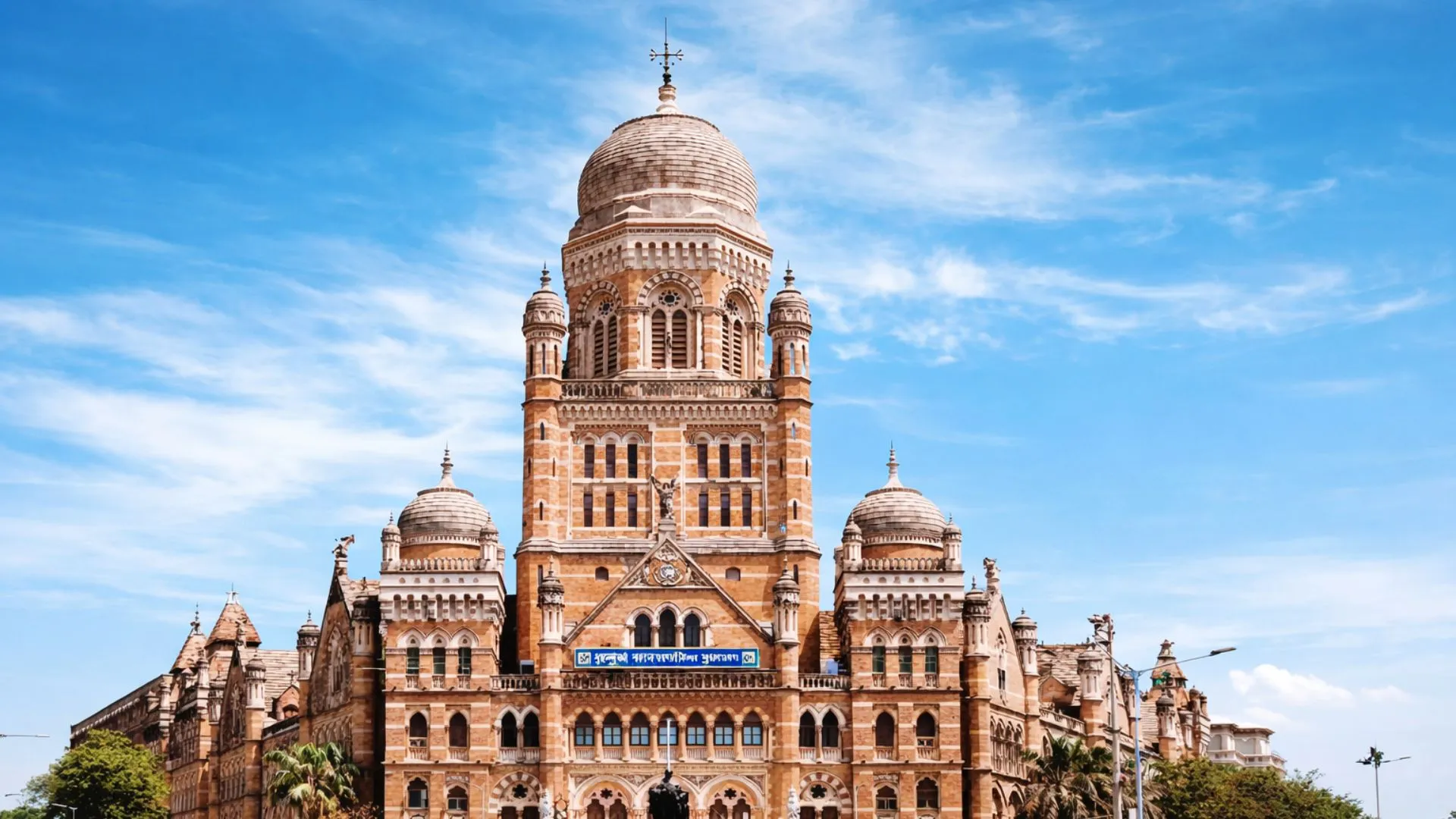
The Brihanmumbai Municipal Corporation (BMC), together with Maharashtra's Urban Development Department, has launched India's first complete digital system for Transferable Development Rights (TDR) transactions, which operates as the e-TDR system starting from April 15, 2026. The platform requires all buyers and sellers in the Mumbai development rights market to register at etdr.mcgm.gov.in, which functions as its official website.
The TDR market in Mumbai functioned as an unregulated system for thirty years because brokers controlled its operations through cash transactions and disputed paperwork. The e-TDR platform brings complete operational transformation through its online system, which handles all processes from listing to bidding and payment and contract execution while maintaining secure identity verification and artificial intelligence monitoring throughout the entire procedure.
What Is Transferable Development Rights (TDR), and Why Does It Matter?
When the government acquires private land for public purposes such as road widening, parks, or infrastructure projects, it does not always compensate the landowner in cash. The landowner receives a Development Rights Certificate, which gives him building rights that match the area of land he has given up.
These DRCs can be:
- Used by the original landowner for their own construction projects
- Sold to developers or investors in the open market as Transferable Development Rights (TDR)
TDR is directly tied to the Floor Space Index (FSI), the ratio that determines how much construction is legally permitted on a given plot. Mumbai's land-scarce real estate market shows that higher TDR leads to increased FSI utilization, which affects both project viability and profitability.
For developers, TDR procurement has historically been the most opaque and risk-prone part of project planning. The e-TDR platform changes that entirely.
Old TDR System vs. BMC's e-TDR Platform
|
Parameter |
Old TDR System |
e-TDR Platform (2026) |
|
Process |
Manual / offline |
Fully digital |
|
Transparency |
Low, opaque dealings |
High, digitally audited |
|
Transaction Speed |
Weeks to months |
Faster, real-time tracking |
|
Buyer-Seller Matching |
Difficult, middlemen-dependent |
Direct bidding on portal |
|
Payment Mode |
Cash / cheque-based |
Secure digital payment via SBI |
|
Legal Record |
Paper contracts |
Digitally signed contract note |
|
Fraud Risk |
High |
Minimal, tamper-proof system |
|
Access for Small Developers |
Limited and expensive |
Equal opportunity for all |
Also Read: Delhi–Dehradun Expressway Opens Big Connectivity, Bigger Returns What Every Homebuyer Must Know
How Does the BMC e-TDR Platform Work?
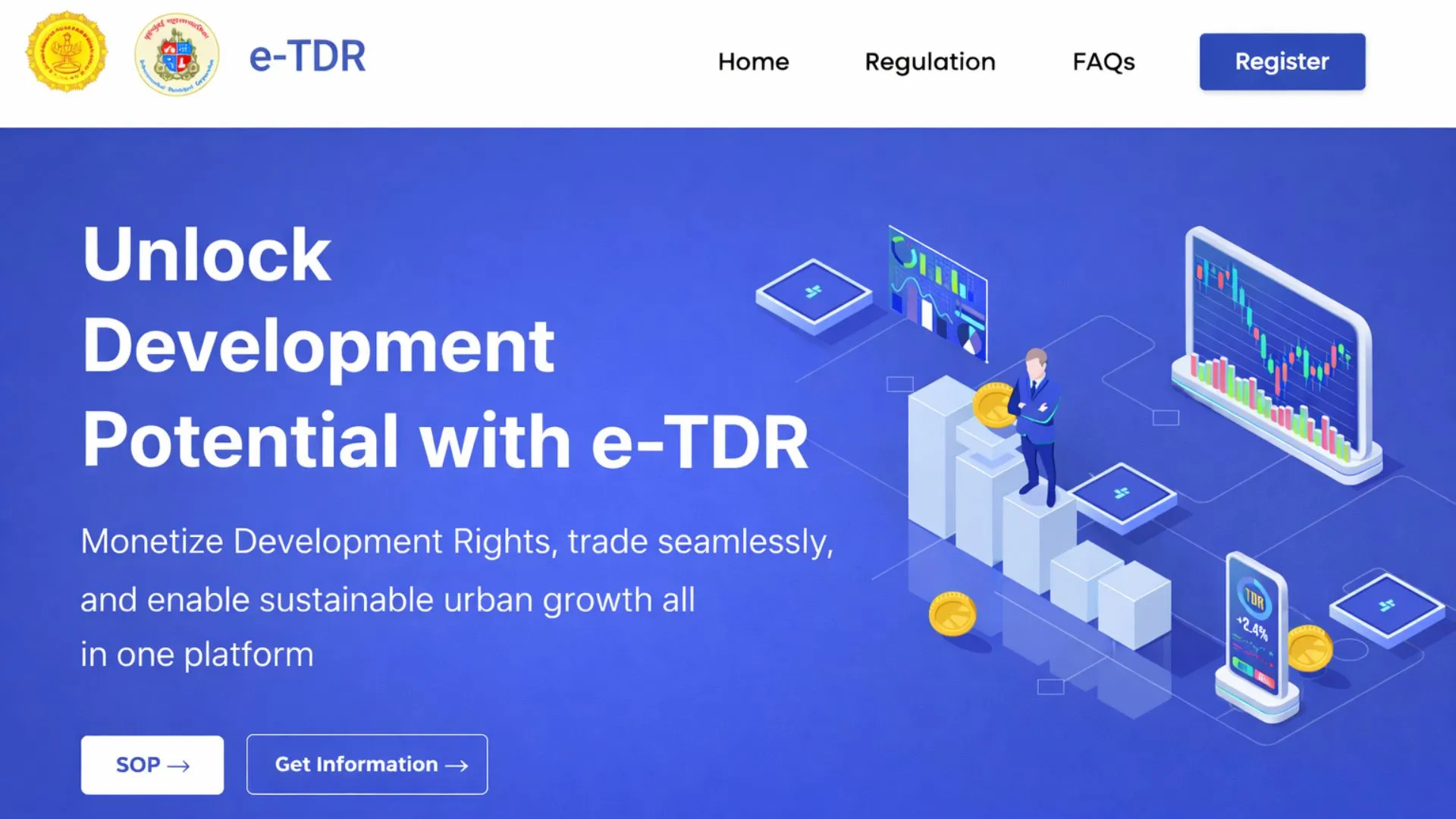
The e-TDR system functions as a one-stop digital marketplace for the registration, display, sale, purchase, and utilization of DRCs. Here is the exact transaction flow on the platform:
- Seller registers on etdr.mcgm.gov.in with mandatory KYC verification and lists available TDR
- Buyer registers, browses listed TDRs, and places direct bids on the portal
- Both parties can negotiate even after the initial bidding stage
- Once a deal is finalized, the transaction is completed via secure digital payment through State Bank of India integration
- TDR is credited directly to the buyer's registered account
- Funds are digitally transferred to the seller, no cash, no intermediary
- A digitally signed contract note is auto-generated as a legally valid transaction record
- AI-based analytics monitor all transactions in real time, with a complete, end-to-end digital audit trail
e-TDR Platform Key Technical Details at a Glance
|
Platform Feature |
Details |
|
Portal URL |
etdr.mcgm.gov.in |
|
Registration |
Mandatory for buyers and sellers |
|
KYC Verification |
Account linking with KYC compliance |
|
Banking Integration |
State Bank of India (SBI) |
|
Analytics Engine |
AI-based transaction monitoring |
|
Audit Trail |
End-to-end digital recording |
|
Contract Note |
Digitally signed, legally valid |
|
Full Rollout Date |
April 15, 2026 |
|
Pilot Launched By |
CM Devendra Fadnavis |
Who Benefits From the BMC e-TDR Platform?
The platform is designed to be inclusive across Mumbai's entire real estate ecosystem. Here is who gains the most and why.
- Large developers: Faster TDR procurement directly reduces project timelines and approval delays
- Small builders and individual investors: Equal access to a market that was previously gatekept by brokers and informal networks
- Original landowners (TDR holders): Guaranteed digital payment security with zero dependence on intermediaries
- Licensed architects and planning consultants: Architects and planning consultants who hold professional licenses need access to TDR availability information together with its associated pricing and inventory details in real-time.
- Urban governance bodies: AI analytics and audit trails create a comprehensive system that prevents all three illegal activities of corruption and underreporting and price manipulation.
Ashwini Bhide, who serves as Municipal Commissioner, explained that the platform provides equal access to all participants while it represents progress toward achieving transparent and efficient urban administration that serves the needs of citizens.
Also Read: IBBI Committee's 155-Point Blueprint Marks Turning Point for India's Stressed Housing Sector
Why Is This a Structural Shift for Mumbai Real Estate?
Mumbai's TDR market is estimated to be worth thousands of crores. For most of its existence, this market operated through informal networks, making it nearly impossible for smaller players to access TDR at fair prices. Price discovery was inefficient, contracts were frequently disputed, and the absence of centralized record-keeping made fraud an endemic risk rather than an exception.
The e-TDR platform resolves all three structural failures through its simultaneous operations of three primary components.
- Price discovery: The pricing system establishes market values through open bidding which creates a competitive environment that replaces broker-determined prices.
- Access: All registered users can participate under equal conditions regardless of their organizational size and network capacity.
- Accountability: The system records every transaction through digital documentation, which includes signatures that enable permanent tracking of all activities.
The initiative is guided by Additional Chief Secretary (Urban Development) Aseem Gupta and was formally piloted by Chief Minister Devendra Fadnavis in the presence of Deputy Chief Ministers Eknath Shinde and Ajit Pawar.
Conclusion
The Brihanmumbai Municipal Corporation's e-TDR platform is not incremental reform. It is a structural overhaul of how development rights are transacted in India's most complex urban real estate market. By replacing opaque, middlemen-driven processes with a KYC-verified, AI-monitored, and SBI-integrated digital marketplace, BMC has set a national benchmark for urban governance and real estate transparency.
The logic is straightforward, register, bid, transact, and receive a legally valid digital contract. No brokers, no cash, no disputed paper trails.
For developers, landowners, and investors active in Mumbai real estate, registration on etdr.mcgm.gov.in is now both a regulatory requirement and a strategic necessity. The platform is live. The market has moved. The only question is whether you are on it.

_1792140859.webp)

_1792151285.webp)
Ans 1. The BMC e-TDR platform is India's first integrated digital marketplace for Transferable Development Rights (TDR) transactions, launched on April 15, 2026, at etdr.mcgm.gov.in. It enables buyers and sellers to register, list, bid, negotiate, and transact TDR entirely online with full KYC verification, SBI payment integration, and a digital audit trail on every transaction.
Ans 2. When private land is acquired for public infrastructure like roads, parks, civic projects, the landowner receives Development Rights Certificates (DRCs) instead of cash compensation. These DRCs can be used for construction or sold to developers as TDR, allowing the buyer to build additional Floor Space Index (FSI) on their project sites in Mumbai.
Ans 3. A DRC is a document issued by BMC to landowners whose property has been acquired for public infrastructure. It certifies the owner's entitlement to additional building rights equivalent to the surrendered land area and can now be listed and transacted on the official e-TDR portal.
Ans 4. The legacy TDR system was characterised by severe opacity, broker dependence, cash-heavy transactions, slow price discovery, and a high incidence of fraud. BMC launched the e-TDR platform to eliminate these structural inefficiencies, create a competitive and accessible marketplace, and establish a tamper-proof digital record of every development rights transaction in the city.
Ans 5. Yes. Registration on etdr.mcgm.gov.in is mandatory for both buyers and sellers. The platform uses KYC-based account verification linked to banking systems. All TDR transactions in Mumbai must now be conducted exclusively through this portal. Offline or cash-based transactions are no longer permissible.
Ans 6. FSI (Floor Space Index) is the total permissible construction area on a plot, determined by zoning regulations. TDR is a mechanism that allows additional FSI to be purchased or transferred from a different location. Acquiring TDR effectively increases the FSI available on a developer's project site, making it a critical input for high-density development in Mumbai.
Ans 7. Previously, small developers had limited access to the TDR market due to information asymmetry and exclusive broker networks. The e-TDR platform provides equal access to all registered users, including individual stakeholders and small builders, through open bidding, transparent pricing, and direct digital transactions with no intermediary dependency.
Ans 8. The e-TDR platform was developed by the Urban Development Department, Government of Maharashtra, in collaboration with Brihanmumbai Municipal Corporation. It was formally launched in its pilot phase by Chief Minister Devendra Fadnavis, in the presence of Deputy Chief Ministers Eknath Shinde and Ajit Pawar, and became fully operational from April 15, 2026, under the guidance of Municipal Commissioner Ashwini Bhide.
Ans 9. Yes. The e-TDR platform is designed to be fully inclusive. Individual landowners holding Development Rights Certificates, as well as individual buyers, can register and transact on the platform, not just large real estate developers. The open bidding mechanism ensures no participant has a structural advantage over another.
Ans 10. Registration on etdr.mcgm.gov.in is now mandatory for all TDR transactions in Mumbai. Transactions conducted outside the platform are not legally compliant under the new framework. Buyers and sellers who bypass the portal risk losing legal standing on the transaction, with no digital contract, no payment guarantee, and no audit trail to protect either party.