
✦ AI Summary
Table of Content
▲
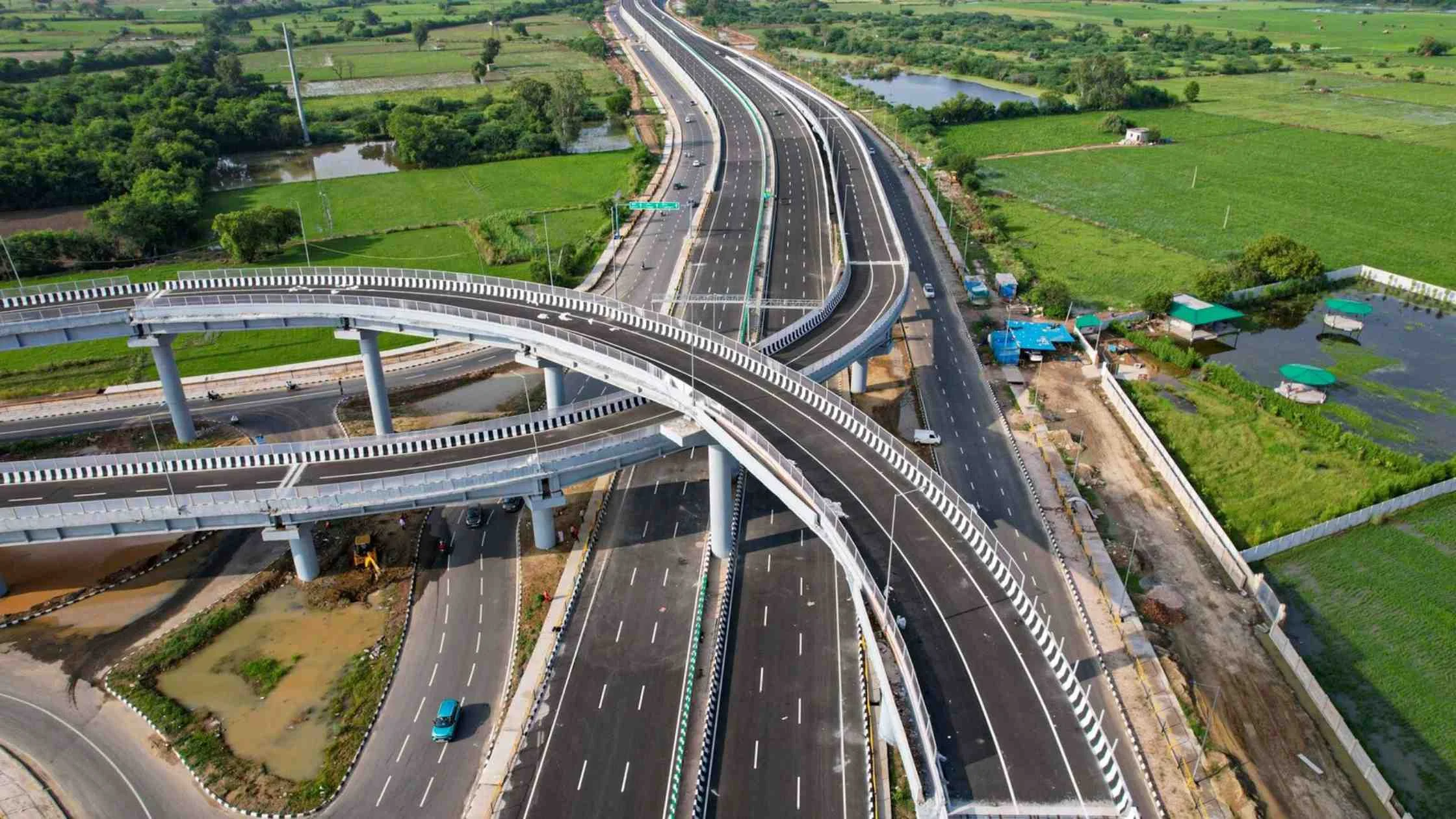
India’s real estate is being greatly impacted by infrastructure development, especially with regard to highways and expressways. In recent years, new highways and expressway systems have turned some previously developing areas into busy communities with residential areas, offices, factories, warehouses, etc. Because of better connectivity and shorter travel distances, more buyers are purchasing properties along these important highway corridors.
Today, developers, investors and homeowners are no longer looking for properties only within city limits, but instead are now looking in places that were once thought to be on the outer edge of urban growth and are beginning to see themselves as new growth areas.
Reports released by various organisations have identified eight major highway corridors as being among the most significant contributors to real estate growth across India, and the development of these major highway corridors has resulted in a significant amount of new housing, commercial, warehouse, industrial, agricultural and all other uses throughout India.
Why Expressways Matter for Real Estate Growth
The relationship between road infrastructure and property value is one of the most consistently correlated in Indian real estate, more reliable than most market analysis because it's grounded in simple, measurable economics rather than sentiment.
Key Benefits of Expressway Led Development
- Improved connectivity and reduced travel time
- Higher demand for residential housing
- Growth of commercial and retail projects
- Expansion of logistics and warehousing facilities
- Increased employment opportunities
- Rising land and property values
- Attraction of institutional investments
Many of India's fastest-growing property markets today are located near major transportation corridors.
8 Expressway Corridors Creating New Real Estate Opportunities
1. Delhi-Mumbai Expressway
Delhi-Mumbai Expressway is the largest ongoing highway infrastructure project in India stretching roughly 1,386 km across Haryana, Rajasthan, Madhya Pradesh, Gujarat and Maharashtra. Once it is fully operational, it is expected to cut travel time between Delhi and Mumbai from about 24 hours down to 12 hours, basically reshaping the economic geography along the corridor.
Real Estate Impact
- Rising demand in Haryana, Rajasthan, Gujarat, and Maharashtra
- Growth of industrial and logistics parks
- Increased residential development near interchanges
- Expansion of commercial activity along the corridor
Several districts that previously witnessed limited investment are now attracting developers and institutional investors.
2. Dwarka Expressway
The Dwarka Expressway is the story of how a single road can transform a real estate market in a relatively short period. Just over a decade ago, Sector 36A and the surrounding areas of Gurugram accessible via the Dwarka Expressway were embryonic plots being marketed with appreciating future promises. Today it's one of NCR's most active premium residential and commercial markets.
Growth Drivers
- Direct connectivity between Delhi and Gurugram
- Improved airport accessibility
- Premium residential projects
- Strong commercial development pipeline
The corridor has already emerged as a major destination for luxury housing and corporate investments.
3. Samruddhi Mahamarg
Samruddhi Mahamarg officially named the Hindu Hrudaysamrat Balasaheb Thackeray Maharashtra Samruddhi Mahamarg stretches 701 km from Mumbai to Nagpur across Maharashtra, passing through 10 districts and more than 390 villages. At this scale, it's not just a road; it's an economic programme for central Maharashtra.
Real Estate Benefits
- Development of new urban centers
- Growth in industrial investments
- Increased demand for residential projects
- Expansion of logistics infrastructure
Cities and districts along the route are witnessing growing investor attention due to improved accessibility.
4. Yamuna Expressway
Yamuna Expressway is still counted as one of India’s better real estate success stories, since it shows the most documented and steady appreciation record of basically any expressway corridor here. You can almost feel the Formula One kind of excitement around the Buddh International Circuit, then shift to the Noida International Airport project at Jewar, and keep going toward the large industrial and educational development that’s clustered along its 165 km length, it’s like the Yamuna Expressway has gone through multiple appreciation cycles, one after another.
Why It Continues to Grow
- Proximity to Noida International Airport
- Industrial and manufacturing investments
- Residential township development
- Educational and commercial projects
Property prices across the corridor have witnessed substantial appreciation over the past few years and continue to attract investors.
5. Bengaluru Mysuru Expressway
The Bengaluru-Mysuru Expressway has reduced travel time between Karnataka's two most important cities from approximately three hours to under ninety minutes. For Bengaluru's technology sector workers whose commute within the city itself can take ninety minutes, Mysuru suddenly becomes a genuinely accessible option for residential living.
Emerging Opportunities
- Residential growth in satellite towns
- Increased commercial investments
- Expansion of hospitality projects
- Higher demand for plotted developments
Improved travel convenience is encouraging migration and investment across the corridor.
6. Eastern Peripheral Expressway
The Eastern Peripheral Expressway running approximately 135 km through Haryana and Uttar Pradesh around Delhi's eastern perimeter was primarily designed as a traffic management solution for Delhi's clogged road network. Its real estate impact is proving to be considerably more significant.
Real Estate Impact
- Reduced congestion in Delhi
- Growth of warehousing and logistics hubs
- New residential clusters
- Rising investor interest in peripheral locations
The corridor has become an important driver of development across NCR's outer regions.
7. Purvanchal Expressway
The Purvanchal Expressway is the 341-km road that was supposed to finally connect eastern Uttar Pradesh's most populated districts to the state's economic mainstream and the impact on the economic geography of eastern UP is exactly what infrastructure advocates promised. Cities like Azamgarh, Ambedkar Nagar, and Ghazipur are now connected to Lucknow within a few hours rather than the previously exhausting journey times.
Benefits for Property Markets
- Better access to regional cities
- Industrial investment opportunities
- Growth of residential townships
- Expansion of commercial activity
The corridor is helping create new economic and real estate growth centers across eastern UP.
8. Ahmedabad Vadodara Expressway
Gujarat's real estate market has been one of India's most consistently performing for decades and the Ahmedabad-Vadodara Expressway is one of the infrastructure foundations that has supported that performance. The approximately 200-km corridor connects Gujarat's two most important commercial cities and sits within one of India's most industrially productive state economies.
Key Growth Areas
- Industrial development
- Residential expansion
- Commercial real estate growth
- Logistics and warehousing demand
The corridor remains a major contributor to Gujarat's economic and real estate success.
Also Read: NH 163 Highway Overview: Route, Toll Charges, Connectivity, and Expansion Updates
Comparison of Key Expressway Corridors
|
Expressway Corridor |
Major States |
Primary Real Estate Opportunity |
|
Delhi Mumbai Expressway |
Haryana, Rajasthan, Gujarat, Maharashtra |
Industrial and Residential |
|
Dwarka Expressway |
Delhi NCR |
Premium Housing and Commercial |
|
Samruddhi Mahamarg |
Maharashtra |
Industrial and Township Development |
|
Yamuna Expressway |
Uttar Pradesh |
Residential and Airport Driven Growth |
|
Bengaluru Mysuru Expressway |
Karnataka |
Residential and Hospitality |
|
Eastern Peripheral Expressway |
NCR Region |
Warehousing and Housing |
|
Purvanchal Expressway |
Uttar Pradesh |
Regional Urban Development |
|
Ahmedabad Vadodara Expressway |
Gujarat |
Industrial and Commercial Growth |
What Investors Should Look For
Not every location along an expressway offers the same investment potential. Investors should evaluate multiple factors before purchasing property.
Infrastructure Readiness
Check whether roads, utilities, schools, hospitals, and commercial facilities are already available.
Economic Activity
Areas attracting industries, logistics parks, and business investments often experience stronger long-term appreciation.
Government Development Plans
Future infrastructure projects can significantly enhance property values.
Connectivity to Employment Hubs
Locations offering easier access to business districts generally attract higher housing demand.
Developer Presence
Reputed developers entering a corridor often signal long-term growth potential.
Risks Investors Should Keep in Mind
While expressway-led development offers significant opportunities, investors should also remain cautious.
- Delays in infrastructure completion
- Overpricing in speculative markets
- Regulatory and land title issues
- Slower than expected commercial development
- Temporary oversupply in some residential segments
Proper due diligence remains essential before making any investment decision.
Final Thoughts
India’s next real estate development is going to be focused on infrastructure or highways corridors, rather than on traditional central city areas. The development of these expressways opens up new markets, attracts investment and creates opportunities across all sectors including residential, commercial, industrial and logistics.
Delhi-Mumbai Expressway, Dwarka Expressway to Yamuna Corridor, Purvanchal Corridor, will change the geographic landscape of real estate and develop new regional investment markets. For buyers and investors alike, an understanding of the longer-term effects of these infrastructure initiatives will probably be the best way to identify the most sought-after locations for real estate investment in the future.


Ans 1. The eight expressway corridors offering the strongest real estate investment opportunities in India in 2026 are the Delhi-Mumbai Expressway for multi-state industrial and residential development, Dwarka Expressway for NCR premium housing and commercial growth, Yamuna Expressway for airport-driven appreciation, Samruddhi Mahamarg for Maharashtra industrial and township development, Bengaluru-Mysuru Expressway for lifestyle residential growth, Eastern Peripheral Expressway for NCR warehousing and affordable housing, Purvanchal Expressway for early-stage eastern UP development, and Ahmedabad-Vadodara Expressway for Gujarat's established industrial corridor.
Ans 2. Expressways affect real estate prices by compressing effective travel time between cities, which expands the practical residential and commercial catchment of urban employment centres. This compression triggers multiple demand drivers simultaneously residential buyers consider previously too-distant locations viable, industrial operators find large affordable land parcels now logistics-accessible, developers enter markets they couldn't previously attract buyers to, and institutional investors follow economic activity creating employment that generates housing demand. The combination of rising demand against constrained land supply produces price appreciation. The pattern has repeated across every major Indian expressway project over the past two decades.
Ans 3. The Yamuna Expressway remains a strong investment in 2026 primarily because of the Noida International Airport at Jewar, one of India's most significant infrastructure projects, which when operational will be NCR's second major airport. The Yamuna Expressway is the primary access route to the airport zone, and properties within the corridor continue absorbing investor demand driven by airport-related appreciation expectations. Beyond the airport, the corridor has established industrial sectors, educational campuses, and residential townships with documented appreciation track records. The combination of existing infrastructure maturity and defined future catalyst makes it a credible medium-term investment.
Ans 4. The Delhi-Mumbai Expressway creates real estate opportunities across five states and multiple asset classes. Industrial parks and manufacturing facilities are developing in Rajasthan, Madhya Pradesh, and Gujarat sections where large land parcels are affordable and now accessible. Logistics and warehousing hubs are forming at interchange points that connect the expressway to existing highway networks. Residential townships are emerging near major interchange towns where commuting feasibility has been created for the first time. Commercial development is following the industrial activity and residential population. Previously overlooked districts in Dausa, Ratlam, and surrounding areas are attracting institutional investment that validates development economics.
Ans 5. The Dwarka Expressway transformed NCR real estate by creating direct, high-speed connectivity between Delhi's Dwarka district and Gurugram's corporate hub allowing professionals working in Gurugram to live in west Delhi and Dwarka with a manageable commute. This connectivity created demand for the premium residential and commercial developments that now define the corridor. Property prices in Sector 36A and surrounding areas have appreciated significantly since the expressway became the area's defining infrastructure. National developers including Signature Global, Sobha, and others have committed large capital to this corridor, validating the market's long-term potential. The Jewar airport's future accessibility adds another appreciation layer.
Ans 6. The Purvanchal Expressway represents an early-stage investment opportunity rather than an established market which means higher potential returns but longer timelines and more execution uncertainty. The expressway has genuinely transformed the accessibility of eastern UP's most populated districts, connecting cities like Azamgarh, Ambedkar Nagar, and Ghazipur to Lucknow within a few hours. Organised residential development and industrial investment are beginning to arrive. For investors with 7 to 10-year horizons willing to accept early-stage risk, entry in well-located corridor towns before developer activity fully materialises offers the strongest appreciation potential. Conservative investors should wait for more visible development momentum before committing.
Ans 7. Expressway development most directly affects several real estate types in order of impact. Land values increase most dramatically near interchanges where logistics and commercial activity concentrate. Industrial and warehousing facilities develop most rapidly as logistics operators respond immediately to improved connectivity. Residential housing demand grows as the worker population serving new industrial activity needs accommodation. Commercial retail development follows the residential population. Hospitality development serves the business travel generated by commercial activity. Agricultural land bordering the expressway experiences the most dramatic reclassification potential as development encroaches from interchange points outward.
Ans 8. The Bengaluru-Mysuru Expressway is unique among India's major expressway corridors in being primarily lifestyle-driven rather than industrial-driven. It's creating demand not from manufacturing or logistics activity but from Bengaluru's technology sector workers who see Mysuru and the corridor towns as viable residential alternatives offering better quality of life at significantly lower property prices. This lifestyle demand generates a different real estate profile plotted villa communities, second-home developments, and hospitality projects dominate rather than industrial parks and logistics facilities. The investment profile is moderate appreciation with strong lifestyle utility, suited to buyers who want the property for personal use alongside investment value.
Ans 9. Key risks for expressway corridor real estate investment include infrastructure completion timeline delays that extend the appreciation realisation period beyond projections. Speculative price acceleration at announcement stage that builds in future value before it's delivered, creating vulnerability if timelines extend. Agricultural and tribal land classification restrictions that affect development rights in peripheral areas. Title complexity in rural areas without clear ownership histories. Slower-than-expected commercial development that leaves residential investments without the employment base needed to sustain housing demand. And oversupply risk in residential segments where multiple developers launch simultaneously into the same corridor.
Ans 10. The Eastern Peripheral Expressway is important for NCR real estate because it created a high-speed bypass route around Delhi's eastern side that improved accessibility for locations in Sonipat, Kundli, Meerut, and Palwal that were previously difficult to access from either Delhi or existing industrial corridors. The primary real estate impact has been in warehousing and logistics, the expressway's connectivity to multiple national highways makes it ideal for distribution facilities serving NCR's consumption market. Industrial manufacturing activity followed. Affordable housing for the growing industrial workforce is the residential development driver. The corridor serves a different buyer profile from premium NCR corridors mid-income housing and industrial land investments rather than luxury residential.