
Table of Content
▲- What is Vastu Shanti Pooja?
- Why is Vastu Shanti Pooja Important?
- Difference Between Vastu Shanti and Griha Pravesh Pooja
- Benefits of Vastu Shanti Pooja
- When to Perform Vastu Shanti Pooja
- How to Prepare for Vastu Shanti Pooja
- Materials Required for Vastu Shanti Pooja
- Step-by-Step Guide to Conduct Vastu Shanti Pooja
- Do’s and Don’ts After Vastu Shanti Pooja
- Conclusion
Are you looking to bring harmony, positive energy, and prosperity to your home or office in 2026? Vastu Shanti Pooja for house is an ancient Hindu ritual designed to remove negative energies and ensure peace, prosperity, and well-being. Performed before moving into a new house or after renovations, it aligns the five elements of nature earth, water, fire, air, and space with the energies of the universe.
In this article, we will explore the significance of Vastu Shanti Pooja, its benefits, step-by-step guide, and preparation tips, along with the Vastu Shanti Muhurat 2026 to ensure the best results.
What is Vastu Shanti Pooja?
Vastu Shanti Pooja, also called Vastu Dosh Nivaran Puja, is performed to harmonize a home or office with nature’s energies. It is a combination of Vedic rituals, Ayurvedic principles, and planetary alignment.
- Vastu Shanti helps remove Vastu Doshas, which are architectural or natural flaws affecting energy flow.
- It is performed during housewarming, renovation, or business openings.
- The Pooja invokes gods’ blessings, balancing natural elements and enhancing positive vibrations.
Key Insight: A house is considered a microcosm of the universe. Positive energy inside the home reflects in the happiness, prosperity, and well-being of its occupants.
Also Read: Powerful Vastu Tips to Remove Negative Energy and Bring Positivity to Your Home
Why is Vastu Shanti Pooja Important?
Vastu Shanti Pooja is performed for several reasons:
- Correct Vastu Doshas: Improper house layout or construction can create obstacles in health, finances, and relationships.
- New House or Office: Ensures a smooth transition into a space with positive energy.
- After Renovation: Renovations may disturb the energy flow; Vastu Shanti restores balance.
- Returning from Abroad: Helps reset energies and remove negative influences from long absences.
- Long-Term Peace: Performed every 10 years to maintain harmony and remove accumulated negative energies.
Difference Between Vastu Shanti and Griha Pravesh Pooja
|
Aspect |
Vastu Shanti Pooja |
Griha Pravesh Pooja |
|
Purpose |
Remove Vastu Doshas, harmonize energy |
Mark entry into a new home |
|
Timing |
Before Griha Pravesh or after 10 years in a house |
During housewarming |
|
Rituals |
Chanting, Havan, offerings to gods |
Primarily prayers for well-being and protection |
|
Focus |
Energy correction and planetary alignment |
Family prosperity and safety |
Tip: Vastu Shanti can also be performed alone without Griha Pravesh for homes or offices needing energy realignment.
Benefits of Vastu Shanti Pooja
Vastu Shanti Pooja is not just a ritual it has tangible benefits for your home and life.
- Improves financial flow: Removes blocks to wealth and stability.
- Brings peace and harmony: Reduces conflicts among family members.
- Boosts health: Balances natural elements that impact physical and mental well-being.
- Enhances positive vibrations: Ideal for meditation and spiritual growth.
- Protects from negative energies: Wards off misfortune and bad luck.
- Promotes prosperity and success: Opens pathways for career and personal growth.
When to Perform Vastu Shanti Pooja
Vastu Shanti Pooja is recommended in the following situations:
- Moving into a new house or office
- Renovating an old house
- Buying a previously owned property
- Long-term stay in a house (10+ years)
- Ongoing financial or health issues
- Breaking or remodeling parts of the home without consulting Vastu
Vastu Shanti Muhurat 2026: Astrologers suggest performing the pooja during auspicious moon phases, such as Amavasya (new moon), Shukla Paksha (waxing half-moon), or Krishna Paksha (waning half-moon) for maximum benefit.
How to Prepare for Vastu Shanti Pooja
Preparation is key to ensuring the pooja’s effectiveness:
- Clean the Pooja area thoroughly
- Sprinkle Gangajal (holy water) before setting up the Hawan Mandal
- Place Ashoka leaves at the main entrances
- Draw a Swastik sign at the main door
- Arrange Pooja Samagri (items) close to the Hawan Mandal
Materials Required for Vastu Shanti Pooja
|
Material |
Quantity |
|
Kuldevata Murti (optional) |
1 |
|
Sandalwood Paste |
40 gm |
|
Gangajal |
As required |
|
Incense Sticks |
As required |
|
Haldi / Turmeric |
As required |
|
Variety of Flowers |
As required |
|
Coconut |
2 |
|
Supari |
30 |
|
Betel Leaves |
30 |
|
Oil Lamps |
4 (small & big) |
|
Metal Bowls |
4 |
|
Water Kalasha |
2 |
|
Fruits |
As required |
|
Rice |
250 gm |
|
Sugar, Ghee, Milk, Honey, Yogurt |
As required |
Note: Quantities may vary depending on family size or pooja custom.
Step-by-Step Guide to Conduct Vastu Shanti Pooja
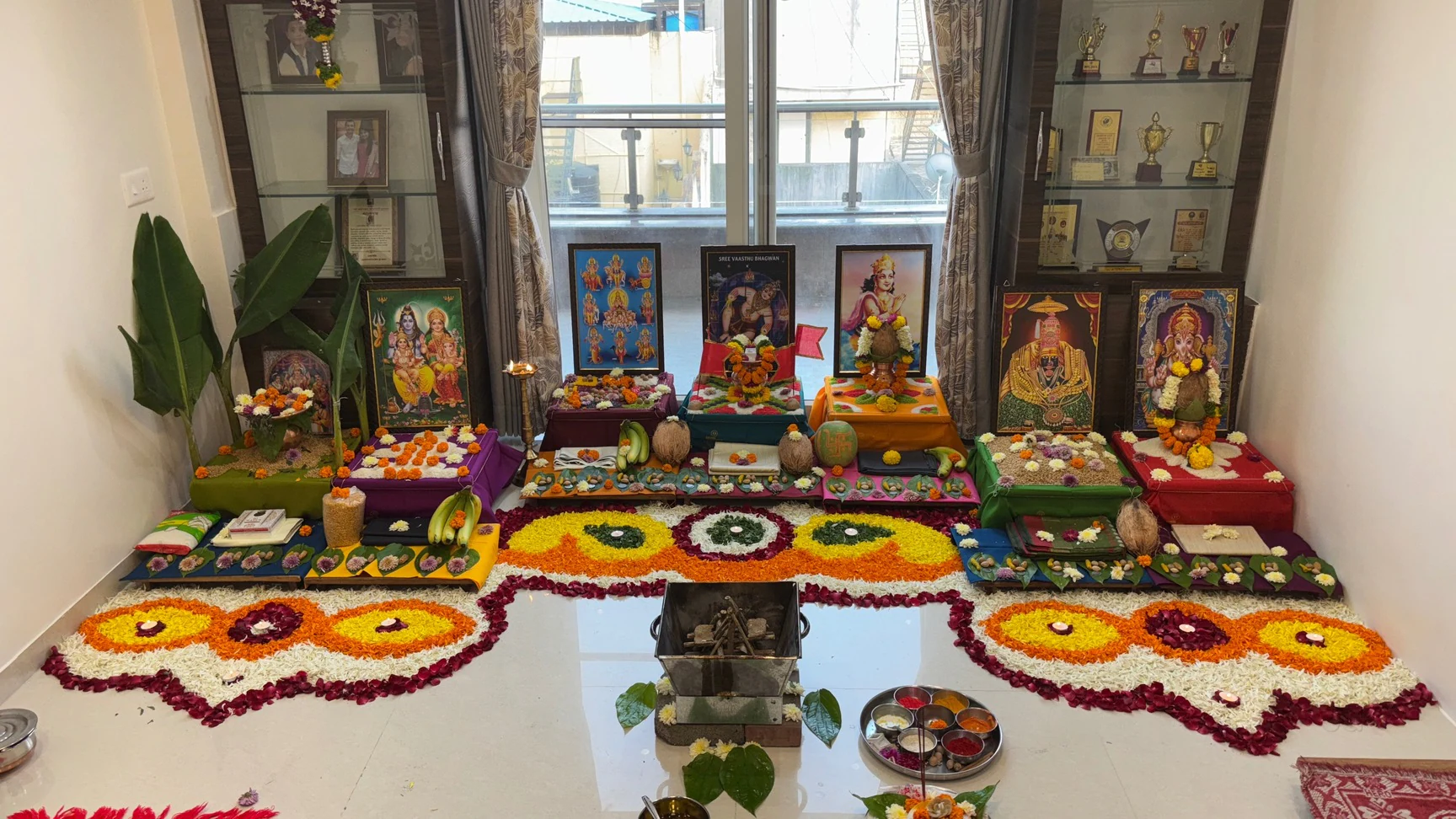
Step 1: Prepare the Pooja Room
- Clean the room
- Place images or idols of Lord Ganesha and other deities
- Arrange flowers, incense sticks, and lamps
Step 2: Invite the Priest
- A knowledgeable Hindu priest should be invited to perform the rituals and recite mantras
Step 3: Take Sankalp
- Family head offers grains, flowers, and other sacred items to Mother Earth while reciting mantras
Step 4: Perform Havan
- Offer ghee, herbs, and other materials into the sacred fire
Step 5: Chanting and Offerings
- Recite Vastu Shanti mantras and offer prayers to gods
Step 6: Conclude Pooja
- Distribute Prasad (sacred food offerings)
- Cover Havan items in a pit as per tradition
Also Read: Bhumi Pujan Muhurat 2026: Auspicious Dates for Starting House Construction
Do’s and Don’ts After Vastu Shanti Pooja
Do’s:
- Keep the house clean, especially the Pooja area
- Light a diya daily
- Maintain calm and positive behavior
- Use the house normally without locking for many days
Don’ts:
- Avoid shouting or fighting
- Don’t play loud music
- Avoid negative conversations
- Don’t start construction immediately
- Follow priest’s instructions regarding pooja ash and items
Conclusion
Vastu Shanti Pooja for house is a powerful ritual that enhances positive energy, removes negative influences, and brings peace, prosperity, and balance. By performing it in 2026 during the auspicious Vastu Shanti Muhurat, you ensure harmony in your home or office. Whether you are moving into a new property, renovating, or correcting Vastu flaws, this pooja is a time-tested solution for holistic well-being.






Ans 1. Vastu Shanti Pooja is a Hindu ritual performed to remove negative energies, correct Vastu Doshas, and harmonize the home or office with natural and planetary energies.
Ans 2. It is recommended before moving into a new house, after renovations, when buying a previously owned property, or every 10 years for long-term energy balance.
Ans 3. The pooja improves financial flow, brings peace and harmony, enhances health, protects from negative energies, and promotes prosperity and success.
Ans 4. Vastu Shanti Pooja focuses on energy correction and removing Vastu Doshas, while Griha Pravesh Pooja is performed to mark entry into a new home and bless the family for well-being.
Ans 5. The ritual involves cleaning the pooja area, arranging items like flowers, coconut, and holy water, invoking a priest, taking a Sankalp, performing Havan, chanting mantras, offering prayers, and concluding with Prasad distribution.
Ans 6. Common items include sandalwood paste, Gangajal, flowers, coconuts, supari, betel leaves, oil lamps, water Kalashas, rice, and dairy products like milk, ghee, and yogurt.
Ans 7. Astrologers recommend performing the pooja during auspicious moon phases such as Amavasya (new moon), Shukla Paksha (waxing moon), or Krishna Paksha (waning moon) for maximum benefits.
Ans 8. Do keep the house clean, light a diya daily, and maintain positive behavior. Don’t shout, play loud music, or engage in negative conversations, and follow priest’s instructions regarding pooja ash.