
Table of Content
▲
The Reserve Bank of India has taken a significant step that will impact borrowers, developers, and India’s broader economic outlook. In its latest monetary policy review, the central bank reduced the RBI repo rate by 25 basis points, bringing it down from 5.5% to 5.25%.
For millions of homebuyers, this brings up an immediate question:
Will home loan EMIs finally get some relief?
With GDP growth holding strong and inflation falling to record lows, the rate cut signals the RBI’s intention to support economic momentum while easing financial conditions for consumers.
What the RBI Announced
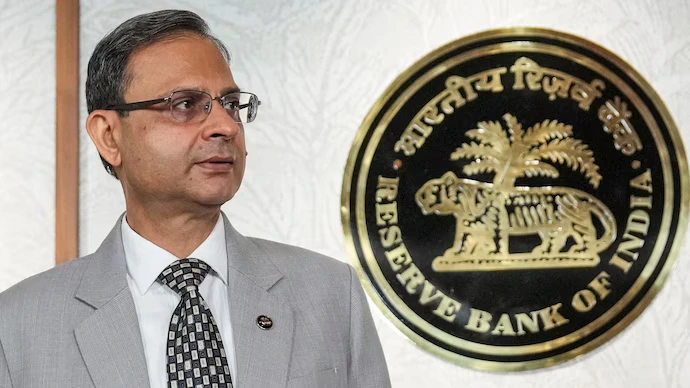
Following a detailed three-day Monetary Policy Committee (MPC) meeting held from December 3 to 5, the committee unanimously voted to reduce the RBI repo rate by 25 bps. RBI Governor Sanjay Malhotra emphasised that the decision followed careful evaluation of evolving macroeconomic indicators, inflation trends, and liquidity requirements.
In addition to the rate cut, the RBI rolled out supporting liquidity measures, including:
- Open market purchases of government securities worth ₹1 lakh crore
- A three-year USD/INR buy-sell swap of USD 5 billion
These steps aim to inject stability into financial markets and ensure adequate liquidity across the banking system.
Also Read: Fixed vs Floating Interest Rate: Smart Choices for Home Loans
Why the RBI Cut the Rate Now
1. Inflation Hit Record Lows
Retail inflation dropped sharply to 0.25%, giving the RBI considerable room to ease monetary policy.
2. GDP Growth Remains Strong
India posted 8.2% GDP growth in Q2, reflecting steady domestic demand and a positive macroeconomic outlook.
3. Liquidity Tightness Emerging
Financial markets were experiencing tightening liquidity conditions, making intervention necessary.
4. Support for Consumption & Credit Growth
The new RBI repo rate is expected to energise consumption, particularly in interest-sensitive sectors like housing and automobiles.
How the Rate Cut Affects Home Loans
Faster Transmission Expected
Most home loans today are benchmarked to the External Benchmark Lending Rate (EBLR), which is directly tied to the RBI repo rate. This means banks generally revise lending rates faster compared to older lending systems.
Impact on EMIs
A 25 bps cut may reduce EMIs by a noticeable margin for borrowers with long-tenure home loans. Floating-rate borrowers will benefit first, while fixed-rate borrowers may require refinancing to enjoy the benefits.
Industry Leaders React to the Decision
The rate cut has sparked strong responses across the real estate sector, with stakeholders expecting positive momentum across segments.
Mr. Jash Panchamia, Executive Director, Jaypee Infratech Limited
According to Mr. Panchamia, the reduction in the RBI repo rate comes at exactly the right moment. He notes that with inflation stabilised and the economy showing resilience, the rate cut is poised to boost consumption not only in housing but across multiple sectors.
He highlights that the affordable and mid-income housing categories will likely see the strongest impact as lower home loan rates encourage hesitant buyers to move forward with purchase decisions. This could create a ripple effect, pushing demand for better-quality homes, strengthening sales activity, and improving investor confidence. Overall, he believes the decision will support long-term stability in the real estate ecosystem.
Mr. Ashok Kapur, Chairman, Krishna Group and Krisumi Corporation
Mr. Kapur states that the 25 bps repo rate cut aligns perfectly with the country’s low inflation levels and strong economic fundamentals. He points out that the luxury housing segment has already been witnessing strong momentum, driven by rising disposable incomes and evolving consumer preferences for design-led, lifestyle-driven homes.
Softer lending rates, he explains, will further enhance affordability for premium homebuyers looking to upgrade to high-quality, future-ready developments. The rate cut strengthens overall market sentiment and supports the long-term growth cycle of India’s real estate sector.
What Experts Across the Industry Are Expecting
Affordable & Mid-Income Housing to Get a Major Boost
Interest-sensitive segments stand to benefit the most. With home loan rates set to decline, developers expect a spike in inquiries and bookings.
Premium & Luxury Housing to Maintain Momentum
While this segment is less sensitive to rate cuts, the reduction in the RBI repo rate supports buyer sentiment and keeps the category strong.
Developers Face Mixed Impact
While demand is set to rise, developers caution that the weakened rupee could inflate the cost of imported construction materials. This may compress margins unless managed efficiently.
NRI Demand Likely to Jump
A weaker rupee, combined with lower borrowing costs, makes Indian real estate more attractive for overseas investors.
Will Home Loans Actually Get Cheaper?
Here’s what borrowers should expect:
Short-Term Impact
Banks will adjust their lending rates gradually. Some may update rates within days, while others may take a few weeks, depending on liquidity conditions.
Medium-Term Impact
If inflation stays low, the RBI may continue its easing cycle, which could push home loan rates even further down in 2026.
Factors Influencing EMI Reductions
- The benchmark your home loan is linked to
- Your bank’s reset cycle
- Your credit score and loan profile
- Whether banks pass on the full benefit of the rate cut
Borrowers with floating-rate loans linked to the RBI repo rate will be the first to benefit.
Also Read: Loan to Value Ratio Meaning Calculation and Importance for Homebuyers
What Homebuyers Should Do Now
1. Track your bank’s revised lending rates
Each bank updates its EBLR differently.
2. Explore refinancing options
If your existing bank is slow to transmit the benefit, switching lenders can help reduce EMIs.
3. Strengthen your credit score
A better score can help you negotiate lower interest rates.
4. Assess your long-term affordability
A lower EMI should align with your financial goals not encourage over-leveraging.
Conclusion
The RBI’s decision to lower the RBI repo rate by 25 basis points signals a supportive policy stance driven by strong GDP growth and historically low inflation. For homebuyers, the big question is whether home loans will get cheaper? is likely to be answered positively over the coming weeks as banks begin adjusting their lending rates.
While developers, consultants, NRIs, and end-users all stand to benefit from this move, the extent of relief will ultimately depend on how quickly lenders pass on the benefit.
For anyone planning to buy a home or upgrade in the coming year, this may be one of the most favourable windows to evaluate opportunities both financially and strategically.



Ans 1. The Reserve Bank of India reduced the repo rate by 25 basis points, from 5.5% to 5.25%, citing record-low inflation, strong GDP growth, and the need to support consumption and credit growth.
Ans 2. Home loans linked to the External Benchmark Lending Rate (EBLR) will see interest rates fall, reducing EMIs for borrowers with floating-rate loans. Fixed-rate borrowers may need refinancing to benefit.
Ans 3. Affordable and mid-income housing buyers are likely to benefit the most, while premium and luxury segment buyers will see modest sentiment improvement.
Ans 4. Banks may adjust rates within days to weeks, depending on their internal reset cycles and liquidity conditions.
Ans 5. Floating-rate borrowers will see reductions first. The actual EMI decrease depends on your bank, loan benchmark, and credit profile.
Ans 6. Refinancing can help borrowers whose banks are slow to pass on the benefit, potentially lowering EMIs or overall interest outgo.
Ans 7. If inflation remains low, RBI may continue easing policy, potentially reducing home loan rates further over 2026.
Ans 8. Yes, a weaker rupee and lower borrowing costs make Indian real estate more attractive to NRIs, especially in premium and investment segments.